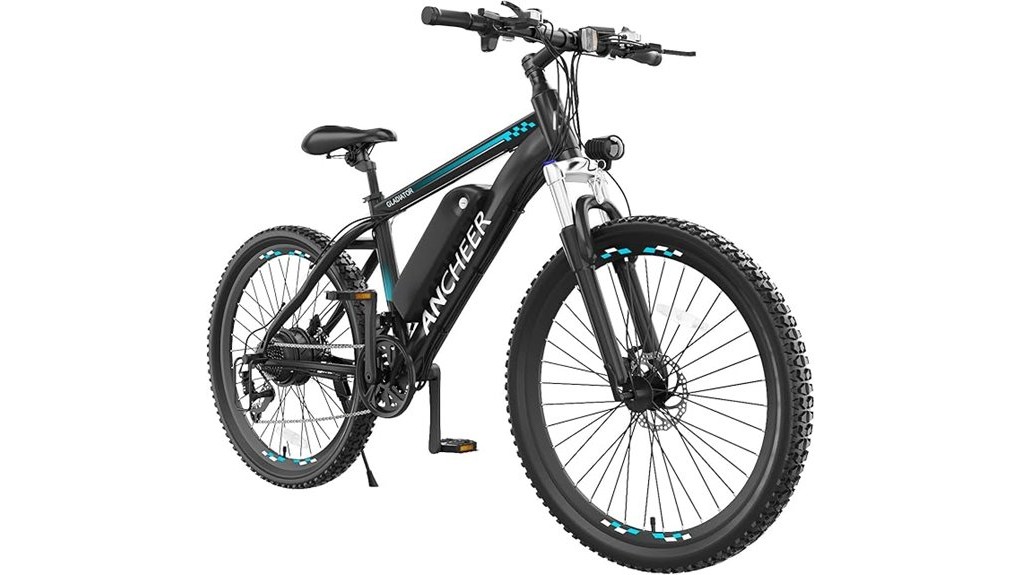

You’ll get a practical, value-focused 26″ e-bike with a 48V 500W hub motor (750W peak) and a removable 499Wh battery that favors usable power and range over light weight or premium bits. Acceleration is strong and linear, hill-climbing is comfortable with the 21-speed drivetrain, and the lockable fork soaks bumps while mechanical discs stop predictably. Real range is usually 25–45 miles, not 55. Keep reading for detailed pros, cons, and ownership tips.
Some Key Takeaways
- 48V 500W (750W peak) hub motor offers strong, linear acceleration and controlled torque for commuting and light off-road use.
- 48V 10.4Ah (499 Wh) removable battery realistically yields 25–45 miles per charge, 55 miles being optimistic.
- 3–3.5 hour fast charging, UL2849 compliance, and recommended spare battery for long trips or heavy usage.
- 26″ wheels, aluminum frame, and lockable front suspension provide stable, comfortable handling on mixed urban terrain.
- Mechanical disc brakes and 21-speed gearing deliver predictable stopping power and smooth hill-climbing performance.
What the ANCHEER 26 750W Peak Actually Is (Quick Specs)
Think of the ANCHEER 26″ 750W Peak as a commuter-friendly electric mountain bike built for hills and daily rides: it pairs a 48V 500W brushless motor (750W peak) with a 48V 10.4Ah (499 Wh) removable battery, 26″ wheels, an aluminum frame and a lockable front suspension fork. You’ll get a 21-speed drivetrain, mechanical disc brakes, and an LCD display showing speed, battery, assist and distance. It’s UL2849 compliant and fast-charging. Evaluate mounts and rack points for cargo compatibility; while not primarily a folding option, some models offer compact components. Overall, it’s practical, commuter-focused, and hill-capable. Designed for riders who enjoy outdoor activities, it complements other adult eBike gear and accessories for extended rides and adventures, including outdoor riding essentials.
How the 48V 500W (750W Peak) Motor Performs in Real Riding
While the 48V 500W (750W peak) hub motor won’t blast you off the line like a throttle-only scooter, it delivers strong, linear acceleration and comfortable hill-climbing for commuter and light off-road use. You get predictable torque delivery across pedal-assist levels, so starts, overtakes, and moderate climbs feel controlled rather than jerky. Top speed tops out near local limits, with gearing smoothing shifts. Thermal management is adequate for typical urban rides; sustained heavy loads heat the hub but don’t trip protections quickly. Overall, the motor balances efficiency and usable power for daily commuting and weekend trails. For riders who enjoy outdoor activities, selecting the right ebike motor involves matching power and torque to the intended use, especially when considering ebike motors for adventure.
Battery, Range, and Charging: Is 55 Miles Realistic?
Because the quoted 55-mile range is an optimistic figure, you should treat it as a best-case scenario rather than a guaranteed outcome. The 48V 10.4Ah (499 Wh) battery charges in about 3–3.5 hours and supports pedal-assist efficiency, but real world range usually falls shorter. Expect 25–45 miles depending on rider weight, terrain, assist level, and stops. Over months, battery degradation will reduce capacity; plan for gradual range loss and follow charging/storage best practices. If you need consistent long trips, carry a spare battery or charge strategically—don’t rely on the 55-mile claim as typical. For reliable charging and longer battery life, choose an ebike battery charger designed for outdoor riders and follow the manufacturer’s charging tips.
Ride Quality: Frame, 26 Wheels, Suspension, and Braking
Even on rough city streets, the 26″ wheels and aluminum frame give a predictable, stable ride, and the lockable front suspension soaks up most bumps without turning steering vague. You’ll notice confident handling: the frame feels stiff under power, keeping geometry consistent during climbs and sprints. 26″ wheels balance nimbleness with rollover ability, while rim durability holds up to potholes if you avoid heavy impacts. Mechanical disc brakes deliver progressive, reliable stopping that’s easy to modulate. Tire traction on wet pavement is good for commuting; aggressive cornering requires care. Overall, the setup prioritizes stability and practical durability. For riders who like to maintain and tweak their setup, choosing the right wheel truing tools helps keep ride quality consistent.
Who This ANCHEER Suits and Final Buy-or-Skip Verdict
If you commute on mixed city streets, tackle moderate hills, or want an affordable, sturdy e-bike for errands and weekend rides, this ANCHEER fits the bill — especially if you prioritize a strong motor, long range, and simple maintenance over lightweight components or premium finishing. You’ll appreciate the 500W (750W peak) torque for climbs, 499Wh battery for extended range, and reliable mechanical discs. It’s a solid commuter fit with basic offroad suitability via front suspension and 26″ wheels, but it’s not a high-performance trail rig. Verdict: buy if you want value, utility, and reliability; skip if you need elite components. Consider carrying a spare ebike battery to extend your adventures and reduce downtime.
Some Questions Answered
Does the Battery Support Regenerative Braking?
No — the battery doesn’t support regenerative braking. You won’t gain meaningful regenerative efficiency from the system because the bike uses a conventional hub motor and mechanical disc brakes without regen circuitry. You can still adjust braking calibration for safer stops, but energy recapture isn’t implemented, so range won’t improve via braking. If regen efficiency matters, you’ll want a model explicitly offering motor-controller regen and clear specs on braking calibration and energy recovery.
Can I Install a Child Seat or Rear Rack?
Yes — you can install a child seat or rear rack, but check fit carefully. You’ll want to verify child seatmount compatibility with the aluminum frame, seatpost diameter, and rear wheel clearance. The bike lacks a factory rear rack, so use sturdy rear rack adapters that bolt to the frame or seatpost and clear the 21-speed drivetrain. Prioritize weight limits, secure mounting, and confirm brakes and suspension handle the extra load for safe riding.
What Is the Bike’s Total Weight Including Battery?
The bike’s total weight including battery is about 60–70 lbs, so you’ll handle a moderately heavy e-bike. You’ll want to factor that into lifts and storage. Its cargo capacity (rack and rider combined) typically sits around 220–265 lbs depending on mounting and frame limits, so you can carry a child seat or groceries within reason. Check the manual for exact load limits and recommended rack specifications before adding heavy cargo.
Are Replacement Batteries or Parts Readily Available?
Yes — you can usually find replacement batteries and parts, but availability varies. You’ll want to check battery availability from the manufacturer and reputable sellers; the 48V 10.4Ah pack is common enough to have aftermarket compatibility with similar 48V systems. Verify connector type, dimensions, and BMS specs before buying. For other parts (wheels, brakes, fork, drivetrain), aftermarket components are broadly available, though some model-specific items may require dealer support.
Does It Come Pre-Assembled or Require Assembly?
It arrives partly assembled; you’ll need to finish setup. Assembly options typically include basic home assembly with included quick-start parts or paying for shop assembly. Tools required are usually an Allen wrench set, adjustable wrench, screwdrivers and torque control for headset/handlebar and pedals. You’ll mount the front wheel, handlebars, pedals, and adjust brakes and gears. If you’re not comfortable, opt for professional assembly to guarantee safety and proper calibration.