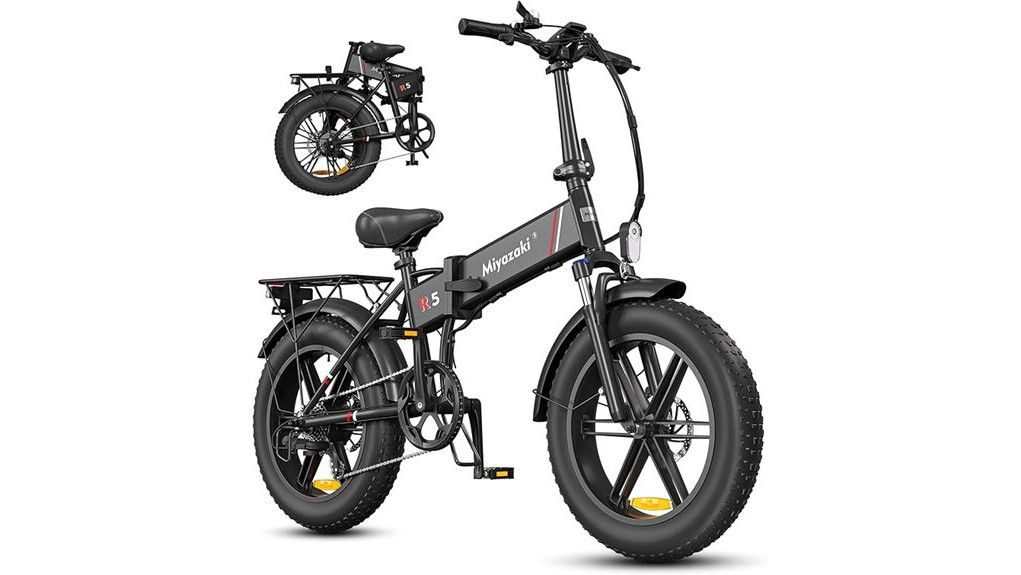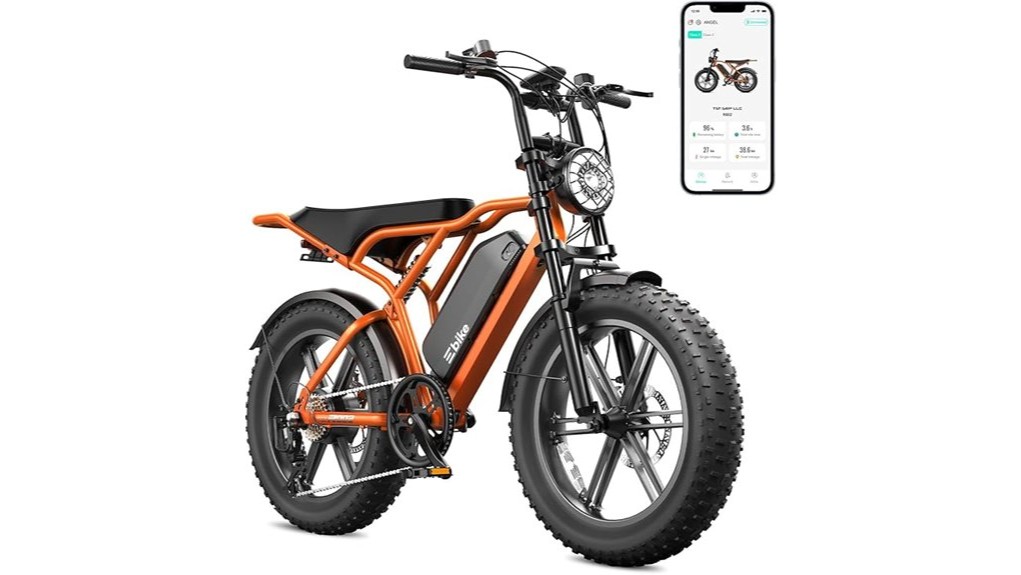

You’ll get a rugged, mixed-terrain e-bike with a 750W nominal (1,500W peak) motor hitting 28 mph and delivering up to 90 Nm for steep climbs; it’s tuned for sustained power and handles about 35° grades depending on load. The removable 48V battery (15Ah standard, 25Ah optional) gives ~50–60 miles with pedal assist, and dual full suspension plus 20×4.0 fat tires soak up rough ground. Keep in mind it’s 66 lbs; read on for full specs and trade-offs.
Some Key Takeaways
- Powerful 750W nominal (1,500W peak) motor delivers up to 90 Nm torque and a top speed of about 28 mph.
- Removable 48V battery (15Ah standard, 25Ah optional) offers ~50–60 miles PAS, ~40 miles throttle, charges in ~6–7 hours.
- Dual full suspension and 20×4.0 fat tires provide excellent traction and comfort on snow, gravel, and mixed terrain.
- Sturdy 66 lb aluminum frame supports up to 450 lb but can be cumbersome to lift or transport.
- Practical drivetrain, mechanical disc brakes, integrated lights, and clear LCD make it reliable for commuting and cargo use.
Quick Performance Snapshot (Speed, Motor, Torque, Climbing)
Although it’s built for mixed terrain, the TST delivers surprisingly robust thrust: its 750W nominal (1,500W peak) brushless motor pushes you to a top speed of 28 mph while producing up to 90 Nm of torque. You’ll notice confident torque delivery from standstill and steady acceleration on flats. Motor efficiency feels optimized for sustained power rather than sprint bursts, balancing heat and battery draw. For hill climb performance, the bike handles steep grades up to about 35 degrees with minimal cadence hunting, though rider weight and tire traction matter. Overall, you get predictable, usable power for varied terrain. The motor choice reflects Top Gear’s focus on choosing the right ebike motor for riders who enjoy outdoor adventure.
Battery, Range, and Charging in Real-World Use
When you ride the TST, its 48V removable lithium pack (standard 15Ah, optional 25Ah) delivers dependable real-world range: expect up to about 50–60 miles using pedal assist under moderate conditions, roughly 40 miles if you rely mostly on the throttle, and shorter distances with heavy cargo, steep climbs, or aggressive assist levels. You’ll appreciate UL-tested safety, waterproofing, and easy removal for battery swapping or secure indoor charging. Charging etiquette matters: recharge after long rides, avoid deep discharges, and use the supplied charger for ~6–7 hours to preserve capacity. Real-world gains come from conservative assist and proper battery care. For extended outings consider pairing the bike with an ebike range extender to maximize miles on long rides.
Ride Comfort and Build : Frame, Suspension, Wheels, Weight Limits
Having covered battery behavior on long rides, let’s look at how the TST’s chassis and suspension design influences your comfort and control. The aluminum frame feels sturdy without excess flex; 66 lbs mass helps stability but you’ll notice heft when lifting. Dual full suspension soaks bumps; suspension travel is generous for 20″ fat wheels, smoothing trail chatter and reducing fatigue. 20×4.0 puncture-resistant tires add cushioning and traction in snow or gravel. Seat ergonomics are decent—wide saddle supports longer rides though you may swap for a performance seat. Rated 450 lbs max load, the bike handles heavy riders without structural strain. Riders who enjoy outdoor activities will appreciate how fat ebike tires improve grip and comfort on varied terrain.
Controls, Drivetrain, Brakes, and On-Road Safety Features
Because the TST pairs a simple, reliable drivetrain with intuitive controls, you’ll find it easy to manage pace and power on mixed terrain. The 7-speed cassette and chain drive shift cleanly; twist grip ergonomics are comfortable for long rides and precise when climbing. Electric assist modes and throttle respond without lag to input. Mechanical disc brakes deliver predictable stopping power; modulation is good for mixed surfaces. The LCD survives glare; LCD readability testing shows clear speed, battery, and trip data at various angles. Integrated lights and reflector-equipped taillight enhance visibility; overall control layout prioritizes safety and functional simplicity. For riders who enjoy active outdoor riding, selecting quality disc brake pads can further improve braking performance and pad longevity.
Who Should Buy This Bike and Final Verdict (Use Cases, Pros/Cons, Value)
If you need a rugged, high-torque e-bike for mixed terrain—mountain trails, snow, or urban commutes with heavy cargo—the TST R004 delivers strong value. You’ll want this if you’re a commuter needing reliable range (up to ~60 miles PAS), a weekend rider chasing offroad adventures, or someone hauling gear up steep grades—750W nominal/1500W peak and 90 Nm torque handle climbs and load. Pros: fat tires, full suspension, removable 48V battery, 450 lb capacity. Cons: 66 lb weight, 180-day warranty, 6–7 hour charge. Verdict: pragmatic, capable choice for demanding mixed-use riders and commuters. Riders should also consider bringing essential gear for trails like a tire repair kit, hydration, and layered clothing to stay safe and comfortable on varied rides and conditions, emphasizing the importance of essential gear.
Some Questions Answered
Does the Battery Come With a Tsa/Airline-Compliant Shipping Option?
No — the battery shipping doesn’t offer a specific TSA/airline-compliant shipping option. You should follow airline rules for lithium batteries: remove the 48V pack for transport, keep it within allowed Wh limits, and present it as carry-on if permitted. The 720 Wh battery exceeds common airline allowances, so carriers will likely refuse transport or require special approval and packaging. Contact the airline and seller beforehand to arrange compliant shipping or alternatives.
Is There Smartphone App Connectivity or Bluetooth for the Display?
No — there’s no documented smartphone pairing or mobile app support for the display. You won’t find Bluetooth settings or app-based controls in the spec sheet, and display firmware updates aren’t mentioned. That means you can’t tweak PAS mapping or log rides via your phone. If Bluetooth connectivity and app integration matter, you should request firmware details or a different model that explicitly lists smartphone pairing and mobile app features before buying.
What Is the Expected Maintenance Schedule and Common Replacement Parts?
You should service the bike every 500–1,000 miles and inspect after heavy rides; do a full tune yearly. Battery care: charge after rides, avoid full discharges, store at ~50% in winter, check mounts and charge port. Drivetrain wear: lubricate chain every 100–200 miles, replace chain/cassette every 2,000–4,000 miles depending on use. Common replacements: brake pads, tires, suspension seals, cables, chain, cassette, and the removable battery over years.
Can the Motor and Battery Be Serviced Under the 180-Day Warranty?
Yes — the 180-day warranty can cover motor and battery defects, but you’ll need to confirm warranty exclusions first. You’ll report failures to the manufacturer/dealer, who’ll authorize service if issue qualifies. Expect a service turnaround that varies by part availability and shipping; typical repairs take days to weeks. Consumables, misuse, accidental damage, and unauthorized repairs are usually excluded, so document issues and follow the authorized service process.
Are Replacement Tires, Rims, or Custom Accessories Available From the Manufacturer?
Yes — you can get replacement tires and rims, and the manufacturer offers some custom fittings and accessories, but availability’s limited. You’ll need to contact the manufacturer for OEM manufacturer parts like 20×4.0 fat tires, aluminum rims, and specific suspension components. Custom fittings (racks, lights, or upgraded saddles) may be possible but often via third-party vendors. Expect lead times, compatibility checks, and potential extra costs for nonstandard items.