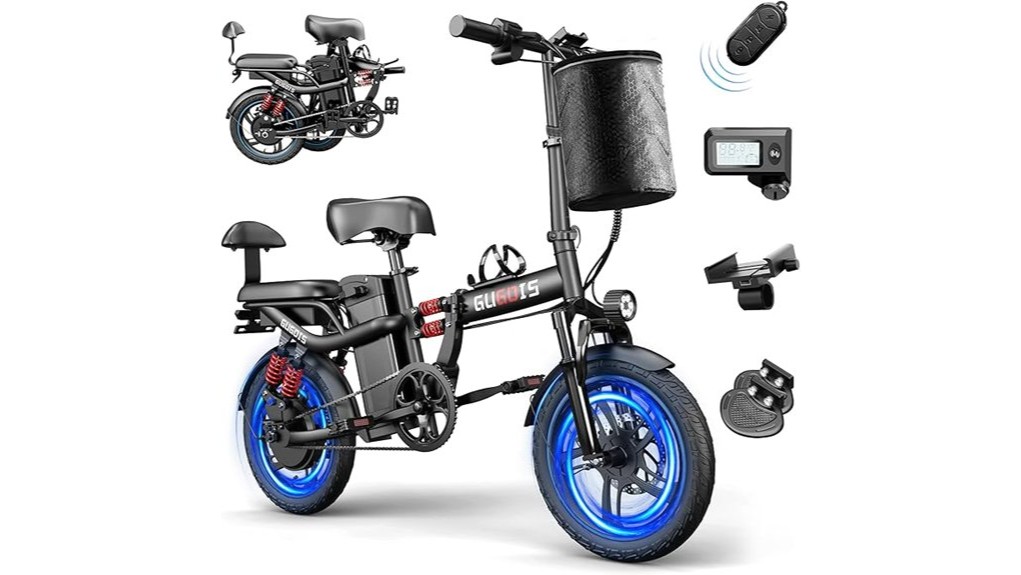

You’ll get a compact, foldable full-suspension e-bike that’s built for near-moped power and practicality. It comes in 16″ or 20″ wheel versions with 750W or 1000W hub motors, a removable 48V battery (≈749–960Wh), UL certification, and a sturdy folding frame — but it’s heavy (~68 lbs) and small wheels trade smoothing for more road feedback. Expect 25–45 mile real-world range and strong hill punch; keep going to see detailed pros, cons, and buying tips.
Some Key Takeaways
- GugoIs G16 is a foldable full-suspension e-bike available in 16″ and 20″ wheel versions, weighing about 68 lbs.
- Motor options are 750W or 1000W hub motors, with top speeds around 28–30 mph on the 1000W model.
- Removable 48V battery ranges ~748.8–960 Wh (15.6Ah cited), yielding real-world ranges of roughly 25–45 miles.
- Ride is compact and nimble but transmits more road feedback due to small wheels, with confident stopping from dual disc brakes.
- Pros: powerful motors, foldability, UL2849 certified; Cons: heavy, steel frame risk of rust, limited sustained climbing and range under load.
What the GugoIs G16 Is (Models, Specs, and Who It’s For)
Wondering whether the GugoIs G16 fits your commute or weekend ride? You’ll find a compact commuter folding electric bike offered in 16in and 20in wheel versions with 750W or 1000W hub motors. It’s a full-suspension, high-carbon-steel frame design, weighing about 68 lbs, with dual disc brakes, 3-speed drivetrain, removable 48V battery (around 748.8–960 Wh), and UL2849 certification. Top speed approaches 28–30 mph; range varies by setup. It supports two-seat use and a 150 kg max load. If you’re a beginner rider seeking portability and straightforward power, the G16’s specs make practical sense. This model fits well for riders who want gear suited to outdoor activities.
Real-World Performance: Speed, Range, Climbing, and Handling
Now that you know the GugoIs G16’s core specs and who it’s aimed at, let’s look at how it actually performs on the road. You’ll see top speed testing hit 28–30 mph on the 1000W variant, realistic in short bursts. Torque delivery is immediate from the hub motor, aiding quick getaways and steady hill pulls. Climbing approached the claimed 25° on short pitches, though sustained grades and rider weight reduce pace. Wind resistance effects are noticeable with the upright posture and small wheels. Overall real world efficiency sits near 25–40 miles depending on assist level and terrain. This review is focused on the needs of foldable e-bike riders who enjoy outdoor adventures and value portability.
Ride Comfort and Usability: Folding, Suspension, Brakes, and Controls
While the GugoIs G16 is compact and practical for commuting, its ride comfort and usability hinge on a few clear trade-offs. You’ll appreciate the full suspension smoothing urban potholes; front and rear travel reduce vibration on 16in or 20in wheels, though small wheels still transmit more feedback than larger commuters. The folding mechanism is sturdy and quick, folding to compact dimensions for transit, but the bike stays relatively heavy to carry. Dual disc brakes deliver confident stopping power. Control ergonomics are decent: adjustable handlebars and seat let you tune posture, while thumb throttle and three assist modes stay intuitive. It’s a convenient choice for riders who need portable storage and transport solutions, especially when paired with folding bike stands for outdoor use.
Battery, Charging, and Maintenance Details You Need to Know
Drawing power from a removable 48V 15.6Ah pack (about 748.8 Wh, with a higher 960 Wh option available), the GugoIs G16 gives you a solid balance of range and usable output; expect roughly 25–45 miles per charge depending on motor, rider load, and assist level, and peak motor output of 750W (1000W option) supports top speeds around 28–30 mph and climbs to about 25°. You should monitor battery health via charge cycles and avoid full depletions. Follow charging etiquette: use the supplied 2A charger, unplug after full charge, and keep cell balancing in mind. For long storage, maintain ~40–60% charge and cool, dry storage precautions. Our shop specializes in ebike range extender batteries and accessories to help you get the most out of your rides.
Should You Buy It? Pros, Cons, Best Use Cases, and Buying Recommendations
Because the GugoIs G16 pairs strong hill-climbing and a removable 48V battery with a compact, foldable frame, it’s a compelling choice if you need a portable commuter that still delivers near-moped-level performance. You should buy it if you want reliable urban commuting, occasional cargo hauling, and fast climbs without sacrificing portability. Pros: powerful 750W/1000W options, full suspension, removable 748–960Wh battery, UL-certified, foldability, 2-seater capability. Cons: heavy (~68 lbs), steel frame may rust without care, limited range under heavy loads, 16–20in wheels trade smoothing for compactness. Recommendation: choose based on wheel size and battery spec; prioritize 1000W and higher-capacity battery for frequent cargo hauling. It also appeals to riders who want adventure-ready step-through ebikes for varied outdoor use.
Some Questions Answered
Can I Add a Rear Cargo Rack or Child Seat to This Bike?
Yes — you can add a rear cargo rack or child seat, but check fitment. The frame’s rear mounting points and 150 kg max load give decent rear rackability; choose a rack rated for e-bike use and your wheel size (16″ or 20″). For child compatibility, use a certified child seat compatible with full-suspension frames and disc brakes, and keep total weight within limits. Securely torque mounts and verify balance before riding.
Is the Bike Street-Legal in My State/Country?
Maybe — it depends on local laws and speed limits where you live. Check your state/country rules for electric bikes: classification often hinges on motor power, top speed, and whether throttle is allowed. With 750–1000W and up to ~30 mph, this model may exceed Class 1–3 limits in many places and require registration, insurance, or helmet laws. Verify limits, registration, and where you can legally ride before using it on roads.
How Easy Is Sourcing Replacement Parts Locally?
You’ll generally find sourcing replacement parts locally is manageable but varies by item. Standard parts like tires, tubes, brake pads, and batteries have good local availability; motor- or controller-specific parts may need ordering. Check spare compatibility with common 16/20-inch wheel sizes and 48V systems to simplify sourcing. Keep the original part numbers and the supplier’s support contact handy; that speeds repairs and makes certain compatible spares reach you faster.
Can I Fly With the Removable Battery on Planes?
Yes — but check airline policies: removable batteries are subject to battery restrictions and typically must be carried in cabin, not checked. Your 48V 15.6Ah (≈748.8 Wh) battery is near regulatory limits; many airlines allow up to 100 Wh without approval and 100–300 Wh with airline approval. Batteries above 300 Wh are usually prohibited. Contact your carrier before travel, pack terminals protected, carry documentation, and expect inspection and possible denial.
What Warranty Process Looks Like for Crash Damage?
Crash damage is usually excluded from warranty exclusions, so you’ll need to file a paid repair or claim through your insurer. Start by contacting support with photos and incident details; they’ll confirm coverage and estimate costs. Repair timeline typically depends on parts availability—expect a 7–21 day window after approval. You’ll get a quote, sign off, and they’ll schedule repairs; keep records for possible reimbursement.