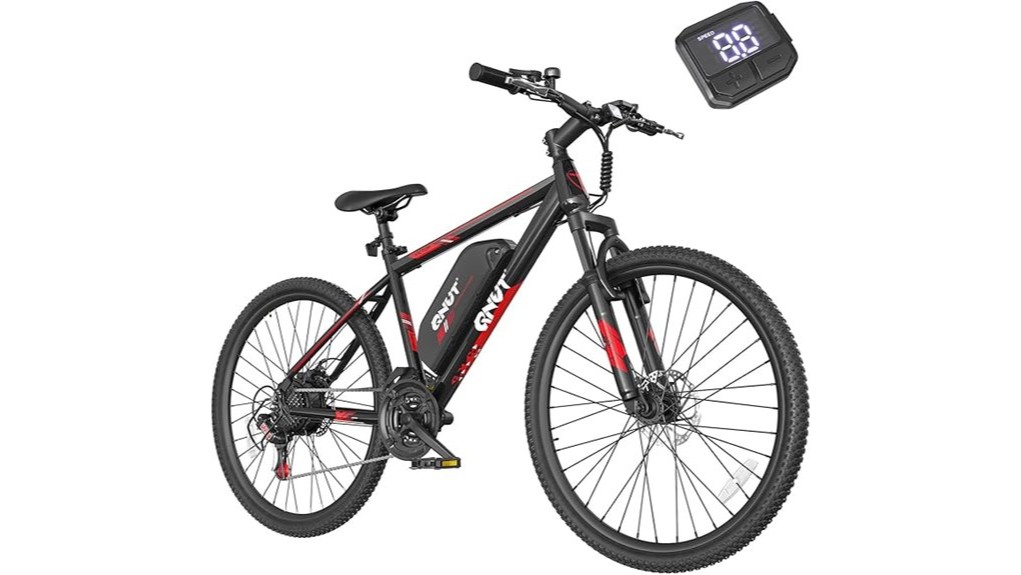
You’ll get a sturdy, no‑frills 26″ commuter e‑bike with a removable UL‑2849 36V 10.4Ah battery and a rear‑hub motor that’s punchy at sprint but heavy on long climbs without pedal help. It tops out around 28 MPH with PAS, handles 10–15° grades in low gears, and real range is roughly 25–45 miles depending on throttle use and rider weight. Comfort is solid but chunky; brakes and components are basic. Keep going to see detailed tradeoffs and ownership tips.
Some Key Takeaways
- Sturdy 26″ steel-frame commuter with 36V 10.4Ah removable UL‑2849 battery (375 Wh) and 42V 2A charger, 4–6 hour charge.
- Rear-hub motor rated 350W (peak 1000W) delivers punchy assist to about 28 MPH, throttle limited near 20 MPH.
- Real-world range roughly 25 miles on heavy throttle use, up to about 45 miles with conservative pedal-assist.
- Ride feels stable but heavy (61.7 lb); front suspension and 26 x 2.125 tires provide comfort but less agility.
- Good value for budget commuters: reliable daily transport, removable certified battery, but basic brakes and heavier components.
What the Victor 3.0 Actually Is: Quick Specs and Who It’s For
The Victor 3.0 is QNUT’s no-nonsense commuter e-bike: a 26″ steel-frame machine with a removable UL‑2849 36V 10.4Ah (375 Wh) battery, a peak 1000W (rated 350W) rear-hub motor, and a 21-speed Shimano-style drivetrain. You’ll find a sturdy, utilitarian build aimed at entry level commuters and budget commuters who need reliable daily transport rather than cutting-edge lightness. It’s heavy but robust, with front suspension, mechanical discs, and IP54 protection. Range and power specs suit city rides and mild trails; don’t expect high-end agility or long-distance touring—this is practical, affordable commuting gear. It’s a good fit for riders who want reliable gear for outdoor rides.
Real-World Performance: Speed, Climbing, and Range Tested
Now that you know what the Victor 3.0 is built for, let’s look at how it actually performs on the road and hills. You’ll see a pedal-assist top speed around 28 MPH on flat ground with supportive motor punch; throttle caps near 20 MPH. Climbing feels competent—its 1000W peak (350W rated) hub handles 10–15° grades if you shift down and add pedal input. Real range depends on assist level and terrain: expect up to about 45 miles in conservative PAS use, closer to 25 miles when relying heavily on throttle. Battery size and rider weight strongly influence results. For riders who enjoy outdoor activities, consider upgraded ebike batteries to extend range and performance.
Ride Comfort and Handling: Frame, Suspension, Tires, and Gearing
While the Victor 3.0’s heavy-duty steel frame gives you a reassuringly stable platform, it also transmits more road buzz than lighter alloys, so the front suspension fork and 26 x 2.125 puncture-resistant tires are doing most of the comfort work. You’ll appreciate the ergonomic saddle and adjustable seat height for longer commutes, though the firm frame means small bumps still register. The suspension soaks larger hits but lacks fine-tuning. The 21-speed drivetrain shifts reliably; gearing covers flats to moderate climbs. Cornering stability is good thanks to weight and tire contact patch, but agility suffers compared with lighter e-bikes. For riders tackling rough trails, consider upgrading to wider fat eBike tires for improved traction and cushioning.
Practical Ownership: Battery, Charging, Safety, and Maintenance
Although the Victor 3.0’s removable 36V 10.4Ah (375 Wh) battery gives you solid range for commuting, you’ll want to treat it like a high-value component: charge with the included 42V 2A adapter (4–6 hours), store it indoors when not in use, and avoid full discharges to preserve capacity. Monitor battery health with monthly voltage checks and keep charge between ~20–80% for longevity. Adopt disciplined charging habits and don’t leave the pack at 0% or 100% for long. Do routine checks on brakes, tires, and drivetrain, and perform regular safety inspections of cables, bolts, and the display. Consider adding an external range extender when you need longer rides or more remote adventures.
Buy or Skip? Pros, Cons, and Which Rider Should Choose Victor 3.0
If you want a sturdy, straightforward commuter e-bike that balances power and practicality, the QNUT Victor 3.0 deserves serious consideration. You should buy if you’re an urban commuter or budget buyer who needs a rugged steel frame, removable UL-certified battery, and a punchy 1000W peak (350W rated) hub motor that handles 15° climbs and 28 MPH PAS. Skip it if you want lightweight agility, premium suspension, or longer range than ~45 miles. Pros: solid build, 21 speeds, safety features, easy charging. Cons: heavy (61.7 lb), basic brakes, limited top-tier components. Choose based on priorities. This model is well-suited for outdoor riders who favor adventure-ready step-through ebikes.
Some Questions Answered
Can I Use a Cargo Rack or Panniers on the Victor 3.0?
Yes — you can fit a rear rack and use waterproof panniers, but watch capacity and mounting. The Victor 3.0’s heavy-duty steel frame and rear dropouts support a standard rack; choose one rated for the bike’s payload (around 140 kg total) and bolt points. Use waterproof panniers for commuting or light touring, keep weight evenly distributed, and avoid overloading the rear to preserve handling, braking, and suspension performance.
Is an Upgraded Battery or Range Extender Available?
No official upgraded battery or dedicated range extender’s listed, but you can pursue third-party battery upgrades and range accessories. You’ll want a compatible 36V lithium pack or auxiliary battery that matches the bike’s connector and UL standards; otherwise warranty or safety might be affected. Install by a qualified e-bike tech, prefer removable/powered racks or frame-mounted extenders, and keep charging specs (42V, 2A) and weight limits in mind.
Does the Bike Support Pedal-Forward or Step-Through Frame Options?
No — it doesn’t offer a dedicated pedal forward geometry or a separate step through option. You’ll get a conventional, heavy-duty steel frame with standard top-tube styling; no factory step-through or stretched pedal-forward design is listed. That said, dealers sometimes offer aftermarket frame modifications or alternate models, but you shouldn’t expect a native pedal-forward or step-through option out of the box for this Victor 3.0.
Can I Register or Insure This E-Bike for Local Regulations?
Yes — you can usually register and insure it, but check local insurance options and registration requirements first. You’ll likely qualify as an e-bike class with a 350W-rated motor and PAS speeds; some areas treat it like a bicycle, others require registration, plate, or specific insurance. Don’t assume coverage: confirm with insurers about liability, theft, and battery risks, and verify local DMV rules to avoid fines or invalidated claims.
Are Replacement Tires and Brake Pads Readily Available?
Yes — replacement parts like tires and brake pads are generally available, but local availability varies. You’ll find common 26″ 2.125 tires and standard mechanical disc brake pads from bike shops and online retailers. Still, check specs (tire width, pad shape) before buying to make certain fit. If local stores don’t stock them, online sellers and the manufacturer can supply parts, though shipping times and costs may differ.