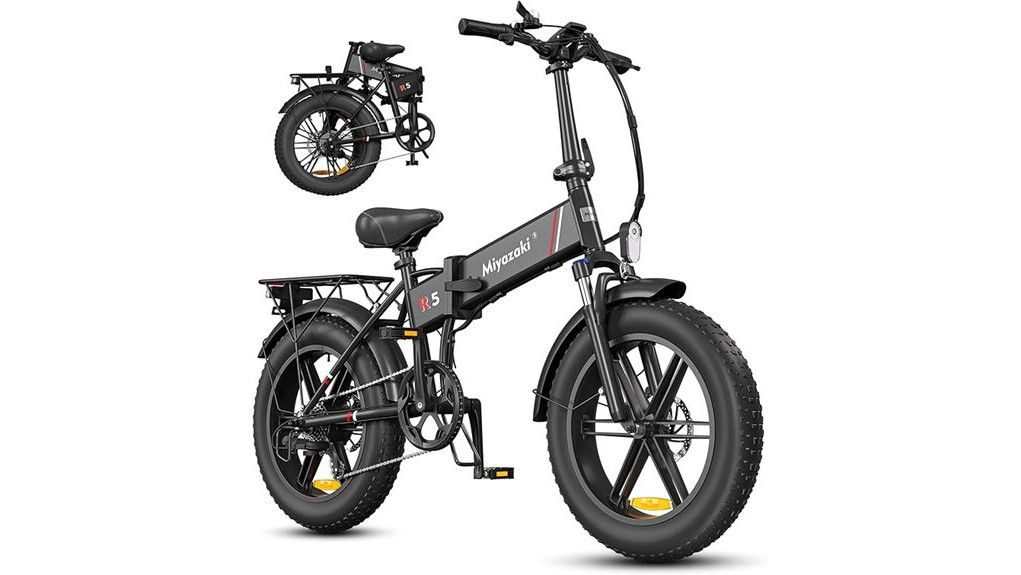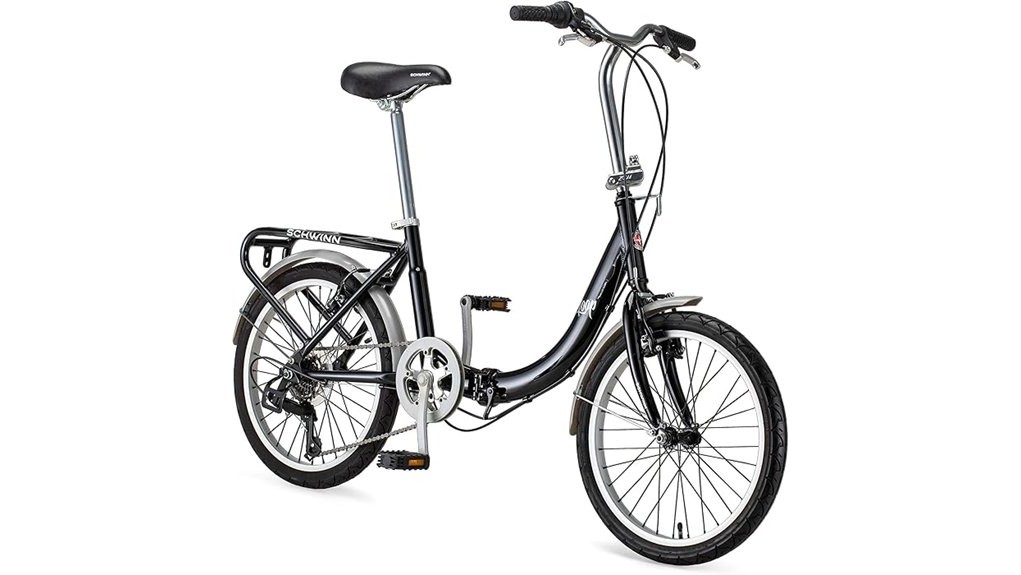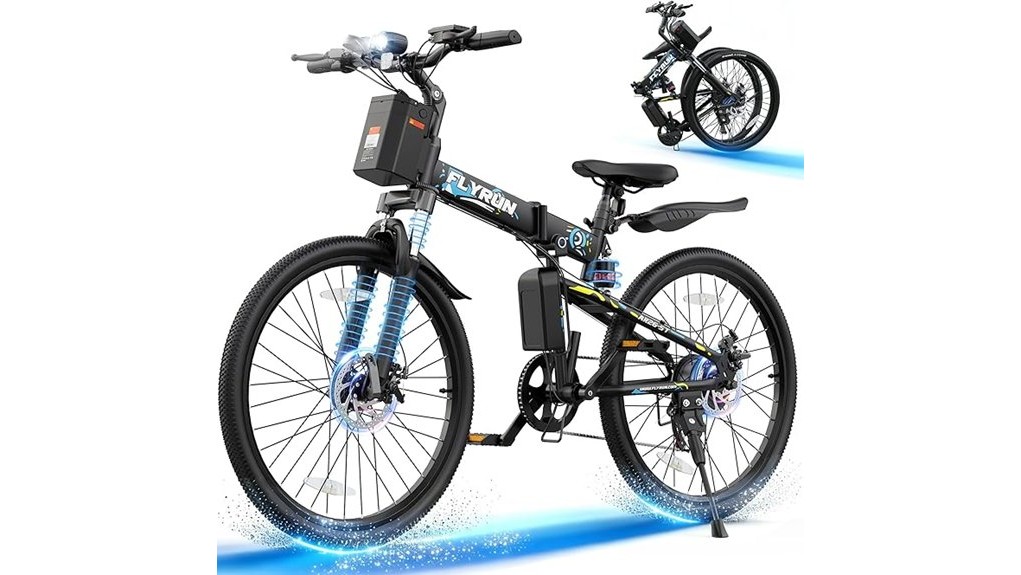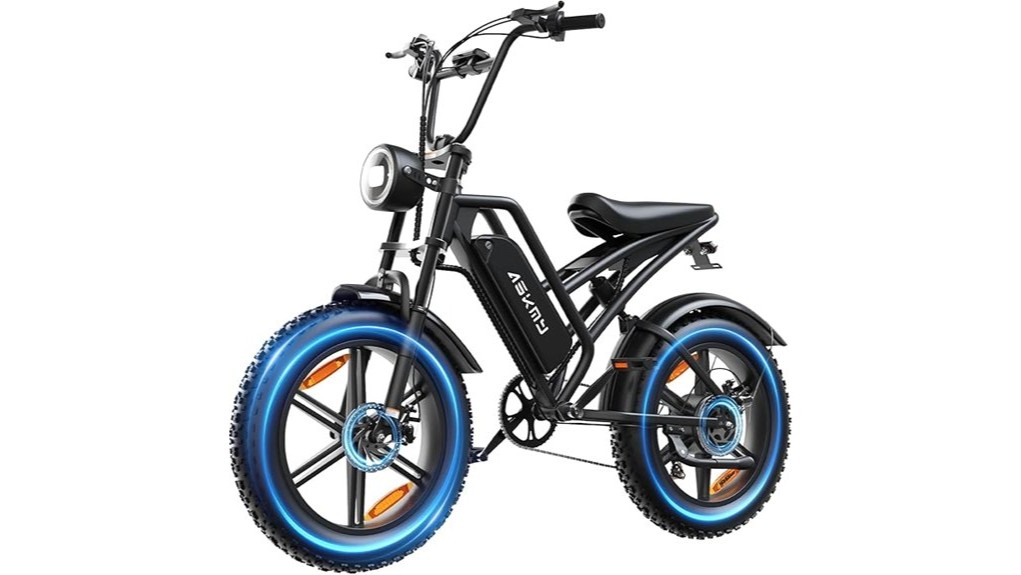

You’ll find this fat-tire e‑bike gives you confident all-terrain performance with a punchy 500W nominal (1,500W peak) motor, a 48V 900Wh removable battery, and full suspension for smooth commutes, trails, sand, and snow. Top speed is about 28 MPH with solid hill-climbing and 40–60 miles pedal‑assist range (25–28 miles full throttle). Dual hydraulic shocks, 20″x4″ tires, 7-speed drivetrain, and dual discs make it durable and practical—keep going and you’ll get full specs and real-world tips.
Some Key Takeaways
- Powerful 500W nominal/1,500W peak motor delivers confident acceleration and sustained climbing on varied terrain.
- 48V 15Ah (900Wh) removable battery provides roughly 40–60 miles pedal-assist, 25–28 miles full-throttle.
- 20″x4″ fat tires and full suspension ensure traction and comfort on sand, snow, dirt, and gravel.
- 7-speed drivetrain with dual disc brakes offers efficient gear control and predictable stopping power.
- Robust high-carbon steel frame and dual shocks support durability; follow maintenance and safe charging practices.
Performance and Range Tested: Speed, Climbing, and Battery Life
Put the E500 through its paces and you’ll see how the specs translate to real-world performance: the 500W nominal (1,500W peak) brushless motor reliably pushes the bike to advertised top speeds of around 28 MPH on flat terrain with a moderate rider, while the 48V 15Ah (900 Wh) removable battery yields about 40–60 miles in pedal-assist and roughly 25–28 miles in full-throttle mode depending on terrain, rider weight, and assist level. You’ll notice confident peak acceleration off the line and sustained climbing up to steep grades. Monitor battery longevity by avoiding constant full-throttle rides and using proper charging cycles. For riders who love outdoor adventures, this setup pairs well with fat tire ebike accessories and gear designed for trail and beach riding, enhancing durability and comfort for all-terrain riders.
Ride Comfort and Handling on Pavement, Sand, Snow, and Trails
Having confirmed the E500’s power and range, let’s look at how that performance translates to ride comfort and handling across different surfaces. You’ll notice the ergonomic saddle and full suspension absorb vibration on pavement, delivering steady comfort during longer commutes. On sand and snow the 20″x4″ tires float and maintain traction; you’ll reduce tire pressure for better grip. On dirt, gravel, and trails the dual shocks and seatpost travel smooth impacts while you stay planted. Steering responsiveness is precise for a fat-tire frame, letting you flick through tight lines or hold steady at higher speeds with controlled confidence. For year-round riding, consider choosing all-season ebike tires designed for varied outdoor terrain.
Motor, Drivetrain, Brakes, and Safety Features Explained
While the E500’s 500W nominal (1,500W peak) brushless motor delivers strong, immediate acceleration, its real-world performance depends on rider weight, terrain, and chosen mode—so expect lively throttle response in pure-electric and smooth, sustained power in pedal-assist. You get a 7-speed drivetrain with integrated shifter and rear derailleur for efficient cadence control; keep gear changes gentle under load. Dual disc brakes provide predictable stopping power; maintain pads and rotor alignment. Follow electrical safety guidance for the removable 48V battery and charger. Practice throttle etiquette—gradual inputs preserve range, components, and rider control. For riders who enjoy off-road exploration, consider motor torque and system reliability when choosing an ebike for all-terrain use.
Build, Suspension, Tires, and Durability for Heavy Use
Because you’ll be riding this fat-tire e-bike over varied terrain and under heavier loads, a rigid ebike frame and suspension that stay responsive without adding unnecessary weight are essential. The high-carbon steel frame resists deformation but you should monitor for frame fatigue at welds after heavy use. Dual hydraulic front and rear shocks deliver controlled travel, smoothing impacts and preserving drivetrain alignment. 20″×4″ EVA fat tires increase stability and traction; carry sealant and a plug kit to mitigate tire puncture in rough terrain. Regular torque checks, corrosion prevention, and scheduled shock servicing extend longevity for demanding riders. Consider adding a thorough maintenance checklist to ensure all components are inspected and serviced before long rides.
Who Should Buy This Fat-Tire E-Bike and Alternatives to Consider
If you need a rugged commuter or trail-capable ride that handles sand, snow, and steep climbs without complex upkeep, this fat-tire e-bike is a strong match for heavy or taller riders who prioritize stability, cargo capacity, and straightforward maintenance. You’ll appreciate UL certifications, 1500W peak torque, 900Wh battery, and full suspension for confident climbs and long pedal-assist ranges. Choose it as a commuter upgrade if you haul gear or want reliable all-weather commuting, or for family outings where comfort and load capacity matter. You can also consider other ebike options: mid-fat commuters for lighter riders or cargo e-bikes for heavy load specialists. Visit our site to explore more about fat ebike tires and related gear.
Some Questions Answered
Is the Battery Removable for Airline or Car Travel Restrictions?
Yes — the battery is removable, but you’ll need to follow airline restrictions. The 48V 15Ah (900Wh) pack is designed to be detachable for charging or transport, yet most airlines prohibit lithium batteries over 100Wh in checked or carry-on luggage. You’ll have to check with your carrier and obtain airline approval for high-capacity cells, arrange special handling, or ship the battery separately via approved freight that meets hazardous materials rules.
Can I Install a Child Seat or Cargo Rack on This Frame?
Yes — you can install a child seat and a cargo rack: the frame is child seat compatible and cargo rackable. You’ll mount to the sturdy high-carbon steel rear triangle and use dual-disc brake clearance and seatpost limits (36″ travel) to guarantee fit. Choose a rack rated for the bike’s 150 kg max load and a child seat that supports the wheel size and mounting points. Have a pro install for safety and warranty compliance.
What Is the Recommended Storage Temperature for the Lithium Battery?
You should store the lithium battery at an ideal storage temperature of about 10–20°C (50–68°F). For long term cycling preservation, keep the charge at roughly 40–60%, avoid freezing or >45°C, and store in a cool, dry place away from direct sunlight. Check state of charge every 1–3 months, top up as needed, and avoid prolonged storage at 100% or fully depleted to maximize battery life and safety.
Are Replacement Tires or Tubes Readily Available Locally?
Yes — you’ll find replacement tires and tubes readily available at local retailers and online. Because the bike uses 20″ × 4″ fat tires, some shops stock compatible options; specialty bike shops or ATV suppliers usually carry more choices. You’ll also be able to handle punctures yourself with DIY patches for tubes, but keep a spare tube or full fat tire on hand for faster repairs and better reliability on remote rides.
Does the Warranty Cover Battery Capacity Degradation Over Time?
No, the limited warranty typically won’t cover normal battery capacity degradation over time. You should expect battery lifespan to decline with regular use; manufacturers usually cover defects, not gradual capacity loss. Get capacity testing documentation if you suspect premature failure—request service and testing from the manufacturer or an approved center. Keep charge records and follow recommended charging practices to support any warranty claim tied to unusual capacity loss.