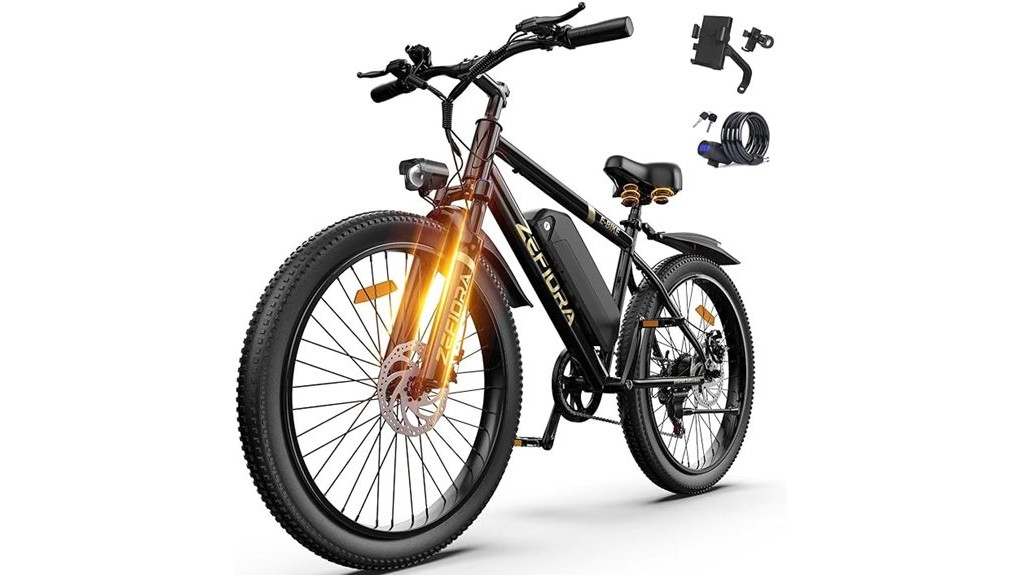

You’ll get a torque-focused 26″ commuter with a 1500W peak rear hub motor and a removable 48V/10Ah (≈480 Wh) battery that’s good for roughly 45 miles in mixed PAS conditions. It uses a 7-speed drivetrain, dual disc brakes, front suspension, and aluminum wheels—basic but repairable components that prioritize value over premium durability. Top speed is capped near 20 MPH and range varies with throttle and load, and more detailed pros, cons, and upgrade options follow.
Some Key Takeaways
- 1500W peak rear-hub motor with 48V/10Ah (480 Wh) removable battery provides strong assist and about 45 miles per pedal-assist in mixed use.
- Top speed is limited to roughly 20 MPH; actual speed and range vary by rider weight, terrain, and assist mode.
- 26″ aluminum wheels, front suspension, and all-terrain tires suit commuting, gravel detours, and light trail use.
- Basic iron-carbon alloy frame and components lower cost but may reduce long-term durability and require more maintenance.
- Comes with practical accessories (charger, phone holder, lock, lights, rack-ready geometry) and a 1-year warranty with 30-day returns.
Quick Verdict: Is the ZEFIORA M10 Worth Buying?
While it won’t replace a lightweight road racer, the ZEFIORA M10 delivers a solid, versatile package for commuters and trail riders who want strong electric assist without premium pricing. You’ll appreciate the 1500W peak motor, 48V/10Ah battery and 7-speed drivetrain balance that favor torque over top-end speed. In a cost comparison with mid-tier e-bikes, the M10 undercuts rivals on initial outlay but uses iron carbon alloy frame and basic components that may affect durability. You should factor long term maintenance—battery replacements, drivetrain wear, suspension servicing—into ownership calculus before buying. Gear up for epic outdoor rides with accessories designed for adult ebikes and riders who enjoy outdoor activities.
What the M10 Offers: Key Specs and Included Accessories
Because you’ll be weighing performance against value, here’s a concise rundown of what the ZEFIORA M10 puts on the table: a 1500W peak rear hub motor paired with a 48V/10Ah (480 Wh) removable lithium battery offering up to about 45 miles per pedal-assist charge; 26″ aluminum wheels shod with all-terrain tires and a front suspension fork for mixed-surface use; a 7-speed chain-driven derailleur with twist-grip shifter for gear range; dual disc brakes, digital display, headlight and adjustable seat for control and comfort; and a package of accessories—charger, two pedals, phone holder, bike bell, bike lock, tool kit and user manual—plus a 1-year warranty and 30-day returns. You’ll appreciate the clear spec sheet and practical accessory bundle; plan routine battery maintenance to retain capacity, and consider accessory upgrades—upgraded grips, stronger lock, or auxiliary lights—if you need tailored utility or security. For riders heading into varied terrain, check battery options and cold-weather care for removable lithium batteries to maintain range and safety.
Real-World Performance: Speed, Range, Comfort, and Handling
Now that you’ve got the spec sheet and accessory list, let’s look at how those numbers translate on the road and trail. You’ll hit the 20 MPH top speed, though top speed consistency depends on rider weight, grade, and assist mode; expect brief drops on climbs. The 480 Wh battery delivers up to ~45 miles in mixed PAS but real range varies with throttle use. Suspension tuning is basic front-fork damping: it soaks bumps but bottoms on big hits. Ride ergonomics favor upright commuting posture with adjustable seat and wide bars. Cornering stability is competent—stable at speed, predictable under lean. For longer adventures consider an ebike range extender to maximize time on trail and flexibility.
Durability, Brakes, and Practical Features for Commuting and Trails
Although the ZEFIORA M10’s iron-carbon alloy frame and aluminum wheels add measurable heft, they also give you a solid platform that resists flex on rough gravel and carries loads for commuting or light touring without noticeable frame creep. You’ll appreciate frame longevity from corrosion-resistant coatings and tube geometry that distributes stress. Dual disc brakes provide predictable stopping power; regular brake maintenance—pad inspection, rotor truing, and cable/hydraulic checks—keeps performance consistent. Commuter practicality comes from integrated lights, fenders, removable battery and rack-ready geometry. Trail adaptability stems from front suspension, 26″ all-terrain tires, and 7-speed gearing for varied gradients. For riders who enjoy outdoor activities, choosing the right ebike kickstand can improve convenience and stability on varied terrain, especially when your bike is rack-ready.
Who Should Buy the M10 : Use Cases, Limitations, and Final Recommendation
The M10’s combination of a stiff iron-carbon alloy frame, front suspension, 26″ all-terrain tires and 1500W peak motor makes it a practical choice if you need a single e-bike to handle mixed duties—daily commuting with cargo, gravel detours, and occasional off-road exploration—while keeping mechanical simplicity and repairability high. You should buy the M10 if you’re an urban explorer who needs rugged 26″ wheels, or a long distance commuter seeking 480 Wh energy and throttle assist for range flexibility. Limitations: 20 MPH cap, 10Ah battery sizing, 7-speed drivetrain for steep touring. Recommendation: strong value for multi-use riders. The M10 is particularly suited to riders who prioritize practicality and outdoor versatility, fitting the needs of step-through ebike riders.
Some Questions Answered
Is Assembly Difficult for One Person Without Professional Help?
Yes — you can assemble it solo, but it’s not fully tool free assembly. You’ll handle frame alignment, wheel and brake setup, and install the removable battery and accessories; those tasks are straightforward if you’re handy. Be precise with torque settings on stem, handlebars, and axle bolts to avoid misalignment or brake rub. Compared to professional assembly, it’s moderately technical but achievable with patience, a basic toolkit, and the included manual.
Can the Battery Be Carried Onto Public Transport or Planes?
No — you can’t gate-check the 48V 10Ah battery on planes; airline restrictions typically forbid lithium batteries over 100 Wh in checked baggage and require airline approval for larger cells. For battery transportability, the M10’s 480 Wh removable pack exceeds most limits, so you’ll be limited to surface transport or special cargo arrangements. On public transit you can usually carry it if local rules allow, but always check specific carrier policies first.
Are Replacement Parts Readily Available From the Manufacturer?
Yes — you can usually get replacement parts directly from the manufacturer; manufacturer availability is reasonable for common items. You’ll find spare sourcing for batteries, chargers, pedals, brakes, derailleurs and displays through Mashite Technology’s channels and authorized dealers. Compare lead times and authenticity: OEM parts guarantee fit and performance, while third-party spares may be cheaper but variable. Keep serial and model info handy to speed technical support and warranty claims.
How Long Does the Removable Battery Take to Fully Recharge?
The removable 48V 10Ah battery typically takes about 4–6 hours to fully recharge with the standard charger. You’ll see longer lifespan if you avoid full deep discharges; battery lifespan depends on charge cycles and care. For faster top-ups you can use compatible fast chargers but check charging safety and manufacturer specs to avoid overheating. Compare cycle ratings and charger output to balance charge speed against long-term degradation.
Is There Smartphone App Connectivity or Bluetooth Features?
No — the M10 doesn’t offer Bluetooth pairing or App integration as a primary feature. You’ll rely on the digital display, wired controls, and physical switches for speed, PAS, and throttle feedback. Compared to e-bikes with companion apps, you won’t get telemetry logging, firmware updates, or remote motor diagnostics. For technical customization or ride analytics, you’ll need third-party sensors or aftermarket Bluetooth modules that interface with the bike’s electrical system.