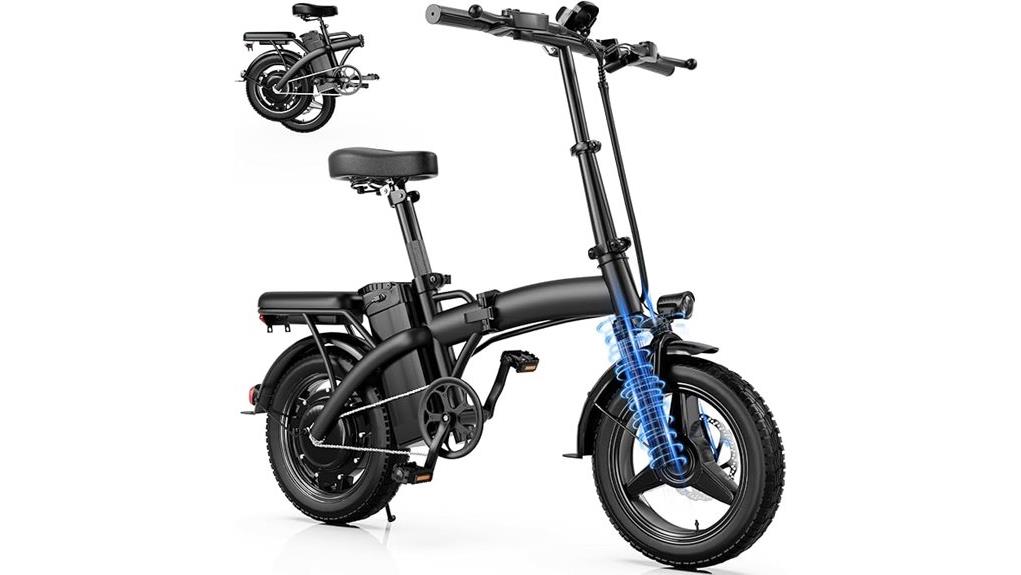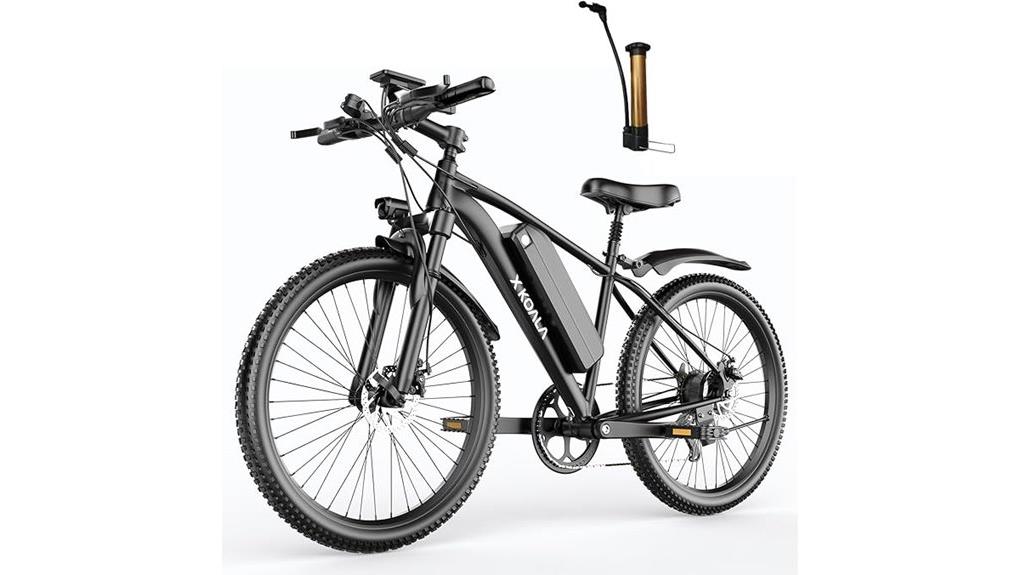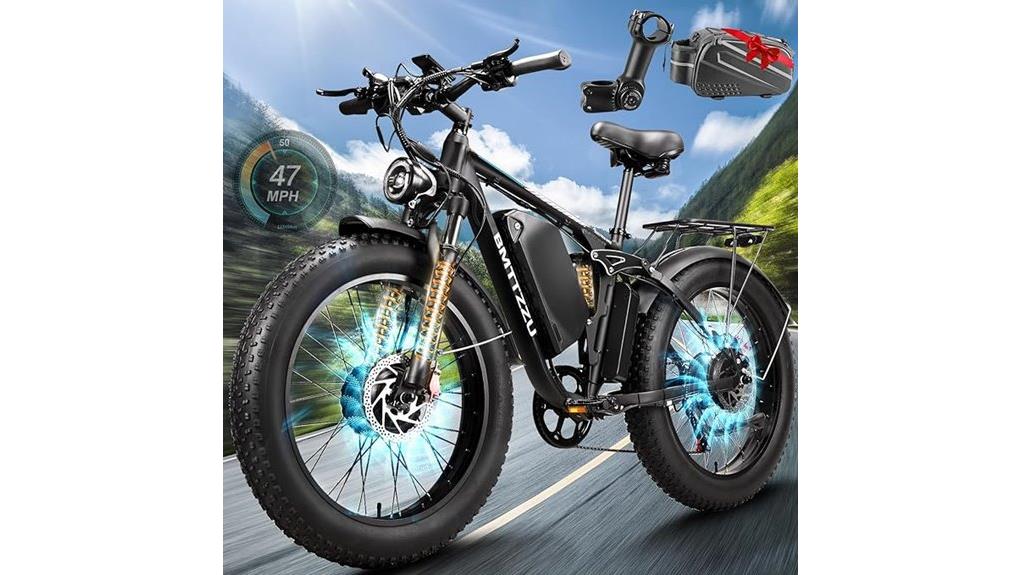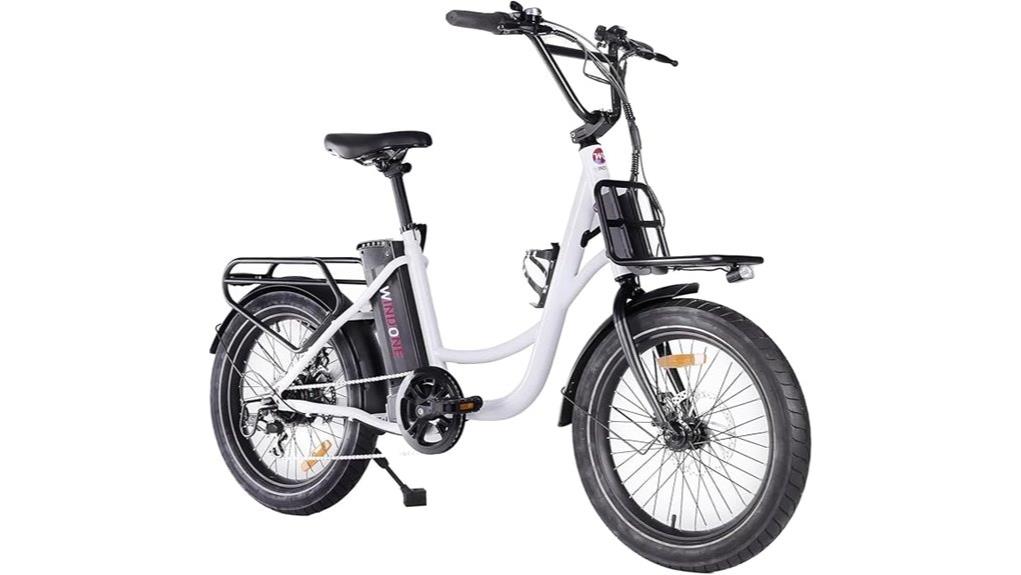
You’ll find the Windone E20/K2 is a compact, commuter-focused step-thru e-bike that’s easy to ride and reliable for short urban trips. It uses a 350W (500W peak) hub motor and a 374Wh removable battery, giving about 17–20 mph and roughly 23–40 miles depending on how much you pedal. It’s stable, comfy with wide tires, and practical for errands, though hill power and range are modest. Keep going and you’ll get full specs, test notes, and buying advice.
Some Key Takeaways
- Compact step-thru commuter e-bike with a 350W (500W peak) hub motor and 374Wh removable battery.
- Top speed ~17 mph on throttle, up to 20 mph with pedal assist; predictable, consistent flat-road performance.
- Real-world range about 23 miles throttle-only and up to 40 miles with pedal assist, recharge ~6 hours.
- Comfortable, stable ride thanks to 20×3.4" tires, supportive saddle, adjustable fit, and practical racks/lights.
- Best for urban commuting and short adventures; limited hill power and modest pure-electric range compared to heavier class e-bikes.
What the Windone E20/K2 Actually Is and Who It’s For
Think of the Windone E20/K2 as a compact, commuter-focused electric step‑thru built for short to medium urban trips: it pairs a 350W nominal (500W peak) motor and 374Wh removable battery with 20" × 3.4" tires, front and rear racks, and an ergonomic adjustable setup to prioritize stability, ease of use, and versatility. You’ll find it commuter friendly: it’s designed for predictable, efficient rides, easy mounting, and practical cargo options. As a city explorer you’ll appreciate nimble handling, integrated lights, and simple controls that let you move freely through traffic and short commutes without fuss or excess complexity. It’s a great match for riders who enjoy outdoor activities and want practical gear for everyday urban ebike use.
Key Specs at a Glance: Motor, Battery, Range, Weight, and Payload
Here’s a quick technical snapshot so you can judge whether the E20/K2 fits your needs: it pairs a 350W nominal (500W peak) hub motor with a removable 36V 10.4Ah (374.4Wh) battery, giving a pure-electric top speed of 17 MPH and pedal‑assist up to 20 MPH; expected range is about 23 miles on throttle-only rides and up to 40 miles with pedal assist, the battery recharging in roughly six hours. You get a 62 lb step‑thru frame rated for 265 lb payload, 20×3.4" tires, Shimano 7‑speed, and disc brakes. Battery management and simple tech maintenance keep it reliable for commuter compatibility and family transport. For riders who take their e‑bikes on longer outings, a portable backup charger can extend rides and support outdoor adventure use.
Real-World Performance: Speed, Hill Climbing, and Range Tested
When you ride the Windone E20/K2 in everyday conditions, its 350W nominal (500W peak) motor reliably hits the listed speeds: expect about 17 mph on throttle-only runs and up to 20 mph with pedal assist on flat ground. In top speed testing you’ll see those numbers repeatedly; the display tracks consistency. Climbing, the bike handles hill repeats up to its rated 20° with steady torque feel, though cadence and shifting matter on sustained slopes. Real world range matched expectations: about 23 miles pure electric, up to 40 miles with assist depending on load and riding style. If you like combining on- and off-road riding, consider hybrid eBikes for their versatility and outdoor adventure flexibility.
Ride Comfort, Controls, Safety, and Daily Usability
Although the E20/K2 is compact, its combination of wide 3.4" tires, adjustable seat and handlebar angle, and step-thru frame delivers a stable, comfortable ride for short to medium trips. You’ll notice supportive seat cushioning and a forgiving tire profile that smooths urban bumps. Controls are logical: Shimano 7-speed shifting, clear LED readout, and straightforward throttle plus pedal-assist modes. Throttle responsiveness feels immediate but predictable, aiding confident starts. Integrated lights, reliable disc brakes, and UL 2849 safety testing boost everyday reliability. With front/rear racks and a removable battery, the bike fits commuting, errands, and spontaneous escapes with minimal fuss. For riders who want to Keep Your E‑Bike Dry, adding appropriate fenders and accessories can make outdoor rides more enjoyable and preserve components ebike fenders.
Should You Buy It? Use Cases, Pros vs. Cons, and Buying Advice
After feeling how the E20/K2 handles comfort, controls, and day-to-day safety, you can judge whether its size, power, and features match your riding needs. If you crave freedom on urban routes, commuter suitability is strong: step-thru frame, 20" fat tires, integrated lights, racks, and a 20 MPH assist make commutes easy. Cargo adaptability is decent for groceries or small loads with front and rear racks but limited by 265 lb capacity and 62 lb curb weight. Pros: reliable motor, removable battery, quick assembly. Cons: limited hill power versus heavier e-bikes, modest pure-electric range. Buy if you prioritize practical urban mobility. The bike is well-suited to riders who want to gear up for outdoor adventures while keeping daily commuting practical.
Some Questions Answered
Can I Use a Different Battery Size or Aftermarket Pack?
You can use an aftermarket pack, but you’ll need to confirm battery compatibility with voltage, connector type, and BMS settings. Mismatched cells or wiring can void warranty and introduce safety risks like overheating, fire, or damage to the motor and controller. Choose a reputable supplier, match 36V nominal (374.4Wh) specs, make certain proper mounting and UL certification where possible, and consider professional installation to preserve performance and reduce legal or safety liabilities.
Is the Bike Compatible With Child Seats or Trailer Hitches?
Yes — you can fit many child seat options and basic trailer hitching options, but check specifics. The step-thru frame, rear rack, and 265 lb load limit make rear-mounted child seat compatibility likely for smaller kids; confirm weight and mounting hardware. For trailers, use a frame-mounted hitch or rack-mounted adapter rated for e-bike use. Prioritize UL-tested accessories, verify hub/axle clearance, and keep total load within limits for safe handling.
What Maintenance Schedule and Costs Should I Expect Yearly?
Expect modest yearly costs: plan two annual tuneups ($80–$150 each), tire rotations and replacements ($30–$80), battery conditioning and inspection ($20–$60), and brake bleeding once yearly ($40–$80). You’ll also budget for chain, cables, pads, and incidental parts ($50–$150). Total annual maintenance typically runs $220–$520 depending on DIY vs shop service, riding frequency, and desire for reliable, free-roaming performance.
Are Replacement Parts and Service Centers Widely Available?
Yes — replacement parts and service are moderately available. You’ll find local dealers who stock batteries, tires, brakes and common consumables, and they’ll handle warranty work. For specialized issues, you can use third party repairs; independent e-bike mechanics and online parts sellers cover motors, displays and drivetrain pieces. Expect some wait for proprietary components, but routine maintenance and most replacements are accessible, keeping you independent and riding.
Does the Bike Come With a Warranty and What's Covered?
Yes — you get a limited warranty; the warranty duration typically covers the frame and electrical components for a set period (confirm with seller). It covers manufacturing defects and faulty components but excludes wear-and-tear items, misuse, crash damage, unauthorized repairs, and batteries beyond specified capacity loss. You should register the bike, keep receipts, and verify exact terms and coverage exclusions before relying on it for long-distance freedom and peace of mind.