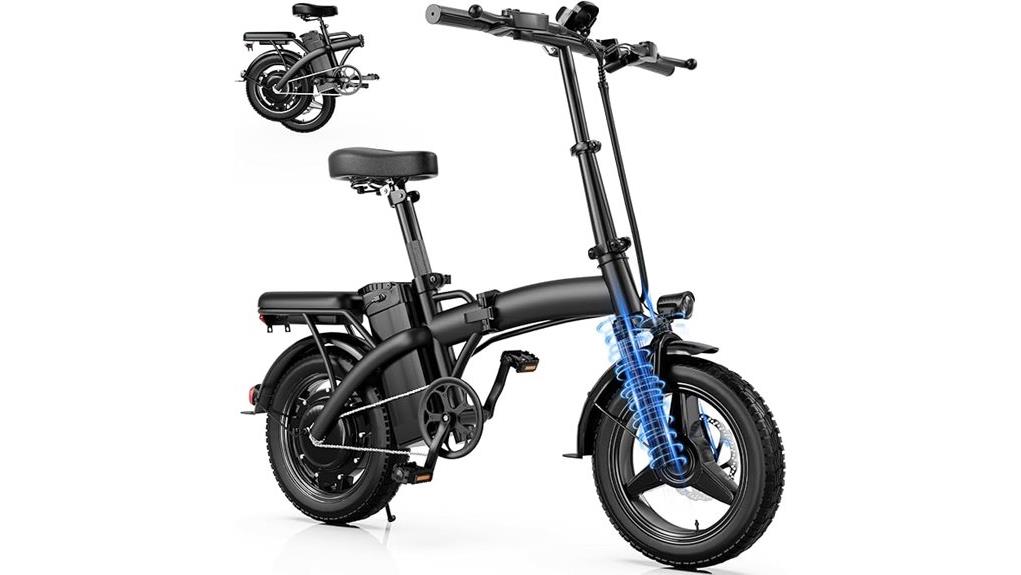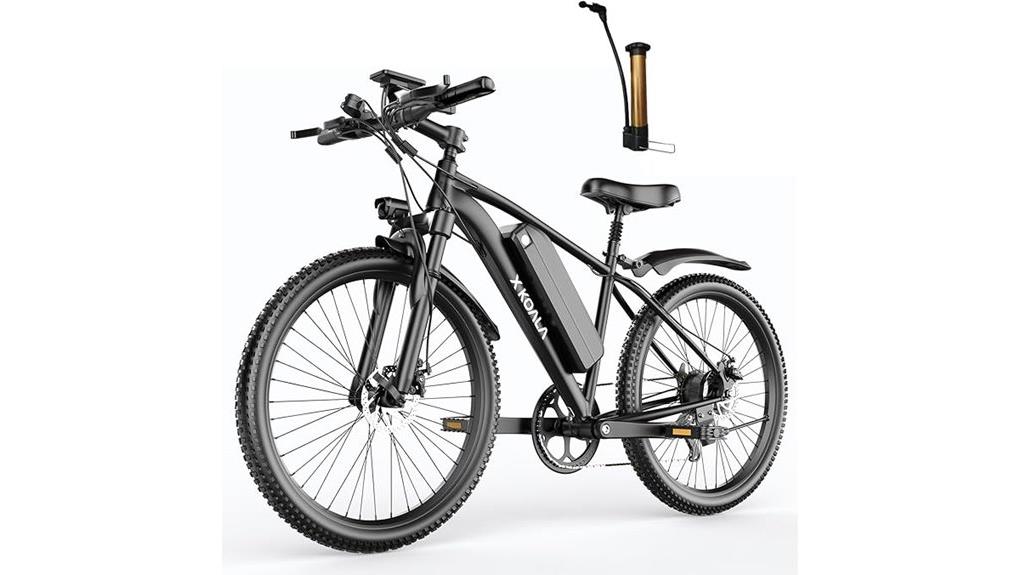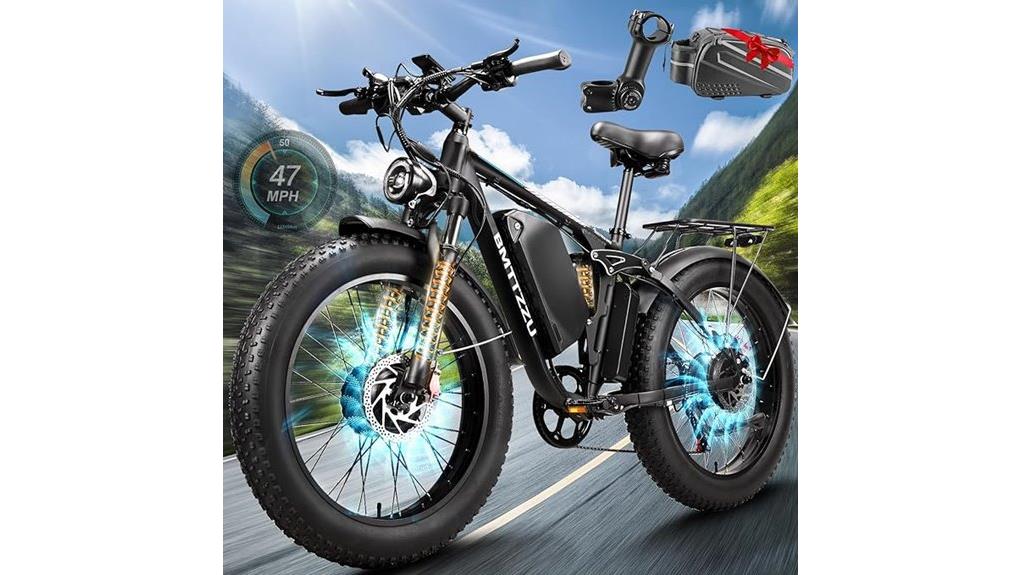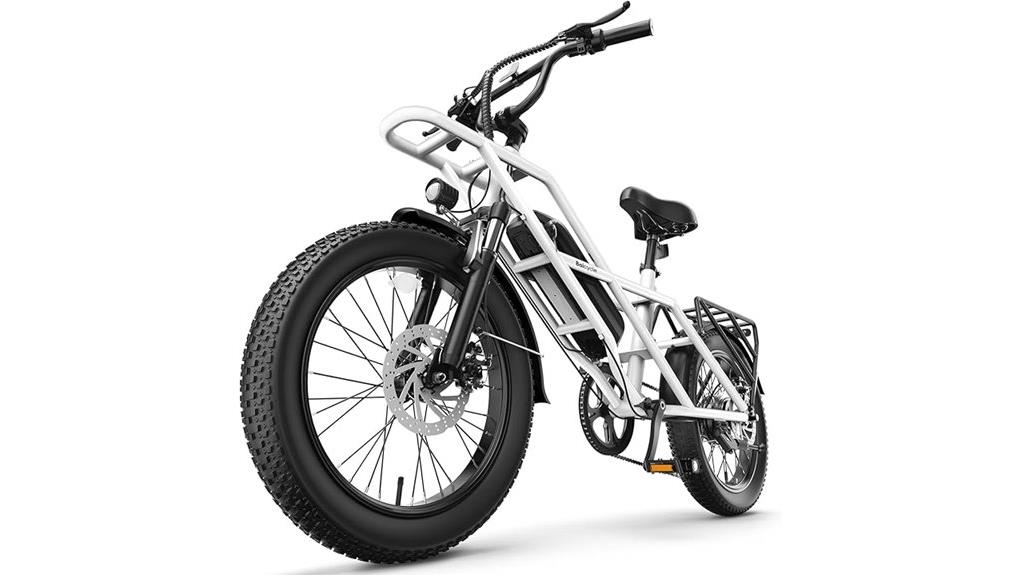
You’ll get brisk acceleration and serious hill‑climbing torque from a 1500W peak (750W rated) hub motor paired with 20″ x 3.0″ fat tires and a 48V 13Ah (624Wh) battery. Expect steady throttle response, usable bursts off‑road, and confident flotation on sand or snow, but a 32 kg curb weight trades portability for planted stability. Real range is 30–60 miles in mixed use; 90 miles is optimistic. Keep an eye on pads, chain, and battery care to extend life — more specifics follow.
Some Key Takeaways
- 1500W peak (750W continuous) hub motors deliver strong acceleration and steady torque, good for flats, climbs, and off-road bursts.
- 20″ x 3.0″ fat tires plus progressive suspension provide flotation, traction, and a comfortable ride on sand, snow, and rough gravel.
- A 48V 13Ah (624Wh) battery typically yields 30–60 miles mixed use; 90 miles is only possible under ideal low-assist conditions.
- 32 kg curb weight and 265 lb load capacity favor stability and cargo use but reduce portability and easy lifting.
- IP54 splash protection, 180 mm disc brakes, and routine maintenance needs (pads, chain) are important for durability and safe long descents.
Performance and Power in Real Life: How a 1500W Peak (750W Rated) Hub Motor Rides on Flats, Hills, and Off‑Road
Feel the immediate surge when you twist the throttle: the 750W continuous / 1500W peak hub motor delivers brisk acceleration on flats, getting you up to the advertised ~28 MPH without straining. You notice crisp throttle response and steady torque delivery as you roll onto open pavement, holding speed with minimal pedal input. On steep pitches the motor sustains power, helping you climb slopes near its limit while you manage cadence and gears. Off-road, the fat tires and suspension absorb chatter; the motor tucks into the ride, offering usable bursts rather than overwhelming surges, keeping control intuitive and freeing. For riders who enjoy outdoor activities, choosing the right hub motor involves matching motor power and bike components to your intended terrain and riding style, emphasizing ebike motors as a key consideration.
Battery, Range, and Charging: What 48V 13Ah (624Wh) Means for the Promised “Up to 90 Miles” and Real‑World Expectations
Look past the headline “up to 90 miles” and you’ll see that a 48V, 13Ah (624Wh) battery only tells part of the story — it defines energy capacity but not how that energy gets used. You’ll rely on range modeling to estimate real miles: assist level, speed, terrain, rider weight, and wind matter. Expect 30–60 miles in mixed use; 90 is optimistic on low assist and ideal conditions. Follow charging etiquette—regular top-offs, avoid full deep-discharge—and you’ll extend battery longevity. Remember cold performance drops usable capacity; plan routes and charging stops to preserve freedom and avoid stranded rides. If you want longer adventures, consider an add‑on range extender to boost usable capacity and flexibility.
Ride, Handling, and Comfort: 20″ X 3.0″ Fat Tires, Suspension Fork, Frame Fit, Weight, and Their Effects on Stability and Portability
With 20″ x 3.0″ fat tires and a six-layer progressive-damping fork, this bike prioritizes stability and comfort over nimble portability—you’ll get plush, confidence-inspiring traction on sand, snow, and rough gravel, and the wide contact patch smooths small bumps that would ping thinner tires. You’ll notice tire flotation that lets you float over soft surfaces, reducing effort and boosting range in practice. The medium step-thru frame and 32 kg weight favor planted handling but limit easy lifting; boarding convenience is decent thanks to low step-in and adjustable seatpost. Overall, it rewards adventurous riders seeking steadiness. This setup is ideal for riders who enjoy outdoor activities and want reliable performance with fat eBike tires.
Safety, Durability, and Maintenance: Brakes, Waterproofing (IP54), Load Limits, Common Wear Points, and Basic Upkeep Costs
Don’t underestimate stopping power—those 180 mm stainless-steel disc brakes give you strong, predictable deceleration but they’ll need regular attention because the bike’s 32 kg mass and fat tires increase braking loads. You should monitor for brake fade on long descents and perform load testing to confirm the 265 lb limit feels stable. IP54 waterproofing protects electronics from splashes, not submersion, so corrosion protection on connectors and frame is essential. Track wear tracking for tires, pads, and drivetrain; expect routine pad and chain servicing. Basic upkeep costs are modest: pads, chain, and occasional cable or seal replacement. For riders who enjoy outdoor activities, choosing the right ebike brake pads helps ensure reliable stopping performance and longer component life.
Who Should Buy This Bike and How to Choose: Ideal Riders, Use Cases (Commute, Snow, Beach, Gravel), and a Comparison Checklist
Although it handles rough terrain and heavy loads, this bike is best for riders who need rugged versatility rather than pure speed or ultralight portability. You should buy it if you value range, torque, and stability: urban explorers who tackle mixed surfaces, commuters facing snow or sand, and families planning beach trips or family outings will appreciate the 1500W peak motor, 3.0″ fat tires, and 90‑mile potential. Choose it for hill climbing, cargo capacity (265 lb), and step‑thru access. Comparison checklist: motor power, battery range, weight, load limit, tire type, suspension, brakes, charge time, waterproofing, and warranty. This bike pairs especially well with fat tire accessories designed for outdoor riders.
Some Questions Answered
Can I Legally Ride This 750w/1500w Bike in My State or Country?
Maybe — it depends on your jurisdiction. You’ll need to check local power limits and license classification: many places cap e-bike motors at 750W (or lower) and restrict speeds for unlicensed use, while others treat 1500W peak as a motor vehicle needing registration, insurance, or a driver’s license. You should confirm state/country statutes, classify the bike under applicable power limits, and contact local DMV or transport authority before riding legally.
How Easy Is Removing and Swapping the 48V Battery for Extended Trips?
You’ll find the 48V battery fairly easy to remove and swap for extended trips. Release, lift out the removable pack, and replace it quickly — it’s a true quick swap. You can stow spares in travel cases and use the included tool kit for any latch tweaks. Plan charging stops along your route; with 5–6 hour charges, swapping batteries keeps you moving and maximizes your freedom to explore.
Are Replacement Parts (Motor, Battery, Controller) Readily Available?
Yes — you can usually source motor availability, batteries and controllers, but options vary. You’ll find the 750W/1500W hub motor and 48V battery from the maker or aftermarket suppliers; check specs first. Confirm controller compatibility with the motor and display before buying replacements to avoid mismatches. You’ll want OEM parts for plug-and-play freedom, but trusted third-party components can broaden choices if you verify connectors, firmware and mounting dimensions.
What Accessories Fit the Step‑Thru Frame (Racks, Child Seats, Fenders)?
Yes — you can fit a rear rack, child seat, front rack, and frame bag on the step‑thru frame, but choose mounting points carefully. You’ll want a sturdy rear rack rated for 265 lb limit, a child seat compatible with step‑thru low standover and seatpost mounts, and a compact front rack that clamps to fork or headset. Use a slim frame bag that hugs the triangle and avoid overstressing bolts to keep riding free and safe.
How Loud Is the Hub Motor Under Heavy Load or at Top Speed?
You’ll hear moderate motor noise at full throttle and some vibration feedback under heavy load. The 1500W peak hub emits a low whine that rises with speed, not a harsh grind, and you’ll feel steady vibration through the frame and handlebars when climbing steep grades. It’s noticeable but not intrusive — you can still enjoy open-road freedom while expecting occasional drone during extended high-speed or steep-load riding.