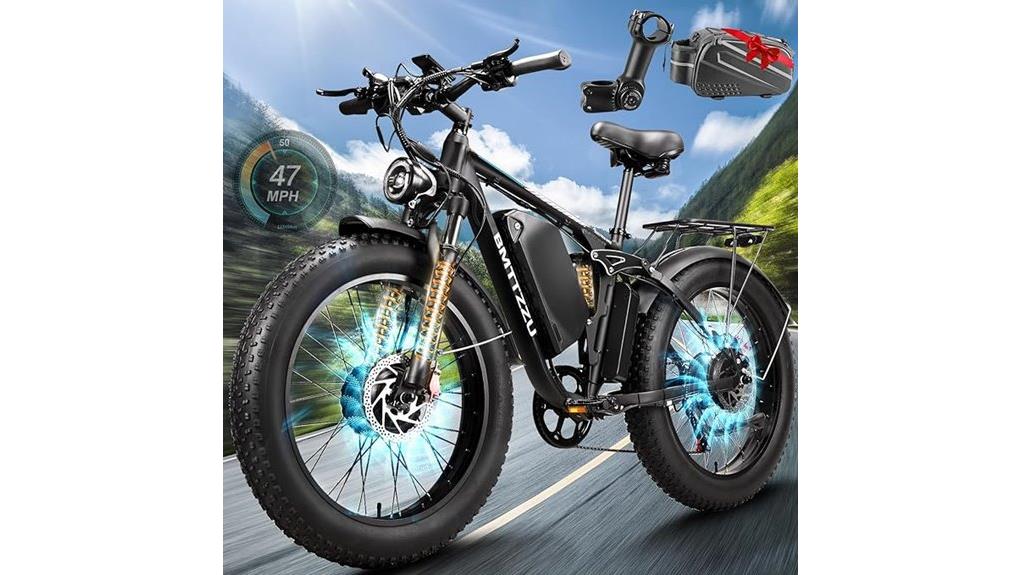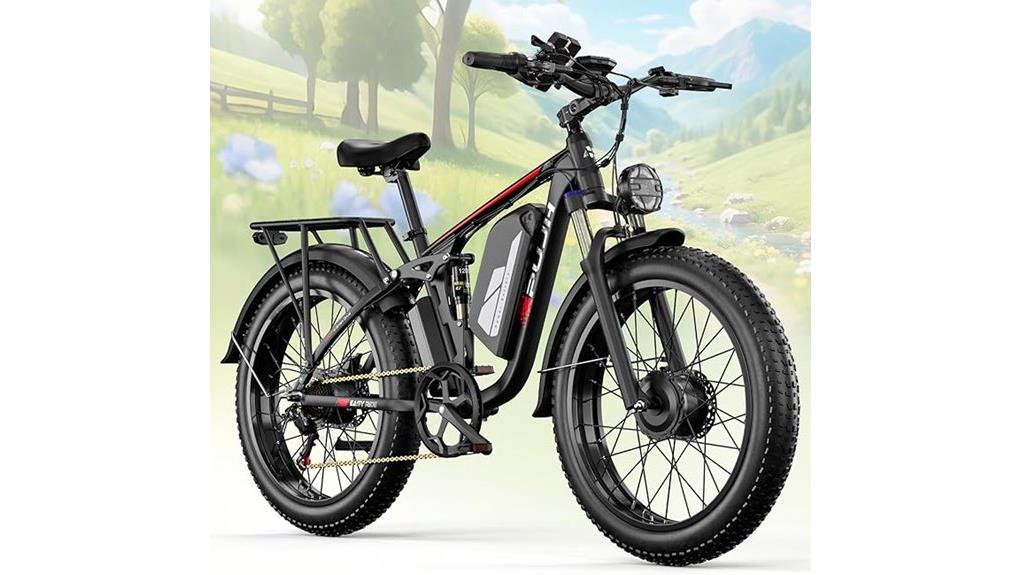
You get blistering acceleration from a 6000W dual‑brushless setup and about 200 Nm peak torque across two motors, so launches and hill climbs beat single‑motor bikes. A removable 60V/1200Wh pack stores 1,200 Wh and yields roughly 35–110 miles depending on mode, load, and terrain, with heavy dual‑motor use toward the low end. The 6061 aluminum frame, full suspension, fat tires, and hydraulic brakes support 330 lb, and more specifics follow below.
Some Key Takeaways
- 6000W dual‑brushless motors deliver instant acceleration and strong throttle response, ideal for rapid launches and heavy loads.
- Peak combined torque ~200 Nm improves hill‑climbing and launch times versus single‑motor setups.
- Removable 60V/1200Wh battery yields 35–110 miles range depending on mode, load, and terrain.
- Full suspension, 24×4.0″ fat tires, and dual hydraulic brakes provide comfort, traction, and progressive stopping under load.
- Tradeoffs include 82.7 lb curb weight, more complex maintenance, and limited consumable warranty.
Real-World Performance: Acceleration, Hill Climb, and Top Speed on a 6000W Dual-Motor E‑Bike
Expect brisk, immediate acceleration from a 6000W dual-brushless setup: with 200 Nm peak torque available across two motors you’ll feel strong throttle response and rapid speed gains from a stop, especially in dual‑motor full‑throttle mode. You’ll compare launch times favorably to single‑motor units, and hill‑climb capability improves under load and with a rider or cargo. Top speed depends on mode selection and gearing; constant‑speed mode smooths outputs. Consider street legality when selecting power settings and wheels. Acoustic output remains low compared with combustion counterparts; the noise signature is muted, aiding stealthy, liberating rides. These bikes are a great fit for compact e-bike riders who want powerful performance without sacrificing portability.
Battery, Range, and Charging: What 60V/1200Wh Means in Practice
Dig into the 60V/1200Wh battery and you’ll find a clearly defined energy budget: at 60 volts and 20 amp-hours the pack stores 1,200 watt‑hours, which sets the ceiling for how much work the motors and electronics can deliver before recharging. You can expect 35–110 miles depending on mode, load, and terrain; dual-motor heavy use pushes range to the low end. The removable lithium-ion pack’s battery chemistry affects weight, cycle life, and discharge rates. Charge with the supplied charger, follow charging safety guidelines, and compare charge times and cell quality when evaluating alternatives for longer independence. For reliable outdoor adventures, prioritize battery care and storage to keep your pack performing at its best and extend its service life by following best charging practices.
Ride Quality and Build: Frame, Suspension, Tires, Brakes, and Carrying Capacity
How does the bike translate its hardware into ride quality? You feel a rigid 6061 aluminum frame with quality paint finish and corrosion resistance treating rough terrain predictably. Full seven-level suspension—dual front forks, single rear shock, dual seat springs—delivers tunable compliance; compare firm touring setups to softer trail bikes. 24×4.0″ fat tires on aluminum wheels provide flotation and traction across sand, snow, and mud while adding rotational mass. Dual hydraulic brakes stop progressively under load and speed. Integrated mounting points and cargo compatibility let you carry up to the 330 lb rated capacity without compromising geometry or handling. Fat eBike tires improve off-road traction and floatation for outdoor riders, enhancing stability on loose surfaces and variable conditions fat eBike tires.
Controls, Safety, and Daily Use: Displays, Lights, Modes, and Rider Ergonomics
Generally, you’ll find the cockpit organized for functional control and situational awareness: a colorful LED display presents speed and odometer readouts while a twist throttle, 7-speed trigger shifter, and clearly labeled mode selector give immediate access to six drive modes (single- or dual-motor full throttle, pedal-assist, regular pedaling with the derailleur, walking assist, and constant-speed). You’ll appreciate precise handlebar ergonomics — adjustable stem and grips reduce fatigue and improve leverage during climbs. Display customization lets you prioritize range or power metrics. Integrated 9W headlight, brake taillight with turn signals, horn, USB port, and dual hydraulic brakes balance safety with daily utility. For riders who enjoy outdoor activities, consider upgrading to brighter, more durable lighting options like ebike lights to improve visibility and reliability on trails and at night.
Pros, Cons, and Who Should Buy This 6000W Dual-Motor E‑Bike
With the cockpit, lighting, and mode selection covered, we can now assess where this 6000W dual-motor e‑bike excels and where it compromises to help you decide if it fits your needs. You get extreme acceleration, 200 Nm torque for climbs and hauling, full-suspension comfort, fat tires for varied terrain, hydraulic brakes, and removable 1,200 Wh battery — ideal if you value range and freedom. Tradeoffs: 82.7 lb curb weight, complex maintenance schedule, and limited warranty on consumables. Choose this if you need high-speed cargo options, heavy-load capability, and robust off-road performance; otherwise pick lighter alternatives. Consider also carrying essential protective gear and tools for trail rides, including helmet fit.
Some Questions Answered
How Loud Are the Dual Brushless Motors Under Full Throttle?
You’ll hear a noticeable audible pitch under full throttle, louder than single-motor ebikes but quieter than small gas engines. Vibration level is moderate — you’ll feel some buzz through the frame and handlebars at peak power, lessened by the full suspension and fat tires. Compared to similar dual-motor setups it’s typical: high-frequency motor whine with measurable harmonic vibration, but still within acceptable comfort for riders seeking speed and freedom.
Can I Legally Ride This 6000W E‑Bike on Public Roads Near Me?
Probably not — you’ll likely exceed local e-bike limits. You should check registration requirements and helmet laws where you ride because a 6000W dual‑motor bike usually classifies as a motor vehicle, not an e-bike. Compared to class‑1/2/3 e-bikes, it has far higher power and speed, so it may need plate, insurance, or be banned from bike lanes. You’ll want to verify state and municipal rules before riding publicly.
How Difficult Is Removing and Transporting the 60V Battery?
It’s moderately easy: you’ll remove the 60V battery using the lockable mount and lift it by the carry handles, but weight concerns matter — the pack is heavy (~20Ah/1,200Wh) so two-person handling is safer for stairs. Compared to integrated packs it’s more portable and charges off‑bike, yet bulk and mass limit single-handed long carries. You’ll want secure grip, a routine for locking/unlocking, and a firm stance when transporting.
Are Replacement Batteries and Motor Parts Readily Available?
Yes — you can usually source replacement batteries and motor parts, but availability varies. You’ll find OEM options from the manufacturer and battery aftermarket choices; third party compatibility depends on voltage (60V), connector types, and physical dimensions. Compare capacity (1,200 Wh), BMS specs, and motor controllers before buying. You’ll want to verify warranty implications, mounting fit, and certification to retain performance and freedom to swap components confidently.
Does the Bike Qualify for Insurance or Financing Options?
Yes — you can often get insurance eligibility and financing options for this bike, but coverage and terms vary. Compare quotes: some insurers treat high-power e-bikes like mopeds, requiring specific policies; others add a rider to your home or specialty e-bike plan. For financing options, dealerships and third-party lenders offer loans or installments; check APR, term length, and battery/motor exclusions to secure freedom on the road without surprise liabilities.