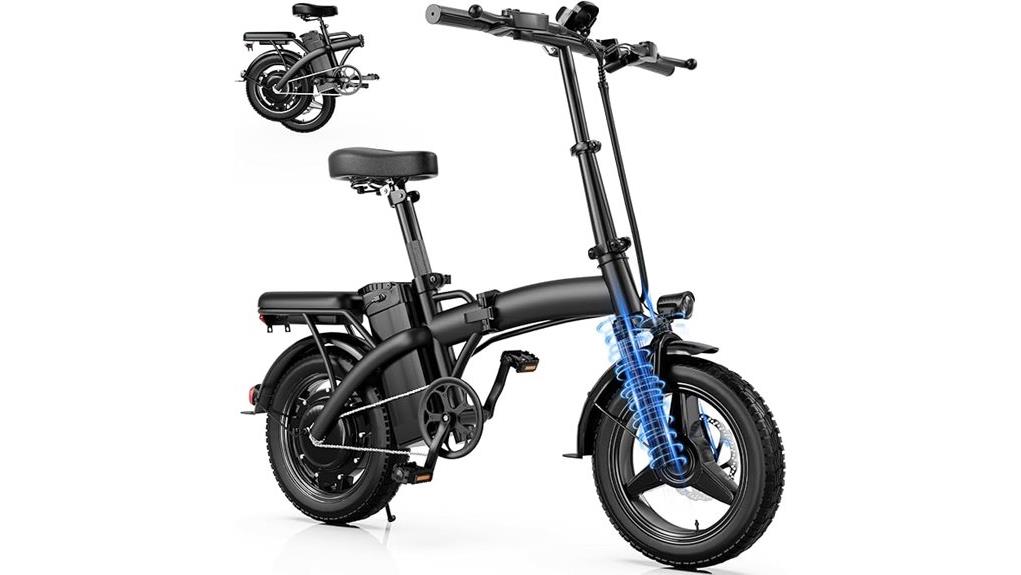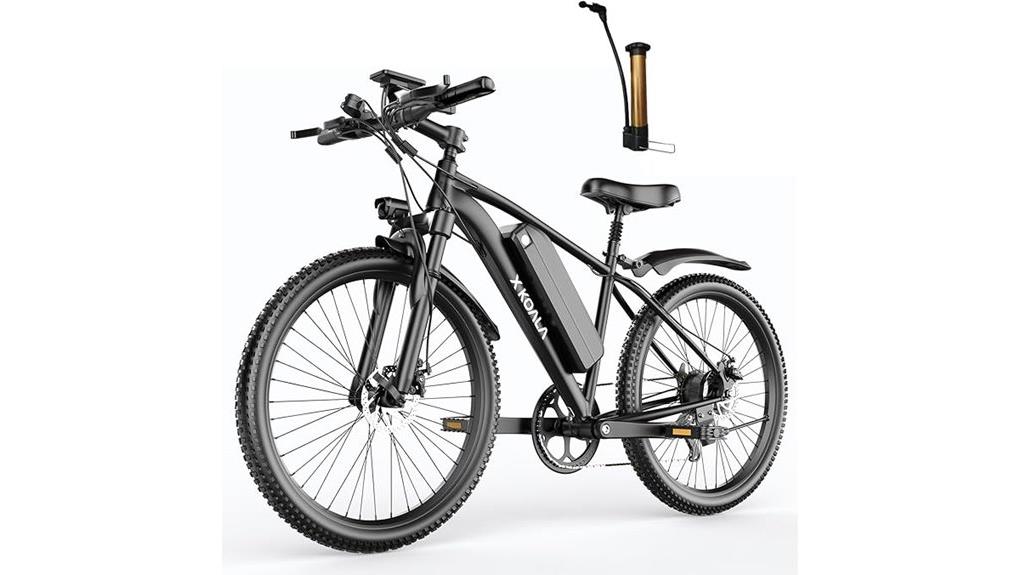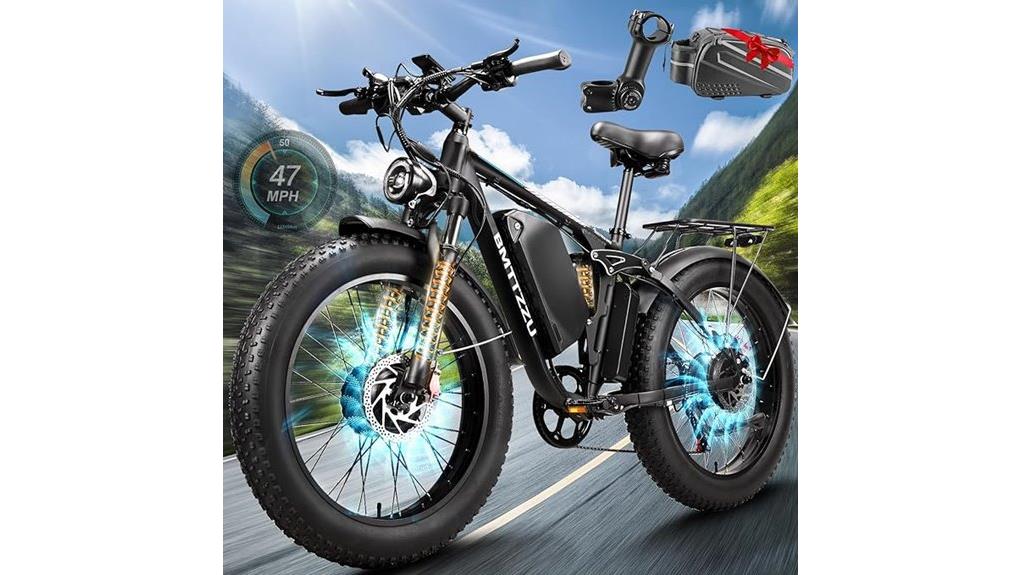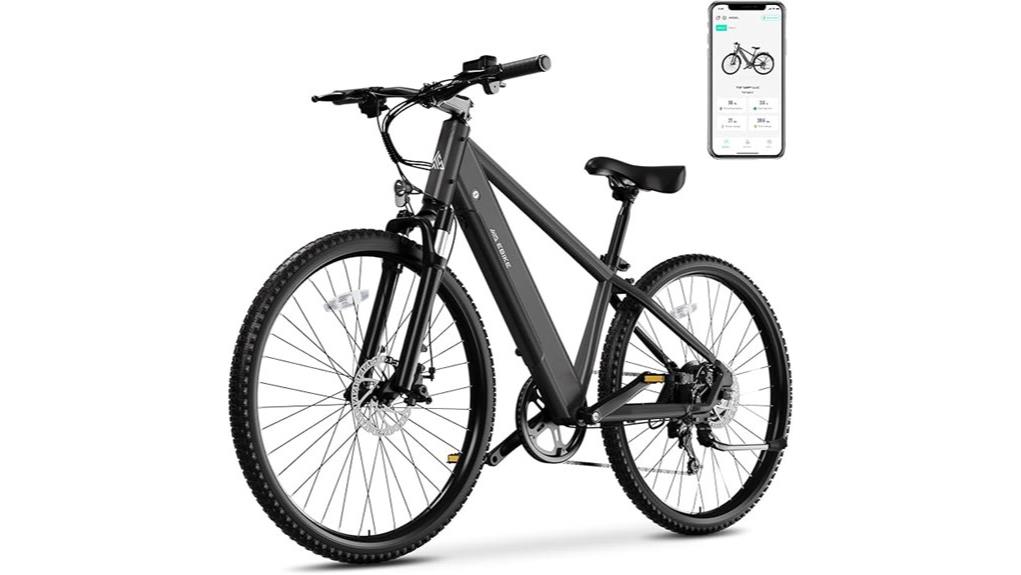
The TST “1000W” e-bike is a practical, affordable choice if you want a stable commuter and light off-road ride; its hub motor feels closer to 500W continuous (750W peak) with brisk initial torque but can thermally throttle under sustained load. You’ll get a removable 36V/360Wh battery with about 40–50 miles in mixed use, 26″ wheels, front suspension, mechanical discs and a 400 lb load rating. Keep local rules in mind, and continue for detailed performance, battery and handling notes.
Some Key Takeaways
- Marketed as 1000W but uses a hub motor rated ~500W continuous and 750W peak, so real-world power is lower.
- Removable 36V 360Wh battery claims 40–50 mile range depending on assist level, rider weight, and terrain.
- Solid aluminum frame, 26″ wheels, and front suspension deliver stable, commuter-friendly handling and light off-road comfort.
- Brisk initial torque with smooth assist, but sustained heavy loads can cause thermal throttling and reduced acceleration.
- Practical features include 7-speed gears, mechanical disc brakes, one-year warranty, and recommendation to add a rear rack for cargo.
Quick Verdict: Is the TST 1000W Electric Bike Worth Buying?
In short, if you want a versatile, relatively affordable e-bike that handles commutes, weekend trips, and light off-road riding, the TST 1000W is worth considering. You’ll get a solid aluminum frame, 26″ wheels, 36V removable battery, and multiple assist modes that extend range up to manufacturer claims of 40–50 miles. Evaluate pricing concerns against included kit, near-complete assembly, and one-year warranty. Check legal compliance for local speed and power limits before riding. If you prize freedom and practical performance over premium refinement, this model offers a balanced, utilitarian choice. This model is aimed at adult riders who enjoy outdoor activities and practical transportation, making it a good fit for ebike riders.
Real-World Motor and Performance: How the 500W Continuous / 750W Peak Hub Feels Versus a “1000W” Claim
You noted the TST 1000W’s practical strengths; now let’s look at what that “1000W” badge actually means on the road. You’ll feel a hub motor tuned for 500W continuous and 750W peak: initial torque is brisk, motor feel is direct without the surge you’d expect from a true 1000W unit. Power delivery stays smooth in assist modes, aiding climbs and overtakes, but sustained high loads can trigger thermal throttling that blunts acceleration. That tuning balances efficiency and durability; it won’t deceive you about speed limits, and it gives predictable real world range performance for riders seeking liberated, reliable travel. For riders who tinker, replacing or upgrading controllers can unlock different power curves and features like regen or custom torque sensing motor controllers.
Battery, Range, and Charging: What to Expect From the 36V / 360WH Removable Pack
Because the TST’s removable 36 V, 360 Wh battery packs a moderate energy density for an adult commuter e-bike, you’ll get a predictable mix of range and charge time: expect manufacturer-quoted ranges of up to 40–50 miles depending on assistance level, rider weight, terrain, and throttle use, with a full charge taking about 5–6 hours. You’ll appreciate the removable design for off-bike charging and storage. Evaluate battery chemistry claims (likely lithium-ion) for lifecycle and protections like over-charge and temperature cutoffs. Practice sensible charging etiquette: avoid deep discharges, top up after long rides, and store partially charged in cool conditions to maximize lifespan. For riders who take their bikes into nature, consider accessories and maintenance tips tailored to outdoor adventures to keep the battery performing reliably.
Ride Quality and Build: Frame, Suspension, Wheels, Brakes, and Cargo/Weight Limits
Assess how the TST’s build and hardware translate to real-world ride quality by looking at frame, suspension, wheels, brakes, and load capacity. You get a lightweight aluminum frame with good frame stiffness that feels stable under power and when cornering. The front suspension fork smooths bumps; sensible suspension tuning favors comfort over aggressive trail play. 26-inch puncture-resistant tires balance traction and roll efficiency. Mechanical disc brakes deliver predictable stopping force, though modulation is basic. A 400-pound max load rating supports cargo and riders, keeping handling composed when loaded. Overall, the setup suits riders seeking reliable, liberating mobility. Built tough racks designed for heavy-duty ebike hauling complement this build and expand practical utility.
Who Should Buy This Bike and Practical Alternatives at Similar Price Points
While the TST Electric Bike 1000W won’t suit every rider, it fits people who want a stable, versatile e-bike for commuting, light off-road use, and hauling moderate cargo without a steep learning curve. You’ll appreciate commuter suitability—26″ wheels, 7-speed gears, and a 25 mph top speed make daily trips practical. If you value freedom but worry about cargo capacity or maintenance costs, note the 400 lb limit and basic mechanical discs keep servicing simple. Check local laws for speed and power limits before buying. Alternatives at similar prices include mid-drive commuter models and cargo-focused fat-tire e-bikes. Consider pairing the bike with a compatible rear rack to improve its hauling capability.
Some Questions Answered
Does the Bike Come With a Throttle Lock or Cruise Control?
No — it doesn’t include a dedicated throttle lock or formal cruise control. You’ll find throttle options including pure electric (throttle) and several cruise settings via speed-sensor assisted modes that sustain pace when you hold throttle or pedal; however, there’s no advertised timed cruise feature. You can rely on the pedelec assist and steady assist mode for sustained riding, but don’t expect an automated lock/cruise system for long, hands-off cruising.
Is the Battery Tsa/Airline Transport Compliant?
No — you can’t freely take the battery on flights as-is. The 36 V, 360 Wh battery exceeds many airline rules for carry-on without airline approval; battery capacity matters. You’ll need to check airline rules, follow shipping restrictions, and meet packaging requirements for lithium-ion cells. If you must transport it, contact the carrier, get written approval, and use approved packaging and labels; otherwise arrange ground shipping that complies with regulations.
Are Lights (Head/Tail) Included or Pre-Wired?
No — lighting included isn’t standard; the bike doesn’t come with head/tail lights installed. You’ll need to add lights unless your specific seller package lists them. Wiring status: basic electricals support the removable 36V battery and display, but dedicated pre-wired light connectors aren’t guaranteed. You’ll want to inspect the harness or request pre-wiring from the seller so you can mount commute-ready lights and keep your freedom to ride after dark.
What Is the Bike’s Exact Weight Fully Assembled?
The bike’s exact fully assembled weight isn’t specified by the manufacturer; you’ll need to expect roughly 55–65 lbs based on components and battery. That weight specification affects ride feel and portability, and you’ll evaluate whether it matches your cargo capacity needs—the frame’s 400 lb max recommendation combines rider plus cargo. If you need a precise number for transport or storage, request a verified scale measurement from the seller or dealer.
Is There Smartphone App / Bluetooth Connectivity for the Display?
No — the display doesn’t support Bluetooth pairing or an official smartphone app for mobile diagnostics. You’ll get a basic LCD readout and onboard controls, so you can monitor speed, battery and assist levels directly. If you want remote diagnostics or ride logging, you’ll need an aftermarket Bluetooth module or third-party tracker. That adds complexity, but it lets you access detailed mobile diagnostics and more freedom over data and navigation.