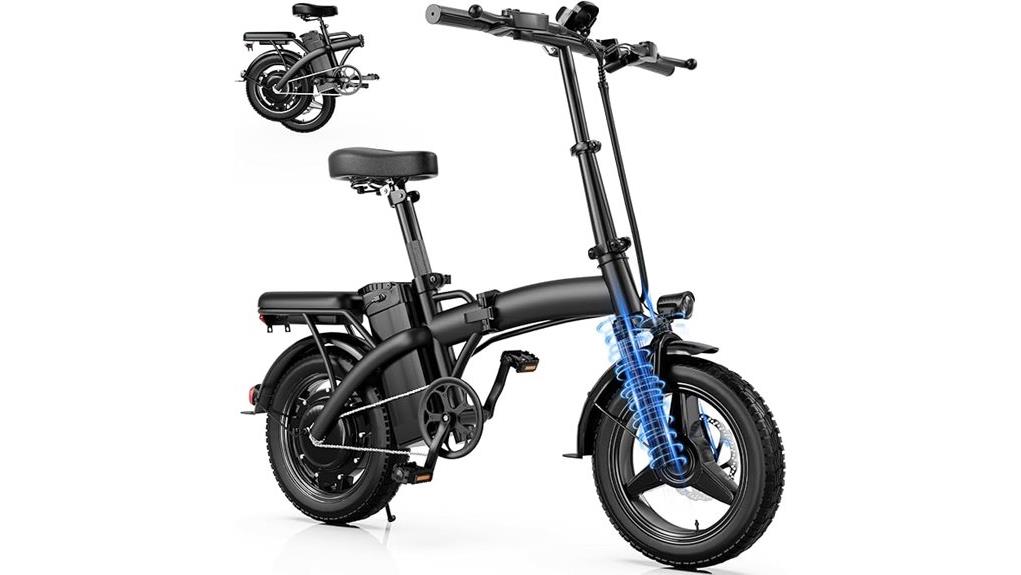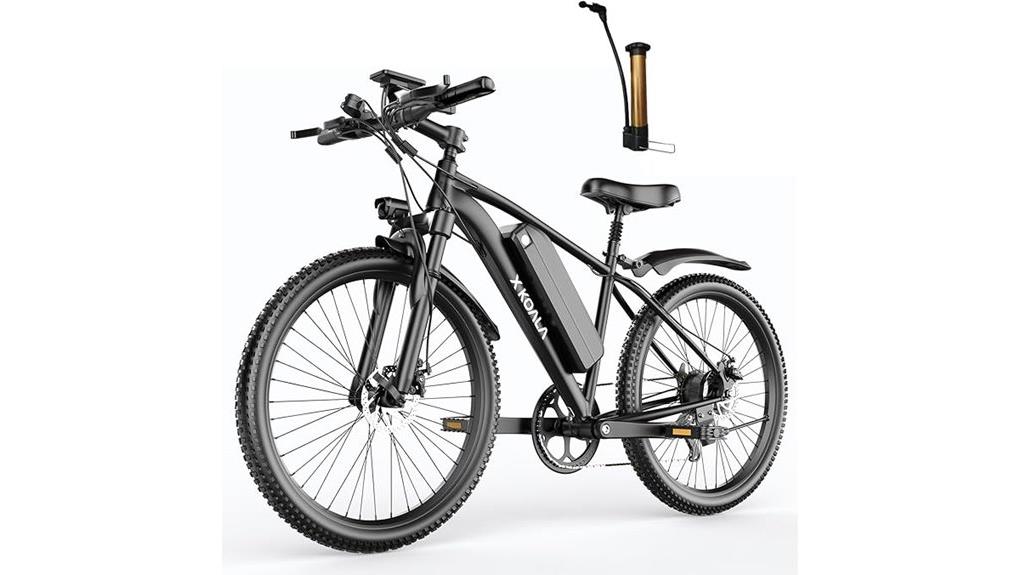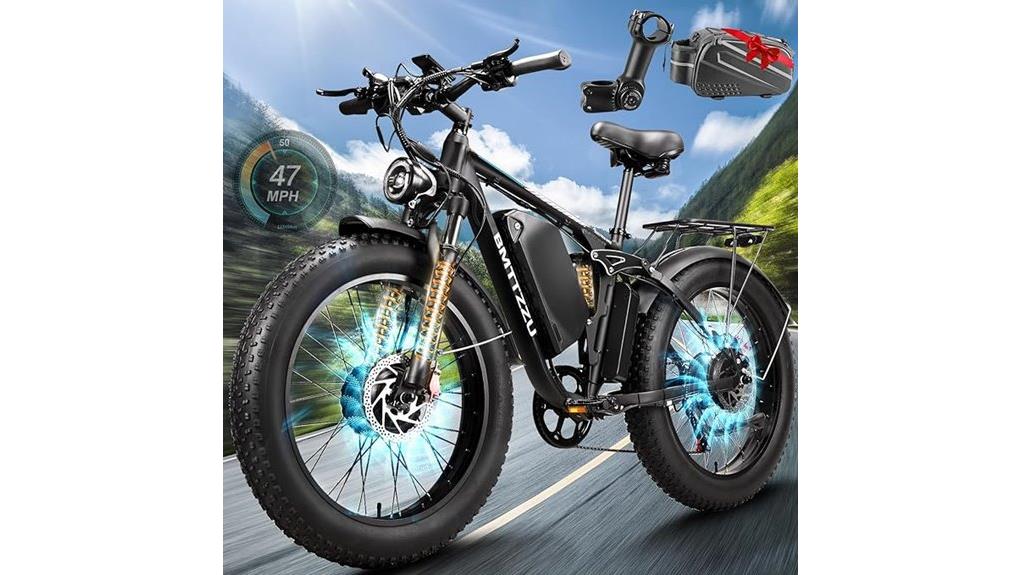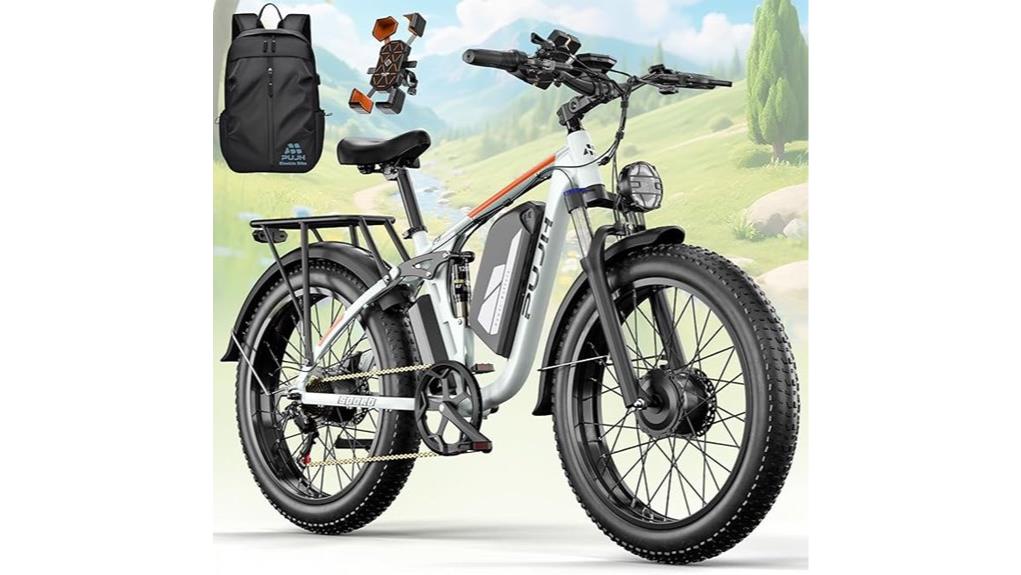
You’ll get motorcycle‑level surge from the PHJU 6000W dual‑motor 60V e‑bike, hitting roughly 45 mph peak with 200 Nm torque and strong hill‑climb ability, but you’ll trade portability and low maintenance for raw power. The removable 60V 20Ah battery gives 35–110 miles depending on assist, payload, and terrain, and one‑ vs two‑motor modes balance range versus instant acceleration. Suspension, fat tires, and dual hydraulic brakes keep it planted. Keep going to learn more specifics and comparisons.
Some Key Takeaways
- Dual brushless motors deliver up to 6000W peak and immediate, motorcycle-like acceleration good for steep hills and heavy loads.
- Real-world range varies widely (≈35–110 miles) depending on assist mode, throttle use, rider weight, terrain, and cargo.
- One-motor mode conserves energy and smooths throttle; two-motor mode gives full power but reduces range and increases battery sag risk.
- Robust 6061 aluminum frame, full suspension, 24″x4.0″ fat tires, and dual hydraulic brakes provide stable off-road handling and strong stopping.
- Removable 60V 20Ah battery with USB, LED display, and recommended care practices; higher maintenance and less portability than commuter e-bikes.
Quick Performance Snapshot : Speed, Torque, and Real-World Range
While the PHJU 6000W can hit top speeds around 45 mph thanks to its dual brushless motors and 200 Nm peak torque, real-world performance depends on mode and conditions. You’ll feel immediate acceleration in two-motor modes; one-motor mode conserves energy and limits peak pace. Torque delivers hill capability comparable to light off-road motorcycles, but payload and terrain change outcomes. Range spans roughly 35–110 miles depending on assist level, throttle use, and cargo. Expect some battery sag under sustained high-power runs or steep climbs; managing modes and cadence extends usable range while preserving spirited, liberating riding. These motors are designed for riders who want high-performance ebike motors tailored to outdoor adventures.
Powertrain Deep Dive : Dual 6000W Motors, Modes, and How They Feel on Trail
Because the PHJU pairs two brushless motors into a selectable single- or dual-drive system, you get distinctly different responses depending on mode: one-motor mode trades peak power for efficiency and smoother throttle control, whereas two-motor mode delivers the full 6000W peak output and immediate, motorcycle-like surge. You’ll choose modes by need: conserve battery and reduce motor heat in single-motor or push for torque and top speed in dual. Throttle response tightens in higher modes, with pedal-assist smoothing inputs. The system’s six working modes let you balance acceleration, range, and control on varied terrain without sacrificing freedom. Top Gear recommends matching motor choice to your riding style and terrain for best results with ebike motors.
Ride Quality and Handling : Suspension, Frame, Tires, and Braking Performance
If you push the PHJU hard over rough trail sections you’ll notice the suspension and frame work together to keep the chassis planted and the rider stable. The 6061 aluminum diamond frame balances rigidity with compliance; full suspension (dual fork shocks, rear shock, 7-level system including seat springs) lets you tune rebound and compression for suspension tuning that matches terrain. 24″x4.0″ fat tires increase flotation and grip across sand, snow, and gravel, enhancing cornering stability compared with narrower rubber. Dual hydraulic brakes deliver predictable modulation and strong stopping power, letting you carry momentum safely without sacrificing control. Consider pairing this setup with an ebike suspension seatpost to further smooth rough rides.
Battery, Charging, and Electrical Features You’ll Use Every Day
Typically, you’ll rely on the PHJU’s removable 60V 20Ah lithium-ion pack for daily use, and it balances high output with practical convenience: lockable and removable for off-bike charging, it supports a claimed 35–110 mile range depending on assist mode, rider weight, terrain and throttle use. You get USB charging, a clear LED display, and integrated lights for practical commutes and adventures. Prioritize battery maintenance: store at 40–80% for long-term health, avoid full depletion, and keep contacts clean. Follow charging etiquette—use the supplied charger, avoid overnight top-offs, and charge in ventilated areas to preserve performance. For riders who like exploring trails and campsites, consider accessories and care products that help keep your battery safe during outdoor adventures.
Who This Bike Is For, Alternatives, Price-Value Takeaways, and Final Verdict
Having covered daily battery handling and electrical features, we’ll now look at who benefits most from the PHJU 6000W and how it stacks up against alternatives. You’ll appreciate this bike if you want high-speed off-road freedom, heavy-duty cargo capacity up to recommended limits, and dual-motor torque for steep terrain. Alternatives include lighter commuter e-bikes or mid-drive cargo models with better range-per-weight. Value-wise, it trades portability for raw power; expect higher maintenance frequency and follow clear maintenance tips (brake bleed, chain care, battery storage). Final verdict: choose it if you prioritize performance and load capability over compactness and minimal upkeep. Gear up with the right protective equipment and accessories for off-road ebike adventures.
Some Questions Answered
Does It Require a Motorcycle License or Registration in My Area?
Not necessarily — whether you need a motorcycle license or registration depends on your local laws and the bike’s classification. Compare power, top speed, and throttle capability to your jurisdiction’s e-bike vs. moped/motorcycle thresholds; some places treat high‑power, throttle‑enabled bikes as motor vehicles. Check license requirements, registration, insurance and helmet rules locally. You’ll want documentation of specs and a quick call to regulators to confirm compliance before riding.
Can I Tow a Small Trailer or Bike Trailer With It?
Yes — you can tow a small trailer or bike trailer, provided you respect the cargo capacity and hitch compatibility. The bike’s 330 lb max load includes rider plus cargo, so calculate payload margins. Use a purpose-built trailer hitch rated for e-bike chain-drive setups and confirm secure mounting to the rear rack or frame. Compare axle loads and braking needs; heavier trailers reduce range and alter handling, so stay conservative for safety.
How Long Is the Battery Warranty and Replacement Cost?
The battery warranty is one year, non-transferable in most cases, and offers pro rated coverage for defects after initial period. You’ll expect battery lifespan claims of 3–5 years depending on use and charge habits. Replacement pricing typically runs high — often several hundred dollars to a full battery pack — so compare vendor quotes and warranty transferability if you plan to resell or ride long-term for true freedom and lower lifetime cost.
Are Replacement Tires and Parts Readily Available Locally?
Yes — you’ll generally find replacement tires and parts readily available through local shops and online marketplaces. The 24×4.0 fat tires and standard 7-speed components match common ATV/e-bike specs, so local shops can supply or fit many items; rarer motor-specific parts may need online ordering. Compare prices, lead times, and return policies; choose vendors that support warranty coverage and offer compatible technical documentation for easier repairs.
Is Assembly Possible Outdoors, or Should I Use a Garage/Workshop?
You can assemble outdoors or in a garage/workshop; choose based on conditions. Outdoors works if you’ve got flat ground, good light, shelter from wind/rain, and a portable toolkit. A garage/workshop gives more space, stands, and weather protection, so it’s technically easier for accurate torqueing, cable routing, and suspension setup. If you value freedom, opt for outdoors with organized trays and the portable toolkit, or use a workshop for precision and comfort.