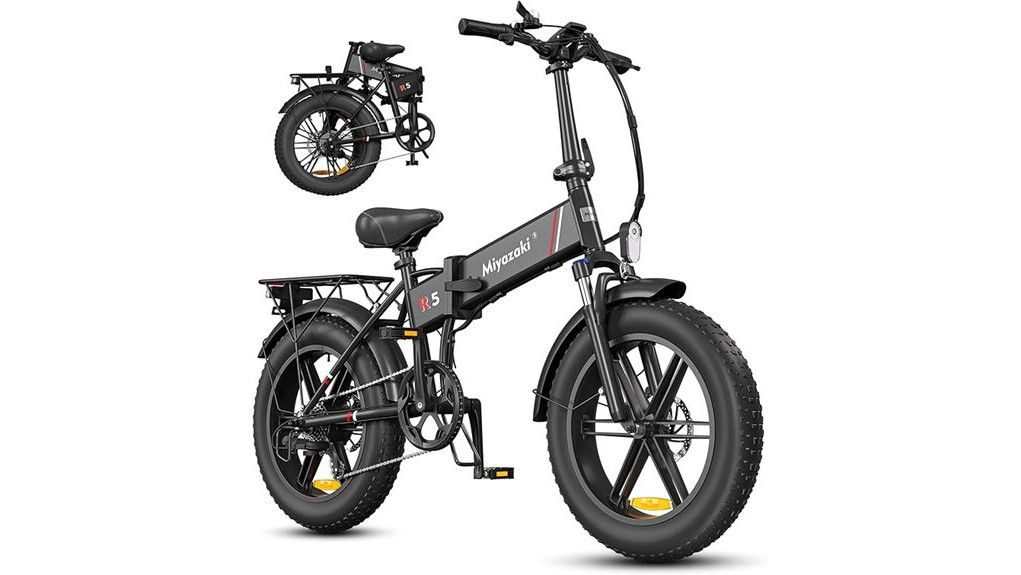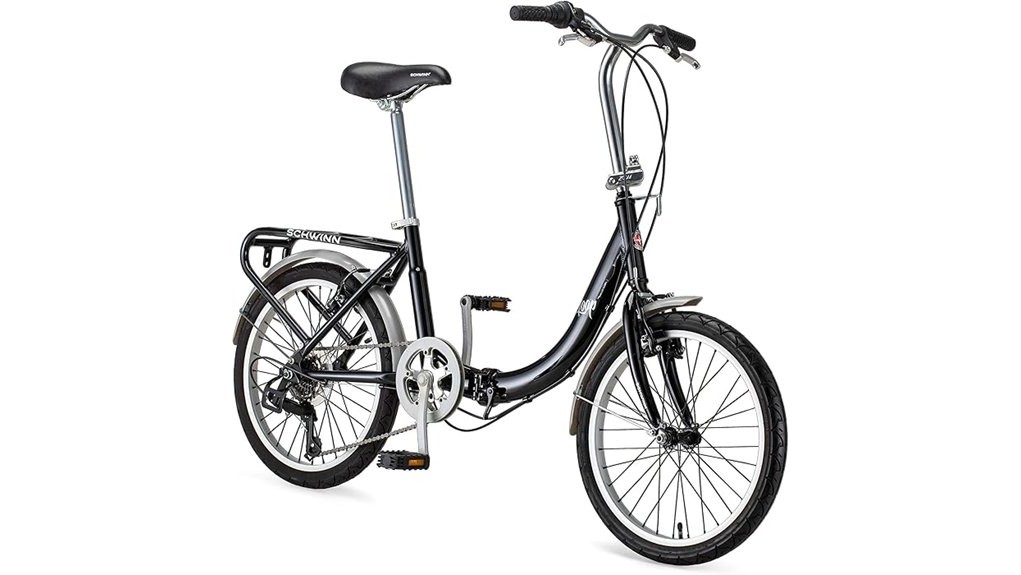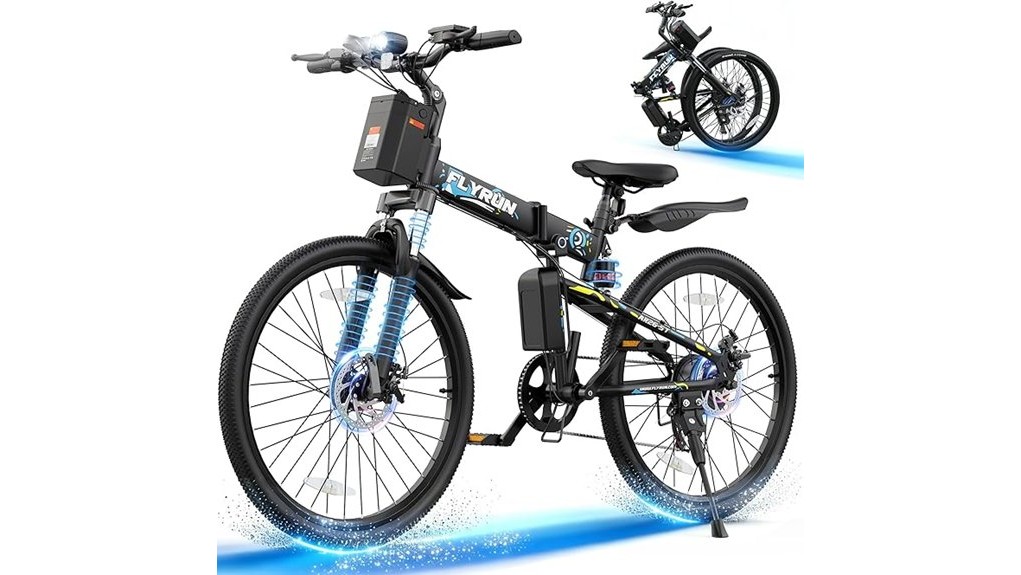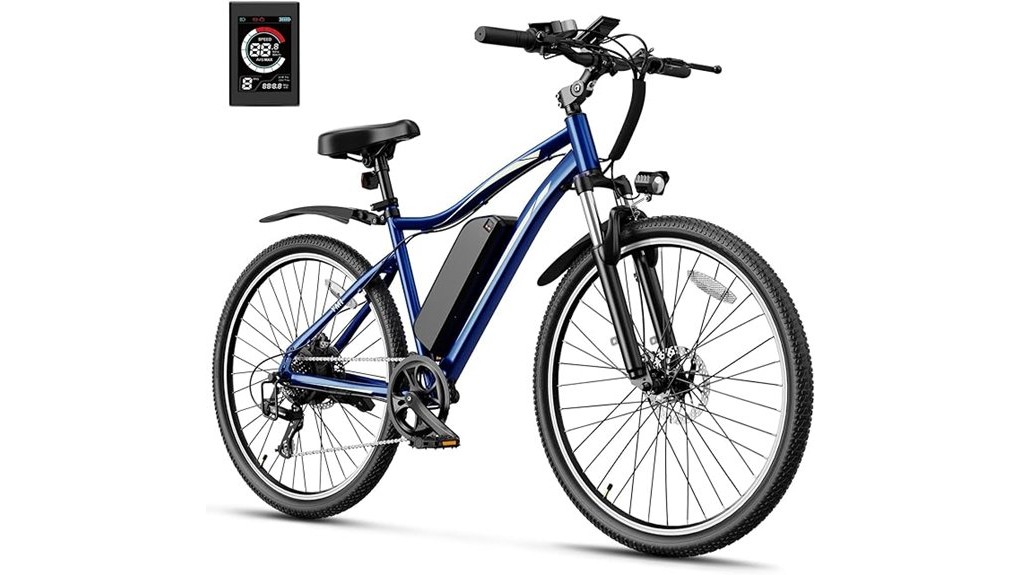

The Heybike YM1 is a sturdy commuter e-bike with a removable 48V 10Ah (480Wh) battery and a 750W peak motor that realistically gives about 30–35 miles per charge at modest PAS levels. You’ll get smooth urban acceleration, a governed top speed near 22 mph, and dependable stopping from dual discs. It handles light cargo and short commutes well but slows on long steep climbs and shows some battery sag under heavy loads—keep going for full specs, ride impressions, and setup tips.
Some Key Takeaways
- Removable 48V 10Ah (480Wh) battery yields about 31–50 miles claimed, realistically ~30–35 miles with conservative city riding.
- 750W peak brushless motor offers solid urban acceleration and a governed top speed near 22 MPH, with some throttle lag on initial twist.
- Sturdy triangular high‑carbon steel frame, front suspension, and 27.5″ puncture‑resistant tires make it comfortable and durable for commuting.
- Dual disc brakes, bright LED headlight, and fenders provide reliable stopping power and all‑weather safety for daily use.
- Best for urban commutes and short hauls; limited hill endurance, not ideal for long touring or riders needing top‑end speed.
Heybike YM1 at a Glance : Range, Speed, Battery, and Who It’s For
While the YM1 doesn’t promise class‑leading top speed, it gives you a practical mix of range and power: a removable 48V 10Ah (480 Wh) battery rated for roughly 31–50 miles per charge with a 5–6 hour charge time and fast‑charge/overcharge protection, paired to a brushless motor listed at 750W peak that’ll get you up to about 22 MPH. You’ll find it suits urban commuting and short‑haul errands, offering dependable range and adequate acceleration. Cargo capacity and frame strength handle modest loads, so you can carry groceries or small parcels without sacrificing stability. Practical, predictable, and commuter-focused. For riders who spend a lot of time outdoors, choosing a compatible replacement battery from a specialist ebike battery retailer ensures better support and product fit.
Technical Breakdown: Battery, Motor, Drivetrain, Brakes, Suspension, Tires, and Display
Now let’s look under the hood to see how the YM1’s components work together. You get a removable 48V 10Ah (480Wh) battery with overcharge protection and fast-charge support; monitor battery health via the smart LCD to preserve longevity. The brushless motor delivers 750W peak with governed top speed; cooling and wiring are tidy. A 7-speed drivetrain needs periodic drivetrain tuning to keep shifts crisp. Stopping power comes from dual disc brakes. The front suspension fork soaks bumps while 27.5″ puncture-resistant tires balance comfort and durability. The upgraded twist throttle and clear display give direct, intuitive control. Keep your ebike battery healthy for extended outdoor adventures by following proper charging and storage practices and monitoring charge cycles with the display battery health.
How It Rides: Range Test, Top Speed, Hill Performance, and Throttle Behavior
If you ride conservatively using PAS levels 1–2 and keep speeds near 15–18 mph, expect real-world range in the lower end of the listed 31–50 miles—roughly 30–35 miles on a full 48V 10Ah (480Wh) pack; pushing higher speeds, using frequent throttle, or climbing steep grades will cut that figure substantially. You’ll see modest battery sag under sustained high loads and steep climbs, reducing top-end assistance. Top speed tops out near 22 mph in practice. Hill performance is adequate with 7-speed gearing but slows on long steep grades. Throttle delivers instant power but exhibits slight throttle lag when you first twist. For riders wanting longer journeys, consider upgrading to long-range batteries specifically designed for extended-range ebike adventures.
Comfort, Safety, and Build Quality: Seat, Suspension, Brakes, Frame, Lights, and Tires
After covering range and performance, it’s worth looking at how the YM1’s hardware impacts ride comfort and safety. You get an adjustable ergonomic seat that supports varied riding positions; seat ergonomics are solid for commuting and moderate trails. The front suspension fork soaks bumps well—suspension tuning favors comfort over aggressive damping, which suits urban use. Dual disc brakes deliver predictable stopping power and modulation. The triangular high-carbon steel frame feels sturdy, aided by puncture-resistant 27.5″ tires and fenders. Bright LED headlight improves visibility. Overall, build quality is utilitarian and safety-focused, with practical components for daily riding. For riders who prioritize long-ride comfort, consider upgrading to a memory foam saddle designed for adventurous ebike riders.
Verdict and Buying Advice: Pros, Cons, Ideal Rider, and Setup/Maintenance Tips
While the Heybike YM1 won’t satisfy riders chasing top-end speed or long-distance touring, it delivers a reliable, comfortable e-bike package for commuters and recreational riders who value durability and straightforward performance. You’ll appreciate strong braking, puncture-resistant tires, and simple controls. Pros: sturdy frame, removable battery, good range, accessory compatibility, and easy assembly. Cons: modest top speed, limited warranty, and potential discrepancies in listed specs. Ideal rider: urban commuters and weekend explorers who prioritize comfort over speed. For setup and maintenance, follow torque specs, check software updates, charge battery correctly for long term storage, and document service to protect resale value. When caring for the removable battery, use a compatible ebike battery charger and follow manufacturer charging guidelines to maximize lifespan and safety.
Some Questions Answered
Does the Battery Support Cold-Weather Performance or Reduced Range in Snow?
Yes — the battery will show reduced cold start performance and shorter range in snow and cold conditions. You’ll notice lower output, slower charging and diminished capacity as temperatures drop. You can mitigate this with insulation options like thermal wraps, keeping the removable 48V 10Ah pack indoors before rides, and avoiding prolonged exposure. Those steps won’t eliminate losses but will improve cold-weather reliability and preserve usable range.
Can the Battery Be Charged While Still Installed on the Bike?
Yes — you can charge the battery while it’s installed on the bike. For battery charging, connect the charger to the bike’s external port and follow charging safety guidelines: avoid wet or freezing conditions, guarantee good ventilation, and use the provided charger. Take precautions like inspecting connections, not overcharging, and monitoring for unusual heat. If you need to remove the battery for security or extreme cold, follow the manual’s removal steps.
Is There an App or Bluetooth Connectivity for Ride Data or Firmware Updates?
No — there’s no dedicated Bluetooth app for ride data or firmware updates on this model. You’ll rely on the smart LCD for basic metrics and settings. If you want Bluetooth app features or firmware updates, contact support to confirm any aftermarket options or planned Bluetooth app and firmware updates. They’ll tell you whether OTA firmware updates or a Bluetooth app can be enabled or if a dealer must perform firmware changes.
Are Replacement Parts (Tires, Battery, Display) Readily Available?
Yes—replacement parts are generally accessible; you’ll find spare tubes and replacement rims from third-party sellers and the manufacturer. The removable 48V battery, LCD display and common wear items like tires are stocked or replaceable via support channels. You’ll want to confirm compatibility (wheel size, connector type) before ordering. Keep receipts and serials; the 12-month warranty and professional support team can help source authentic components quickly.
Can the Bike Be Legally Ridden on Bike Paths in 28 MPH Regions?
No — you likely can’t ride it on bike paths restricted to 28 mph. Your bike’s legal classification and posted speed limits matter: with a motor spec and top speed listed at 22 MPH it generally fits lower-speed e-bike classes, but where local rules require max 28 mph or a specific class, you must confirm classification, throttle rules, and local ordinances. Check local regulations and carry documentation to avoid fines or access restrictions.