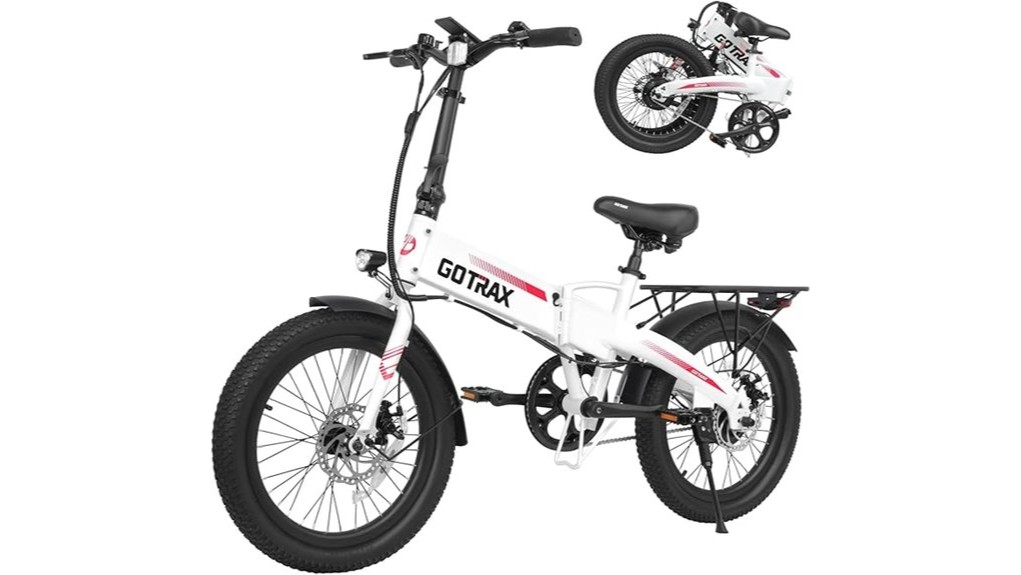

The GOTRAX R1 White (2023) is a compact 20-inch folding e-bike that suits commuters and campus riders who need portability over long range. You’ll get a 48V/374Wh battery with a 350W-rated motor, about 15–25 miles depending on assist and load, plus dual disc brakes for reliable stops. It’s nimble with upright comfort but a rigid fork limits plushness, and the 45 lb weight still requires lifting ability. Keep going and you’ll find detailed pros, cons, and comparisons.
Some Key Takeaways
- Compact 20-inch folding e-bike with 45 lb aluminum frame, ideal for trunk storage and subway carriage.
- 48V, 374.4Wh battery with 350W rated (500W peak) motor yields ~15.5 miles electric, ~25 miles with pedal assist.
- Upright geometry and padded saddle offer comfort for short commutes, but rigid fork transmits road vibrations.
- Dual disc brakes provide reliable stopping power; initial lever feel is firm but consistent.
- Best for urban commuters and apartment dwellers seeking portability; not suited for long-range touring or heavy loads.
What the GOTRAX R1 White Actually Is (Quick Specs and Who It’s For)
While it’s marketed as a compact commuter, the GOTRAX R1 White is fundamentally a 20-inch folding electric bike built for short urban trips and mixed-terrain leisure rides. You get a 45-pound aluminum frame, 20″ wheels, 48V battery, dual disc brakes, and a 5-level pedal-assist system. Folded dimensions suit trunk or subway carriage, emphasizing folding convenience and practical portability. It targets commuters, campus users, and recreational riders under 264 pounds who value easy storage over long-range touring. You’ll appreciate straightforward controls, UL certification, and modest specs tuned to short-range, city-focused use. It’s a good fit for outdoor adventure riders who need a portable e-bike for mixed-use outings.
How the Motor, Battery, and Range Perform in Real Rides
You’ll notice the R1’s motor and battery define what the bike can actually do on the road rather than its folding convenience or frame details. You get a 48V pack (374.4 Wh) and a peak 500W / rated 350W motor that deliver usable motor torque for short accelerations and modest climbs. In mixed urban riding expect the stated ~15.5 miles pure electric, ~25 miles with PAS; real results vary by load, terrain, and assist level. Battery longevity depends on charge cycles and care — plan conservative range estimates and regular charging to preserve capacity over time. If you’re an outdoor rider, consider options for replacement ebike batteries to extend range and maintain reliable performance.
Ride Quality, Brakes, and Comfort: Handling on City Streets and Light Trails
Get a clear sense of how the R1 rides by focusing on its handling, stopping power, and rider comfort across pavement and packed trails. You’ll find 20-inch wheels and an aluminum frame deliver nimble steering and predictable cornering stability at moderate speeds. Dual disc brakes provide consistent, confidence-inspiring stopping power, though initial lever feel is firm. Suspension comfort is limited by the rigid fork; expect road and trail vibrations to transmit to the saddle. Seat padding and upright geometry mitigate some harshness for short commutes. Overall, the R1 handles urban streets and light packed trails competently, prioritizing efficiency over plush ride quality. Consider pairing the bike with an appropriate floor stand to keep it secure during outdoor stops.
Practical Considerations: Size, Folding, Weight Limit, Assembly, and Portability
Because the R1 folds down to a compact 37.4 × 17.7 × 27.5 inches and weighs 45 pounds, you can stow it in many car trunks or take it on transit, but you’ll want to confirm your vehicle’s cargo dimensions and your ability to lift 45 pounds repeatedly. The folding mechanisms are straightforward and fast, reducing storage footprint. Assembly is required but aimed at beginners; expect basic tool use and alignment steps. The aluminum frame supports a 264-pound recommendation, so match that to rider plus cargo. Carry handles aid short-distance transport, though 45 pounds can be tiring without assistance. The site caters to adult ebike riders who enjoy outdoor activities and offers gear suited for outdoor rides.
Final Verdict: Pros, Cons, Who Should Buy, and How It Compares to Rivals
While the R1 won’t satisfy riders seeking long-range touring or high-speed performance, it delivers a balanced package for commuters and city riders who value portability and simplicity. You’ll appreciate affordability comparison against pricier folding e-bikes: the R1 undercuts rivals while offering solid core features—500W peak motor, UL certification, disc brakes, and a compact fold. Pros: lightweight aluminum frame, decent PAS, usable display, easy transit storage. Cons: limited electric range, rigid suspension, modest warranty. Who should buy: urban commuters, beginners, and apartment dwellers. Consider rivals if you need extended range or higher sustained speeds; evaluate long term durability. Built around an accessible step-through design, it’s tailored for outdoor riders who prioritize easy mounting and everyday practicality.
Some Questions Answered
Can I Carry the Battery Onboard an Airplane or in Checked Luggage?
No, you can’t check that battery; airline restrictions generally prohibit lithium batteries above 100 Wh in checked baggage and often require carry-on with terminals protected. Your 48V 7.8Ah battery is about 374 Wh, so carriers will deny it in both checked and sometimes carry-on without airline approval. You should contact your airline, make sure battery terminals are insulated or taped, carry documentation, and get written permission before attempting transport.
Are Replacement Batteries or OEM Parts Available Separately?
Yes — you can get replacement options and OEM parts, but availability varies. You’ll find official replacement batteries and components through the manufacturer or authorized dealers; they’re ideal for compatibility and warranty. Third party cells and aftermarket packs exist, offering cheaper or higher-capacity choices, but you’ll need to verify fit, voltage, and UL safety. You should weigh cost, certification, and potential warranty voiding before choosing third party cells.
How Waterproof Is the Bike for Riding in Heavy Rain?
You shouldn’t ride it in heavy rain; it’s not fully waterproof. The bike resists light moisture but prolonged downpours risk water ingress and compromise sealing integrity around the battery and electronics. Connector corrosion can occur if exposed repeatedly, and insufficient drivetrain protection may let grit and water shorten component life. If you must ride, dry and inspect connectors, avoid deep puddles, and perform regular maintenance to mitigate damage.
Is There a Throttle-Only Mode for Non-Pedaling Use?
No, it doesn’t offer a throttle only mode for sustained non-pedaling use; motor assist requires pedaling or uses short electric-only bursts depending on mode. You’ll get pure electric mode for short distances up to the listed range, but continuous throttle-only operation isn’t a designed feature for extended rides. Evaluate how much motor assist you need versus pedal input to match your commuting or leisure requirements and legal limits.
Can the Bike Be Customized With Racks or Child Seats?
Yes — you can add a rear rack and mount many child seat styles, but you’ll need to verify compatibility. The aluminum frame and seatpost accommodate common rear racks, though load limits (264 lb max rider) and rack mounting points matter. Choose a child seat rated for 20″ wheels and confirm seatpost or frame mount fit; consider professional installation to guarantee secure attachment and avoid voiding warranty or compromising braking and folding functions.