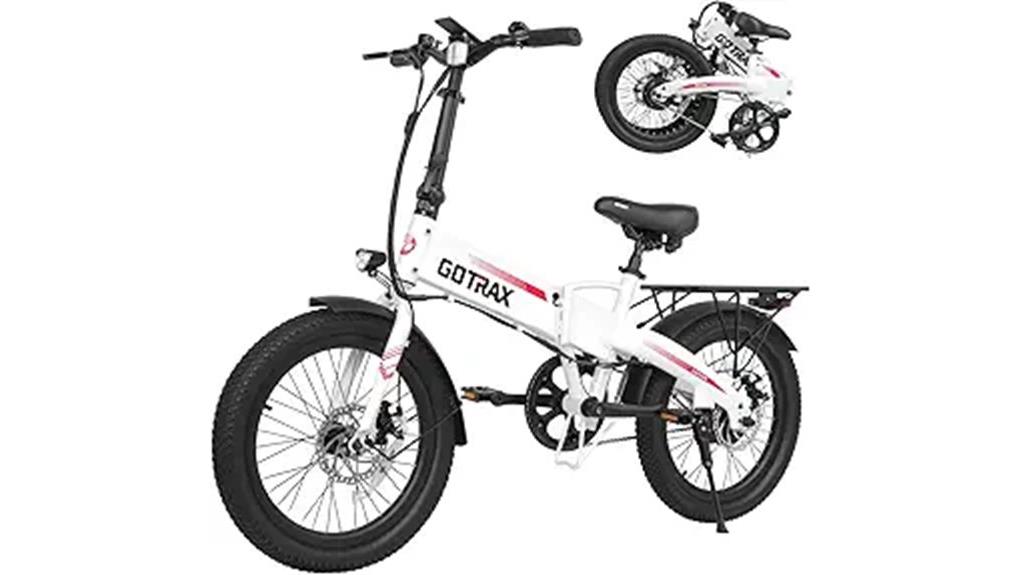
The Gotrax R1 20″ folding e‑bike (white) is a compact, commuter‑friendly ride that’s easy to fold and stash on transit or under a desk. You’ll get a peppy 500W peak motor with smooth 20 mph assist, five PAS levels, and reliable dual disc brakes for confident city stops. It’s about 45 lbs and best for shorter commutes — expect ~15.5 miles pure-electric or ~25 with pedaling — and practical battery care tips follow if you want more.
Some Key Takeaways
- Compact 20″ folding aluminum frame (37.4 x 17.7 x 27.5 in folded) is ideal for commuters and tight storage.
- 500W peak (350W nominal) hub motor reaches about 20 mph with smooth, responsive pedal-assist.
- 48V 7.8Ah (374.4 Wh) battery yields ~15.5 miles pure-electric and ~25 miles with pedal assist under typical conditions.
- Dual disc brakes provide predictable stopping power; 45 lb weight is portable but noticeable on stairs.
- 180-day limited warranty, basic maintenance recommended, and several optional accessories available (racks, lights, range extenders).
Quick Verdict: Who the Gotrax R1 20 Folding Electric Bike (White) Is Best For
Because it folds compactly and stays light at 45 lbs, the Gotrax R1 20″ is best for commuters and campus riders who want a simple, portable e-bike for short to medium trips. You’ll appreciate its commuter fit—compact frame, 20″ wheels, and foldable profile make transit and storage easy. Urban portability is its strong suit: you can carry it onto buses or tuck it under a desk. It’s beginner friendly, with straightforward controls and manageable weight, and size compatibility covers many adults from about 5’3″ upward. If you value freedom and simple mobility, this one’s for you. It’s a good match for riders who enjoy outdoor activities and need a foldable e-bike tailored to outdoor adventure riding.
How the R1 Performs: Motor, Speed, Pedal-Assist, and Braking in Real-World Use
When you ride the R1 you’ll notice its 500W peak (350W nominal) hub motor delivers quick, confident starts and keeps pace on flat and mildly rolling terrain, reaching the 20 mph top speed without strain. You get five PAS levels that feel intuitive: low modes conserve range, high modes push you up small climbs while keeping pedal engagement natural. Motor response is immediate but smooth, so you won’t jerk the handlebars. Dual disc brakes offer predictable stopping power; braking feel is firm and confidence-inspiring for city stops. Overall, it rewards casual commuters who value easy, liberating rides. For riders who like tinkering and upgrades, swapping controllers can unlock better performance with smarter ebike motor controllers.
Folded, Daily, and Storage Use: Weight, Folding Size, Frame, and Ride Comfort
Although it’s light for an e-bike at about 45 lbs, you’ll still notice the R1’s weight when carrying it up stairs or lifting it into a car — the compact 37.4 x 17.7 x 27.5 in folded footprint makes that manageable for short carries and trunk storage. You’ll appreciate the simple folding mechanism: quick latch, compact stack, and secure lock. The aluminum frame balances durability with portability, fitting small apartments or tight closets. On the road, the 20″ tires and rigid fork deliver predictable ride stability — firm but not harsh. Overall, it’s freeing for daily commuting and easy to stash. Compact eBikes are especially popular with outdoor adventure riders who value portability and rugged versatility in urban and trail settings, making them a practical choice for compact eBikes.
Range, Battery, and Charging: Real PAS vs. Pure-Electric Expectations and Charging Time
Don’t expect the quoted ranges to always match your commute — the R1’s 374.4 Wh battery (48 V, 7.8 Ah) realistically gives you up to about 15.5 miles on pure electric and around 25 miles using pedal-assist. You’ll want to plan rides around those numbers: hills, wind, and load cut range. Charge fully before longer trips; charging etiquette matters — don’t top off repeatedly or leave the charger connected for days. Treat the pack gently to slow battery degradation: avoid deep discharges and extreme temperatures. With mindful charging and PAS use, the R1 delivers dependable, liberating urban range. If you ride often off-road or on longer adventures, consider carrying a compact range-extender battery to extend your trip safely.
Ownership Checklist: Specs, Safety Features, Warranty, and Final Buying Considerations
You’ve seen how range and charging habits affect day-to-day use; now check the practical details that shape ownership. You’ll like the R1’s 20″ foldable aluminum frame, 500W peak motor, 48V battery, dual disc brakes, and LED headlight for commuter freedom. Set a simple maintenance schedule for brakes, chain, and battery health. Confirm accessory compatibility for racks and lights before buying. Verify legal compliance in your area (speed limits, helmet laws) and weigh limited 180-day warranty against 365-day parts support. Finally, compare insurance options and total ownership costs to decide if this bike fits your lifestyle. Consider adding an ebike floor stand to protect the frame and stay organized when storing or working on your bike.
Some Questions Answered
Does the R1 Include a Throttle or Only Pedal-Assist?
Only pedal-assist is included — there’s no throttle option. You’ll rely on pedal sensors and five PAS levels to control assistance, so you get a more engaged, legal-friendly ride. That setup gives you predictable power delivery and extends range compared with constant-throttle use. If you want instant, hands-free acceleration, this model won’t provide it; but if you value reliable, pedal-forward freedom, its pedal sensors and PAS tuning serve you well.
Can You Ride the R1 in Light Rain or Wet Conditions?
Yes — you can ride in light rain or wet conditions, but exercise cautious riding. The R1 has water resistance typical for commuter e-bikes, sealed electricals and an aluminum frame, yet it’s not fully waterproof. You’ll want to avoid deep puddles, prolonged exposure, and high-pressure washes. Ride slower, brake earlier, and dry the bike after wet rides to protect the battery, connectors, and drivetrain so your freedom keeps rolling.
Are Replacement Batteries or Extended Packs Available?
Yes — you can get replacement batteries, though official extended packs aren’t widely sold; you’ll find third party packs and battery upgrades from aftermarket vendors. You should check compatibility, voltage (48V), connector type and UL certifications before buying. If you want more range, choose a reputable third party pack with proper mounting and safety features. You’ll enjoy greater freedom, but prioritize quality and confirm warranty/return policies first.
What Tools Are Needed for Assembly and Setup?
You’ll need a basic hex keyset, adjustable wrench, Phillips screwdriver, and a torque wrench for critical bolts. You’ll also want a pump, cable cutters or pliers, and the included charger for battery setup. Tighten folding joints and stem to specified torque, adjust brakes and derailer, then inflate tires. This gear keeps assembly straightforward, safe, and fast so you can get rolling and reclaim your freedom.
Is There a Spare Parts Network or Recommended Service Centers?
Yes — you can get spare parts through Authorized dealers and via independent shops, and you’ll find 365-day parts support and 24/7 assistance from the manufacturer. Use Authorized dealers for warranty-covered components and repair guidance; independent shops can offer faster repairs, upgrades, and customization. You’ll want to contact customer support for OEM parts, then choose an independent shop if you want flexible service, quicker turnaround, or cost-effective fixes.