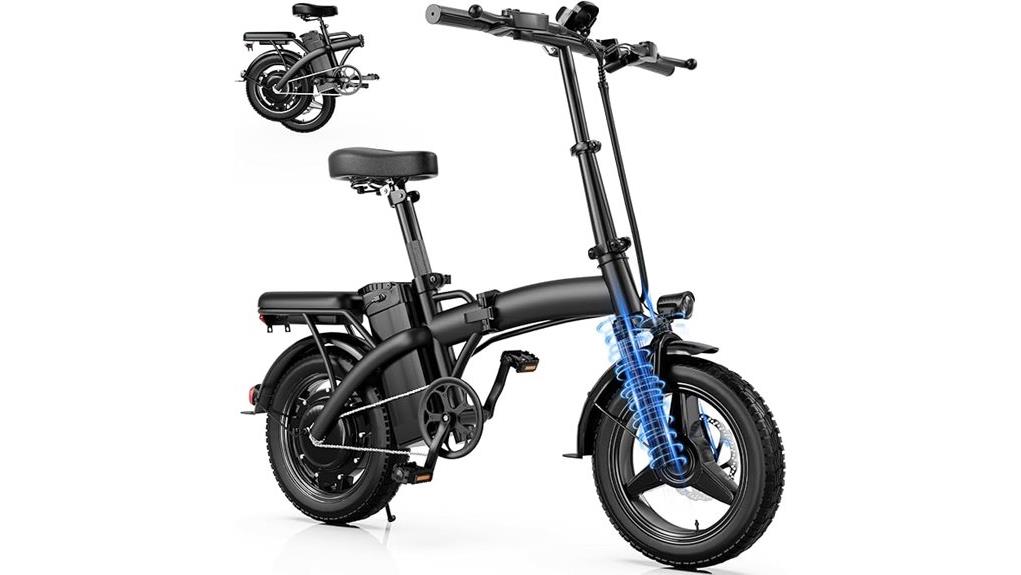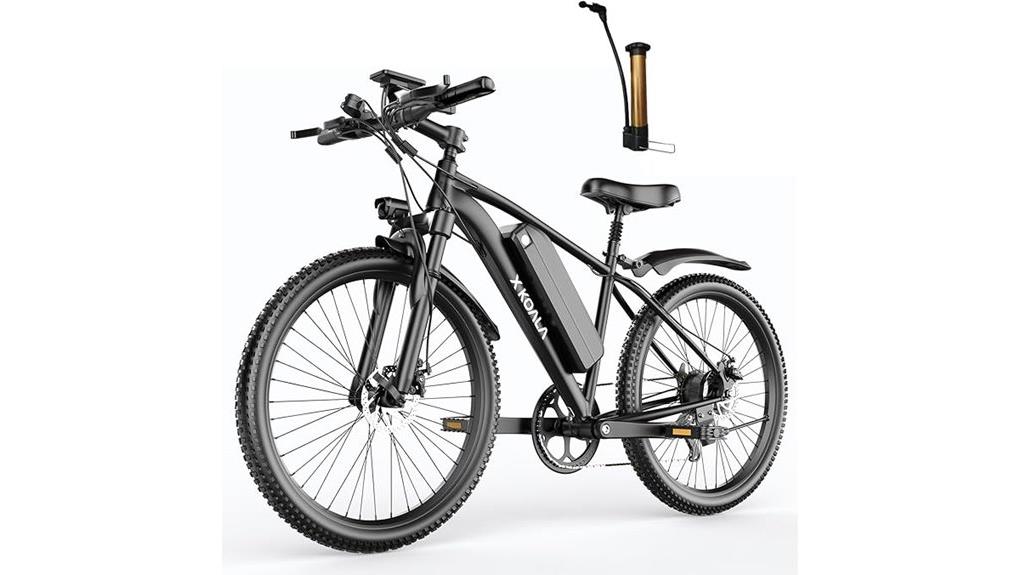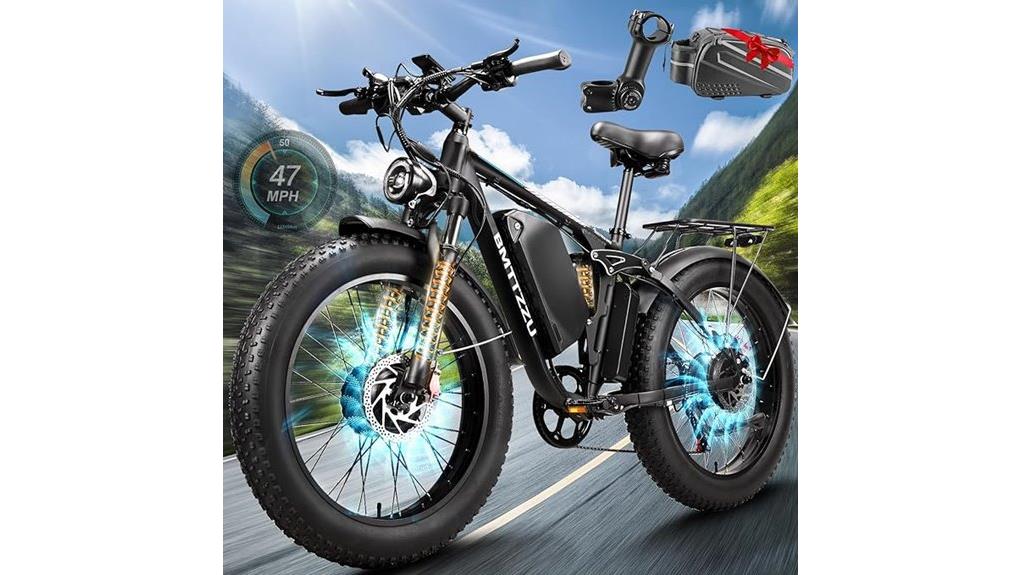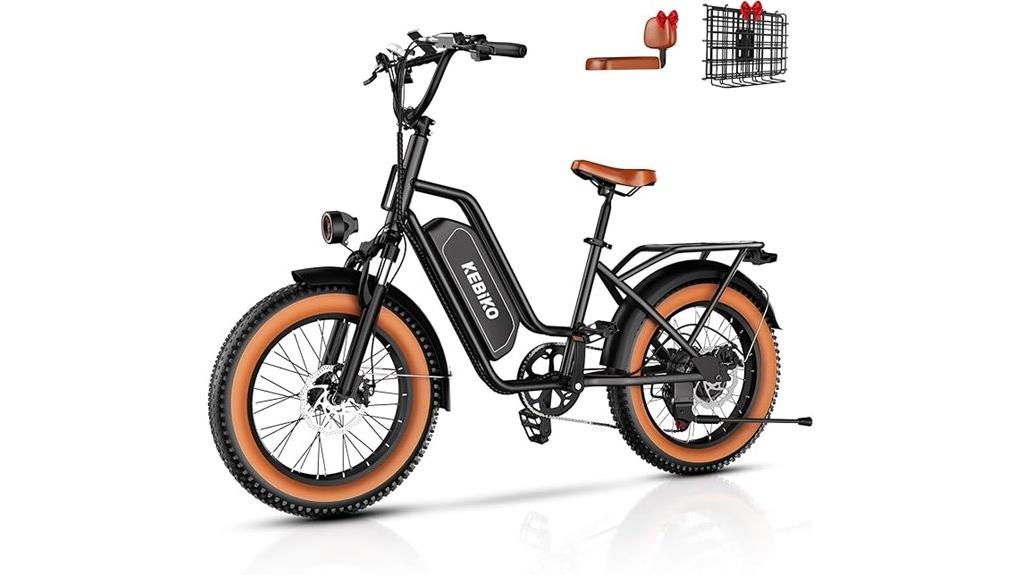
You’ll get a rugged two-seater built for utility: a 1000W nominal (1300W peak) brushless motor, removable 48V 20Ah (960Wh) battery, PAS and throttle, plus a multifunction LCD with BMS diagnostics. The high-carbon steel frame, 4.0″ fat tires and dual 180mm discs handle climbs and rough roads while carrying a passenger or cargo. Expect realistic PAS range around 40–60 miles and strong hill performance with heat tradeoffs. Keep going to see detailed pros, cons, and maintenance tips.
Some Key Takeaways
- Powerful 1000W nominal (1300W peak) brushless motor delivers strong acceleration and climbs, sustaining short-term speeds above 30 mph.
- Removable 48V 20Ah (960 Wh) battery supports PAS ranges typically 40–60 miles under mixed use, up to ~80+ miles in ideal conditions.
- Two-seater step-through frame with reinforced joints, padded rear backrest, and adjustable cushions suits passenger comfort and cargo.
- Robust utility features include 4.0″ fat tires, foldable front basket, accessory mounts, and dual 180 mm disc brakes for stopping power.
- Maintenance needs: monitor brake pad/rotor wear, derailleur alignment, tire tread, and battery/motor connections; consider extended warranty.
Real-World Specs and Core Features of the Bluebiko F8P 2-Seater Electric Bike
Start with realistic expectations: the Bluebiko F8P pairs a 1000W nominal (1300W peak) brushless motor with a removable 48V 20Ah (960 Wh) lithium pack, giving you throttle-on-demand, PAS, and a claimed PAS range up to 80+ miles and pure-electric top speeds north of 30 mph. You’ll assess battery management via charge ports and BMS diagnostics on the multifunction color LCD; display usability is clear but terse. Frame durability feels robust thanks to high-carbon steel construction and reinforced joints for two riders. Accessory compatibility is strong: baskets, child seats and racks mount cleanly. Overall, it’s practical, rugged, and freedom-oriented. Designed for outdoor riders, it fits the needs of those seeking adventure-ready step-through ebikes.
Performance: Range, Speed, and Climbing Tests
Although lab specs promise 960 Wh and “up to 80+ miles” in PAS, real-world range, top speed, and hill performance depend heavily on rider weight, assist level, terrain, and tire pressure. You’ll see roughly 40–60 miles touring with mixed assist if you carry a passenger or climb frequently; battery degradation and high assist settings reduce that. The 1000–1300W motor will hit 30+ mph on flat throttle, but wind resistance and fat tires curtail sustained highs. Climbing is stout—30° grades are attainable in low gear and full assist—though sustained steep climbs will tax battery and heat the motor. For planning longer rides, use an ebike range tool to estimate distances more accurately based on load and conditions, such as range calculators that factor rider weight and terrain.
Ride Comfort, Seating, and Cargo Usability
When you sit on the Bluebiko F8P, the two-seater layout and adjustable cushions deliver predictable support for rider and passenger, while the padded rear backrest keeps a second occupant stable during acceleration and cornering. You’ll notice seat ergonomics tuned for upright posture: firm foam, moderate width, and adjustable spacing that reduce fatigue on long runs. Suspension and 4.0″ fat tires absorb rough surfaces, preserving comfort without compromising control. Cargo adaptability is practical: a foldable front basket plus mounting points let you carry gear or add child seats. Overall, the package balances utility and liberated riding with precise, usable design. Gear Up offers complementary accessories for outdoor ebike riders, including backpacks and cargo solutions that pair well with the F8P’s features like ebike backpacks.
Safety, Braking, Gearing, and Maintenance Considerations
Because the F8P pairs robust mechanical systems with electric assist, you should treat braking and drivetrain checks as routine safety tasks rather than occasional afterthoughts. Inspect dual 180 mm discs for pad wear and rotor deformation during every brake inspection; bleed and adjust calipers if lever feel soft. Monitor chain tensioning and derailleur alignment across the 7-speed cassette; adjust limit screws after heavy loads or tandem use. Track tire wear on the 20″ fat tires and replace before tread failure. Use systematic electrical troubleshooting for battery contacts, connectors, and motor wiring when assist feels inconsistent. Schedule periodic professional service for reliability. For reliable stopping power on e-assist bikes, choose brake pads matched to rotor size and riding conditions, and consider high-quality ebike brake pads for outdoor use.
Value, Warranty, and Who Should Buy the F8P
Having covered routine safety and upkeep, it’s worth evaluating whether the F8P’s hardware and support justify the price and ownership costs. You get a robust 960 Wh battery, 1300W peak motor, dual-seat utility and puncture-resistant tires—features that push resale value above basic commuter e-bikes. Affordability analysis: initial cost versus capability favors riders who need range, load capacity, and hill power. Warranty: one-year limited (365-day support) is standard; consider purchasing an extended warranty for drivetrain and battery. Target demographics: freedom-seeking commuters, short cargo haulers, and couples; avoid if you need premium dealer-backed service or lightweight portability. For riders who want longer trips and tougher terrain, consider upgrading to an extended-range battery for improved range performance.
Some Questions Answered
Does the Battery Support USB Charging for Devices?
No — the battery pack doesn’t list a built-in USB output or device passthrough. You’ll rely on the bike’s main 48V pack and display for power management; if you need USB charging, add a DC-DC converter or dedicated power bank that supports device passthrough. Choose a converter rated for 48V input with stable 5V USB output and overload protection so you can charge phones or GPS devices while preserving range and system safety.
Can I Lock the Removable Battery to Prevent Theft?
Yes — you can secure the removable battery to deter theft. The F8P’s pack fits a keyed battery lock on the frame mount; you’ll remove it only with the key, adding a mechanical theft prevention layer. Evaluate lock integrity and consider a secondary cable lock or alarm for stronger security. You’ll retain freedom to swap batteries quickly while minimizing theft risk, balancing convenience against potential vulnerabilities.
Are Replacement Tires and Tubes Readily Available?
Yes — you’ll find replacement 20″×4.0″ fat tires and tubes widely available from aftermarket suppliers and ebike shops. You can evaluate options for tubeless conversion to reduce flats and run lower pressures; compatibility depends on rim type. If you convert, fit custom valve stems for secure sealing and easy inflation. Choose puncture-resistant, load-rated tires matching the bike’s weight and intended use to keep range and handling predictable.
Is the Bike Compatible With Front or Rear Racks?
Yes — you can fit both front and rear racks; the bike supports rack compatibility for added cargo capacity. You’ll mount a sturdy rear rack behind the passenger seat (check frame clearance and weight limits), and a smaller front rack or basket on the fork or handlebars. Use racks rated for fat tires and e-bike loads, secure mounting hardware, and account for passenger seating to preserve safety and range when maximizing cargo capacity.
Does the Display Show Real-Time Battery Health Diagnostics?
No — the display doesn’t provide full real-time battery diagnostics. You’ll get basic health indicators like voltage readouts and remaining charge, but not detailed charge cycles or advanced battery diagnostics on-screen. You can monitor voltage and state-of-charge during rides, yet for thorough charge cycle counts and in-depth battery diagnostics you’ll need external diagnostic tools or dealer service. That limits your independent, freedom-focused battery management without added equipment.