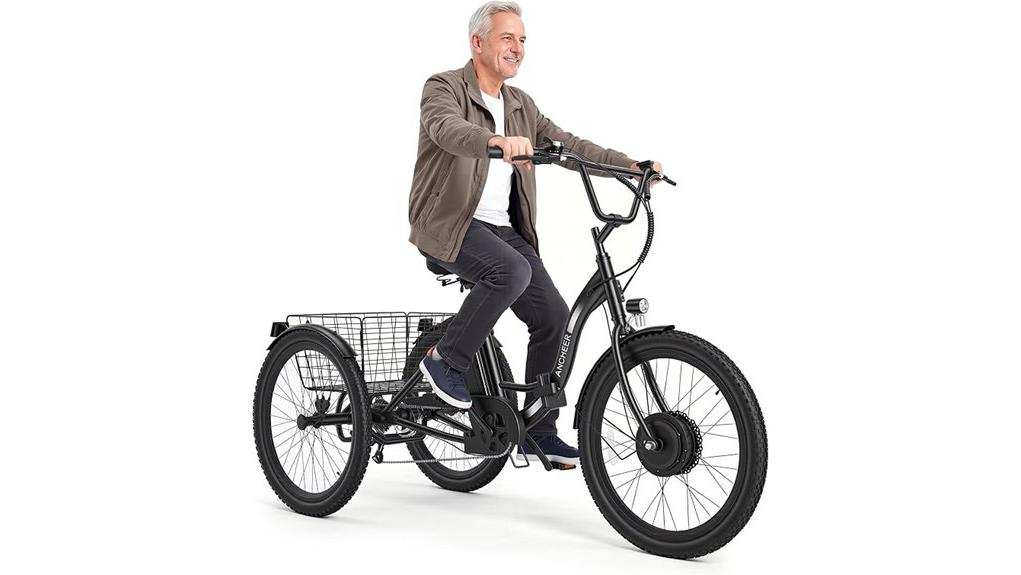
You’ll get a sturdy, low‑speed cargo trike with a 350W motor, removable 48V/499Wh battery, and a rated 55‑mile range under ideal conditions, though real world range is lower under load or heat. It’s stable and confidence‑inspiring thanks to 24‑inch wheels, a rear differential, and dual shocks, but throttle feel is abrupt and brakes are basic mechanical discs. It’s great for errands and small cargo runs, and if you want more detail you can keep going.
Some Key Takeaways
- 350W brushless motor with ~45 N·m torque and 15.5 MPH top speed; performance limited under heavy load or heat.
- Removable 48V/499Wh battery offers up to ~55 miles ideal range and charges in about 4–5 hours.
- Stable handling from 24″ wheels, low center of gravity, and rear differential, ideal for cargo and confident cornering.
- Six assist modes, throttle, cruise control, and seven-speed drivetrain; throttle feels abrupt in low assist.
- Mechanical disc brakes, dual rear shocks, 220 lb rear cargo rating, and 265 lb rider capacity suitable for errands and deliveries.
Detailed Specs at a Glance : Motor, Battery, Range, Speed, and Load Limits
Although it’s built like a utility trike, the ANCHEER EFLAN11 packs serious electrical hardware: a 350W brushless motor (peaking in some listings up to ~550–600W) delivers up to 45 N·m of torque, while a removable 48V/499 Wh lithium battery charges in about 4–5 hours and is rated to provide up to 55 miles per charge under ideal conditions. You’ll appreciate clear specs: 24-inch wheels, 15.5 MPH top speed, seven-speed drivetrain, and 265 lb rider capacity with 220 lb rear load. Note battery chemistry limits and modest motor cooling; performance under heavy load or heat will be conservative, not limitless. For riders who enjoy outdoor activities, consider choosing replacement batteries designed for outdoor rides and the specific ebike model.
How It Rides: Real-World Performance, Comfort, and Handling
When you climb aboard the ANCHEER EFLAN11 you’ll notice its stable, planted feel immediately—24-inch wheels and a low center of gravity make cornering predictable, while the rear differential helps the trike track straight under load. You’ll appreciate confident cornering stability at moderate speeds and easy street maneuvering in traffic or tight parking. The dual rear shocks soften bumps but firm suspension and frame transmit some ride vibration over rough pavement. The ergonomic saddle supports longer rides, though taller riders may want more padding or adjustment. Overall it rewards you with steady control and a liberating, practical ride. It’s a great option for outdoors-oriented ebikers who want a product tailored to electric trikes.
Controls, Modes, and Daily Use: Battery, Display, Cruise, and Boost
Inside the cockpit you’ll find a straightforward LCD control panel and twist-grip shifter that keep daily operation simple: the removable 48V/499Wh battery clicks in for charging or quick swaps, the 7-speed derailleur and six riding modes (Level 0 plus 1–5 assist/full-electric) cover everything from hill-climbing to relaxed cruising, and cruise control engages above ~6 MPH with a single button press while a long press activates the low-speed boost at ~1.9 MPH. You’ll appreciate clear battery ergonomics for swapping and charging, but throttle mapping feels abrupt in lower assist levels; fine for quick passes, less so for silky, liberated cruising. Many outdoor riders prefer durable, weather-resistant battery cases to protect batteries during off-road adventures.
Safety, Braking, Suspension, and Cargo Capacity Tested
Because the trike pairs mechanical disc brakes front and rear with a parking-brake feature and a rear differential, you get predictable stopping power and stable holding on slopes, but you should expect firm lever feel and moderate fade on long descents. You’ll appreciate rear stability from the differential when cornering slowly or loading cargo. Brake modulation is adequate but not buttery—you’ll need deliberate lever input for smooth slow-speed stops. Dual rear shocks absorb potholes; the rigid front trades comfort for direct steering. The rear basket’s 220 lb rating and 265 lb saddle limit let you carry supplies without sacrificing confidence. For riders who use their trike on mixed terrain, consider upgrading to hydraulic brake pads for improved wet-weather stopping and better fade resistance.
Who Should Buy This Trike and Alternatives to Consider
If you need a stable, cargo-capable electric trike for errands, commuting short distances, or redistributing heavy loads, the ANCHEER EFLAN11 is a strong choice—its 24″ frame, 499 Wh removable battery, and 220 lb rear-basket rating give you practical range and hauling capacity without complexity. You should buy it if you value stability, simple controls, and robust cargo needs—suitable riders include retirees, small-business couriers, and anyone who prefers low-speed, high-stability travel. If you want higher speed, longer range, or premium components, consider alternative brands like Rad Power, eWheels, or Addmotor as higher-spec options to weigh against ANCHEER. Our store also offers secure storage solutions and stylish outdoor racks specifically designed for e-bike and trike owners.
Some Questions Answered
Is the Battery Removable for Airline or Long-Term Storage Rules?
Yes — the battery is removable, so you can follow airline compliance and long-term storage rules. You’ll detach the 48V removable lithium battery for charging or transport, which helps meet many carrier policies, but you’ll still need to check specific airline limits (Wh and airline approval). You should lock, protect terminals, carry required paperwork, and follow storage tips to preserve battery health and avoid surprises when you’re ready to ride again.
Can the Trike Be Folded and How Compact Is It for Transport?
Yes — it folds. You’ll use a straightforward folding mechanism to collapse the frame for easier lifting and storage, though it isn’t ultra-compact. Transport dimensions shrink noticeably but still require a roomy car trunk, garage corner, or cargo area. You’ll appreciate the quick setup and durable locks, but don’t expect airplane-size packing. If you crave freedom, it’s portable enough for road trips and errands, not tight-fit travel.
What Tools Are Needed for Final Assembly and Regular Maintenance?
You’ll need basic bike tools: an allen wrench set, adjustable wrench, Phillips screwdriver, tire levers, and a pump for final assembly and routine care. Keep chain lubricant handy and a small torque wrench for bolts you don’t want over-tightened. For brakes and derailleur tweaks, carry a 7mm wrench and cable cutters. You’ll also want rags, a brush, and a charging cable for the removable battery.
Are Replacement Parts (Batteries, Motor, Basket) Readily Available?
Yes—replacement batteries, motors and baskets are generally obtainable, but you’ll want to check parts compatibility first. Aftermarket compatibility varies by model and connector type, so confirm specs before buying. Batteries and common motors are easy to source; specialty parts may require dealer ordering. Warranty transfers are limited—warranty usually stays with the original purchaser—so don’t assume full coverage if you buy used or swap parts from third parties.
Does the Trike Come With Theft Protection or a Keyed Lock System?
No — it doesn’t include a keyed lock as an integrated security feature. You’ll rely on external keyed locks or chains and should consider insurance options for theft or damage. You’ll want a sturdy U-lock or heavy-duty chain, possibly anchored, and to register the trike’s serial number with local police or bike registries. That freedom-seeking setup gives you stronger, flexible protection than a basic factory lock would.