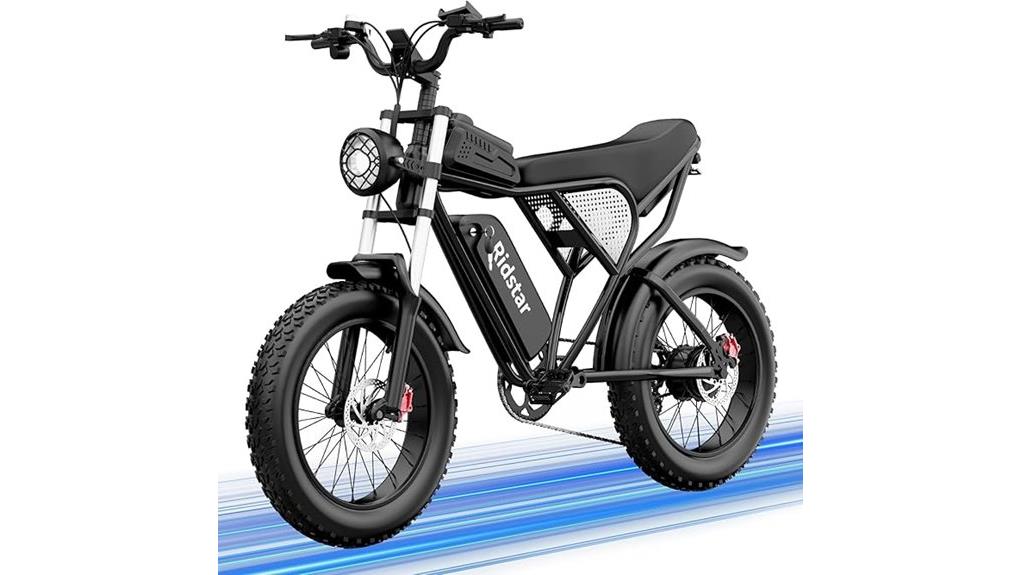

You’ll get a surprisingly capable fat‑tire e‑bike that’s built for mixed terrain and longer trips. The Q20‑2 pairs a high‑torque 2000W peak hub motor with a massive 2080Wh battery option, 20×4” tires, full suspension and dual hydraulic discs for confident climbs and stops. It’s heavier than compact commuters but gives strong acceleration and up to ~33 mph claims; real range varies with load and hills. Keep going and you’ll find detailed specs, tradeoffs and ownership tips.
Some Key Takeaways
- Versatile fat‑tire e‑bike with 20″ frame, 20×4 tires, full suspension, and commuter-friendly accessories for mixed terrain and beach use.
- Upgraded 2000W brushless hub motor offers strong hill climbing and lively acceleration, manufacturer claims up to 33 mph on flat ground.
- Large battery options (notably a 2080 Wh pack) deliver long range; real-world range varies with rider weight, terrain, and assist level.
- Dual hydraulic disc brakes, 7‑speed derailleur, and responsive steering give confident control despite the bike’s heavier build.
- Mostly preassembled with one‑year warranty and lifetime tech support; buy from authorized dealers to ensure warranty and parts coverage.
Quick Verdict: Who the Ridstar Q20-2 Is Best For
If you want a versatile, powerful e‑bike for mixed terrain—city commutes, beach sand, or steep trails—the Ridstar Q20‑2 delivers a compelling blend of fat‑tire stability, a high‑capacity 2080 Wh battery, and up to a 2000W peak motor that can crest steep grades (claimed up to 35°). You’ll appreciate its commuter friendly setup: phone holder, USB charging, lights, and a digital display that suit daily rides. City maneuverability feels surprisingly nimble for a fat‑tire bike, and the 7‑speed derailleur gives control over cadence and range. It’s best for riders who want rugged freedom without sacrificing practical commuter features. This model also pairs well with cargo accessories for extended outdoor trips, offering extra utility for cargo ebike riders.
What’s in the Q20-2: Key Specs and Battery/Motor Options
Having outlined who the Q20‑2 suits, let’s look at what you actually get on the bike. You get a 20″ aluminum frame, 20×4 fat tires, full suspension elements, 7-speed derailleur and dual disc brakes—hardware for varied terrain and confident freedom. Powertrains include peak motor options (1500W–3000W) with a listed upgraded 2000W brushless hub; top speed claims depend on configuration. Batteries are lithium packs (52V40AH, 48V20AH, detachable 20AH UL certified) offering 2080 Wh; charging 4–6 hours and IP54 protection. Note battery chemistry for longevity and follow Motor maintenance to preserve performance and range. Consider using a rugged ebike battery case to protect packs during outdoor rides.
Real-World Performance: Speed, Range, and Climbing Ability
When you ride the Q20‑2, expect lively acceleration and genuine hill-climbing from the upgraded 2000W hub motor—Ridstar claims it can handle gradients up to about 35°, and in real-world mixed terrain you’ll see top speeds near the listed 33 mph in full-electric mode on flat ground with a charged 2080 Wh pack. You’ll hit that top speed in ideal conditions; wind, rider weight, and tire pressure lower it. Hill tests show confident climbs on moderate grades, though sustained steep ascents cut real world range. Monitor battery degradation over time and plan rides with conservative range estimates for freedom-minded outings. For longer adventures, consider upgraded battery options to extend range and reliability for off-road riding with better batteries.
Ride Comfort and Control: Frame, Suspension, Tires, and Brakes
Put simply, the Q20‑2 balances firmness and compliance—its 20″ aluminum frame is stiff enough for responsive handling but the 5‑level suspension (strong front fork shocks plus seat post damping) soaks up bumps on mixed terrain. You’ll notice improved steering responsiveness from the short wheelbase and fat 20×4 puncture-resistant tires that add traction without overly softening cornering. Dual hydraulic disc brakes deliver confident stopping power and reduced wet braking distance. Seat ergonomics favor upright comfort for long rides, though taller riders may want saddle adjustment. Overall, the setup lets you ride farther, freer, and more confidently across varied surfaces. For riders who value comfort on rough trails, consider pairing the bike with a quality suspension seatpost to further smooth impacts and reduce rider fatigue suspension seatpost.
Daily Use Checklist: Features, Accessories, Assembly, and Safety Tips
Although it’s mostly preassembled, you should still follow a quick checklist before your first ride to guarantee safety and peak performance: verify the front wheel is securely installed and torqued, confirm the battery is fully seated and locked (and note its IP54 rating), check brake operation and pad alignment, inspect tire pressure on the 20×4 puncture‑resistant tires, and test the lights, display, and throttle/PAS modes. Then fit pedals, adjust saddle height, and mount the phone holder and USB access. Keep tools and manual in storage maintenance kit, charge battery after use, and heed weather precautions—reduce speed in wet or sandy conditions. Pack a basic ebike tool kit for roadside repairs and maintenance.
How the Q20-2 Compares to Similar Fat-Tire E-Bikes
While the Q20-2 shares the chunky 20×4 fat tires and rugged look of most fat‑tire e‑bikes, it stands out on power and battery capacity: its upgraded 2000W hub motor and 2080 Wh battery give you higher sustained torque and much longer theoretical range than many competitors that use 500–750W motors and 400–700 Wh packs. You’ll notice superior Terrain adaptability on sand, snow, and steep climbs, but expect a heftier Weight comparison against lighter 500–750W models. Battery longevity looks promising due to large capacity, yet higher output stresses cells. Maintenance requirements are standard—disc brakes, derailleur care, and occasional suspension tuning. For riders who frequently head off-road, selecting the right tires like slick e-bike tires can make a noticeable difference in ride feel and rolling resistance.
Ownership Essentials: Warranty, Certifications, Support, and Where to Buy
Because your peace of mind matters as much as performance, check the Q20-2’s paperwork and support before you buy: Ridstar backs the bike with a one‑year manufacturer warranty, lifetime tech support, and a 30‑day return policy for unused items, while the removable battery is UL2849‑certified and IP54 water‑rated for basic protection. You’ll want to confirm warranty transferability if you plan to resell; the policy usually covers original purchasers only. Customer testimonials praise fast support and clear assembly videos, but verify service terms and parts availability in your region. Buy through authorized dealers or Ridstar’s store for full protections. For riders who take their e‑bikes on trails or camping trips, consider securing the battery with an ebike battery lock to keep it safe on outdoor adventures.
Some Questions Answered
Is the Battery Removable for Air Travel or Airline Shipping?
Yes — the bike has a removable battery, but airline restrictions matter. You’ll remove the detachable 52V/48V battery (UL-certified options noted) and check airline and TSA limits for watt-hours and carriage rules. Evidence shows the battery is removable and charges in 4–6 hours, IP54 rated, but many carriers forbid or limit lithium batteries over certain Wh. You should contact your airline, declare the battery, and secure required documentation.
Can I Add a Rear Rack or Child Seat to This Frame?
Yes — you can add a rear rack and use child seatcompatibility is possible, but check mounting points first. The Q20-2’s aluminum frame and 20″ hard-tail layout usually accept rear rackmounts; confirm the presence of eyelets and clearance over the fat 20×4 tires. For a child seat, pick a model rated for electric bikes and match seat rail or rack mounting. Prioritize weight limits, secure installation, and battery/clearance interference for safe freedom.
Does the Bike Come With Pedal-Assist and Throttle Limits for Local Laws?
Yes — the bike includes pedal assist and a throttle, and you can expect throttle limits to match common local law setups. You’ll get PAS levels plus an electric throttle, letting you choose range versus power. Specs show top speeds up to 33–37 mph depending on motor and battery, so you’ll need to limit throttle or configure PAS for legal riding. Check local regs and use built-in settings or a speed-limiter.
What Tools Are Needed for Long-Term Home Maintenance?
You’ll need a basic home kit: an Allen wrenchset for bolts, a torque wrench for cranks and stem, tire levers for changing tubes, and a pump head adapter to fit the fat valves. Add a chain tool, hex bits, quality grease, and a multimeter to check battery connections. That setup lets you maintain safety-critical items, preserve warranty parts, and keep you riding freely with minimal shop visits.
Are Replacement Tires, Tubes, and Batteries Readily Available?
Yes — aftermarket tires and compatible tubes are generally easy to find for 20×4 fat tires, and replacement batteries are available but need matching voltage/capacity. You’ll shop online or from local suppliers for options and check specs (52V/48V/20AH/40AH) and connector type. Inspect warranty and UL certification when buying batteries. That lets you keep freedom on the road while minimizing fit, performance, and safety risks.