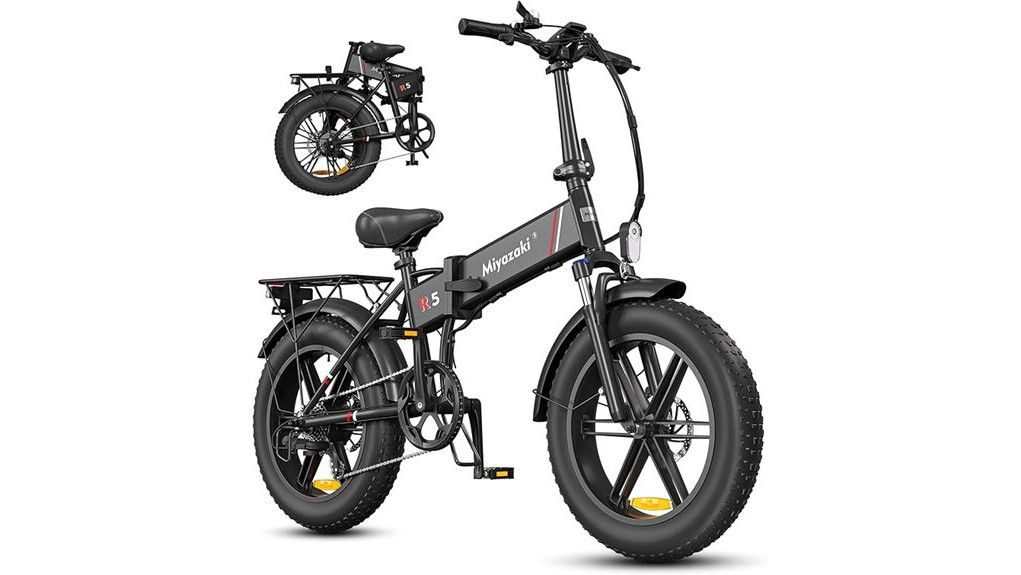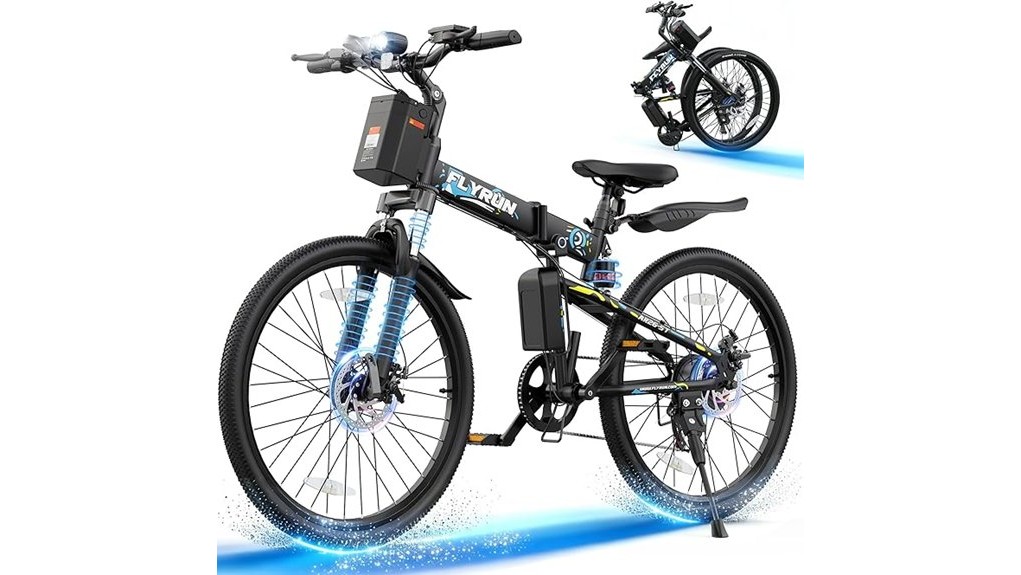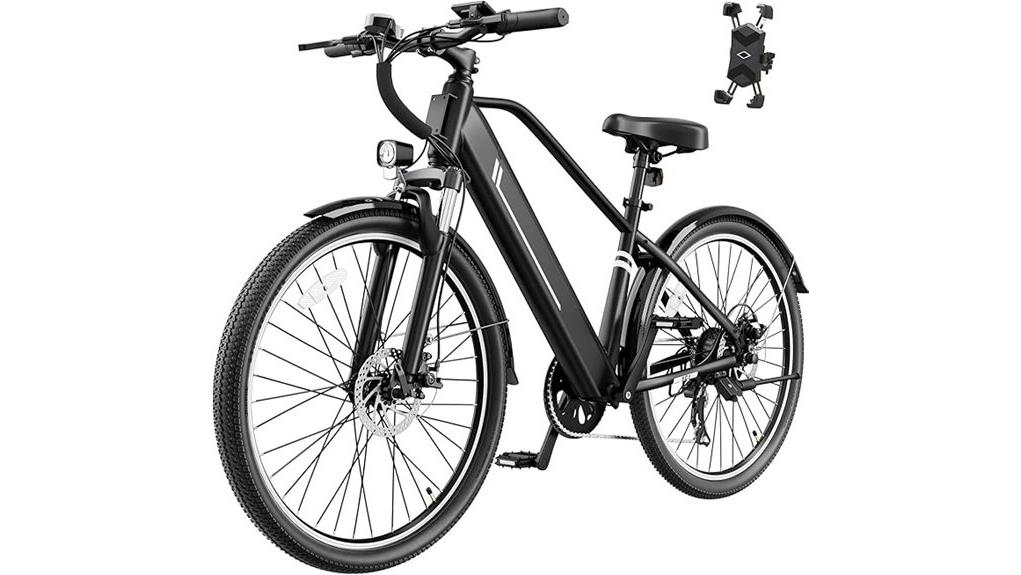

You get a rugged commuter e-bike with a 1000W hub motor, removable 36V/360–375Wh battery, three PAS levels plus throttle, and a 7-speed drivetrain. It delivers immediate torque and confident hill climbing, with throttle bursts for quick launches. Real-world range varies: about 40+ miles in low PAS, 20–30 miles mixed, and 15–20 miles under heavy throttle or climbs. It’s durable but heavier than aluminum; keep reading for detailed trade-offs and tips.
Some Key Takeaways
- 1000W brushless hub motor offers immediate torque, strong off-the-line acceleration, and confident hill-climbing.
- Removable 36V 10Ah (360–375 Wh) battery yields ~40+ miles in low PAS, 15–30 miles in mixed or throttle-heavy use.
- Three PAS levels plus throttle and a 7-speed drivetrain provide flexible cadence and power control for varied terrain.
- Sturdy high-carbon steel hard-tail frame, front suspension, and 26″ x 2.0 tires favor comfort and stability over agility.
- Mechanical disc brakes, integrated LED, and 5–6 hour recharge time make it a durable, commuter-ready e-bike for mixed surfaces.
YOLOWAY 1000W at a Glance: Key Specs and Quick Verdict
Although it dresses like a commuter, the YOLOWAY 1000W delivers near‑off‑road capability with a 1000W brushless hub motor and a removable 36V 10Ah (360 Wh) battery. You get a specs summary: top speed ~25 MPH, 3 PAS levels plus throttle, 7-speed drivetrain, 26″x2.0 tires, front suspension, mechanical disc brakes, integrated LED, UL 2849. Range reaches 40+ miles in PAS; recharge 5–6 hours. Compared to similar city e-bikes it feels beefier and more capable on gravel and climbs. Quick verdict: it frees you for mixed‑surface rides without sacrificing commuter practicality. This model is well suited for riders who want a versatile ride for both daily commutes and outdoor activities.
How the 1000W Motor, PAS and Throttle Perform on Road and Hills
You’ll feel the YOLOWAY’s 1000W brushless hub motor deliver immediate, smooth torque—quick off the line, holding steady up to the advertised 25 mph and easing steep climbs that would tax a typical 250–500W commuter unit. You’ll use three PAS levels for calibrated assistance: low for efficient cruising, mid for rolling terrain, high for steep pitches where motor responsiveness is obvious. Throttle-only mode gives full-power bursts without pedaling, ideal for surges or launches. Combined with the 7-speed drivetrain, hill performance is confident and fatigue-reducing, letting you choose cadence or pure power to maintain momentum and freedom on varied routes. These high-performance motors are built for riders who enjoy outdoor activities and off-road thrills, with components optimized for durability and power delivery high-performance ebike motors.
Battery, Range and Charging : Real-World Miles per Charge
Calculating real-world range, the YOLOWAY’s removable 36V battery (listed at 360 Wh, sometimes 375 Wh in marketing) typically delivers about 25–40+ miles per charge depending on mode and terrain: expect closer to 40+ miles in low PAS on flat roads with moderate pedaling, roughly 20–30 miles in mixed-city use with frequent stops and mid PAS, and 15–20 miles when using throttle-heavy rides or sustained hill climbing. You’ll appreciate removable charging, a 5–6 hour recharge, and BMS protections. Compare conservative estimates for planning, monitor battery degradation over seasons, and follow charging etiquette to maximize useful range. For more reliable outings, pair good riding habits with battery maintenance to keep your pack healthy for outdoor adventures.
Ride Comfort, Frame, Suspension and Braking in Everyday Use
After covering range and charging, let’s look at how the YOLOWAY’s chassis and components affect on-road feel and control. You get a rigid high-carbon steel hard-tail frame that prioritizes durability and a stable ride; it’s heavier than aluminum but steadier at speed. The 26″ wheels with 2.0 tires plus front suspension fork smooth pavement imperfections and light trail chatter, improving seat comfort without softening handling. Mechanical front and rear discs deliver reliable stopping; braking modulation is predictable though not as refined as hydraulic systems. Overall you trade some agility for robust stability—comfortable, controlled, and confidence-inspiring for open-road freedom. Riders who enjoy outdoor trails should also carry essential gear like a multi-tool and tire repair kit for safer, longer rides and basic maintenance.
Who This Bike Is Best For and Whether It’s Worth the Price
While it leans heavy and prioritizes durability over nimble handling, the YOLOWAY 1000W suits riders who want powerful, straightforward electric assist for commutes, mixed-surface weekend rides, and hill-heavy routes. You’ll appreciate commuter friendly features like integrated lights, removable battery for indoor charging, and reliable disc brakes. The 1000W motor and 7-speed drivetrain give you confident climbs and quick accelerations compared with lighter urban e-bikes. If you value range up to 40+ miles and low-tech robustness, it’s worth the price. Factor in ownership costs—battery replacement and heavier maintenance—before committing to ownership. For longer adventures, consider upgrading to extended range batteries to maximize distance between charges.
Some Questions Answered
Is the Battery Removable for Airline or Long-Term Storage Rules?
Yes — the battery is removable, which helps with airline restrictions and long-term storage. You can detach the 36V 10Ah lithium-ion pack for indoor charging or to carry as a spare, reducing transport and storage risk. Compared to integrated batteries, this removable battery lets you comply with many airline rules (check carrier-specific Watt-hour limits) and store cells safely with a BMS, lowering aging and regulatory friction for freer travel.
Does the Bike Come With a Warranty and What Does It Cover?
Yes — you get a limited warranty; typical warranty duration covers the frame and motor for a defined period and electrical components for shorter terms. You’ll want to check specifics, since service exclusions usually omit wear items (tires, brake pads), misuse, water damage, and unauthorized repairs. You’ll be free to ride knowing major components are protected, but compare terms before buying to make certain the coverage matches your needs.
Can I Mount Child Seats, Racks, or Panniers on This Frame?
Yes — you can fit accessories, but choose carefully. The frame accepts a rear rack for cargo and panniers if you mount to the seatpost/frame eyelets; heavier loads need a robust rack rated for e‑bikes. You can add child seats that use a secure child harness and attach to the rack or frame, but confirm weight limits and mounting points. Compare racks for load rating and compatibility to guarantee safe, stable freedom on rides.
Is the Display Backlit and Does It Show Trip Data or Battery Percentage?
Yes — the display is a backlit screen, so you can read it in low light. It shows battery percentage and basic trip metrics (speed, distance, trip time) so you can compare rides and manage range. You’ll switch PAS levels and throttle easily, and the readout’s simplicity beats cluttered interfaces. If you want advanced logging you’ll need an external head unit or app, but this gives clear, freedom-oriented feedback.
How Heavy Is the Bike for Lifting, Car Trunk Transport, or Stairs?
The bike weighs about 60–65 lbs, so you’ll need to plan weight considerations for lifting, trunk loading, or stairs. You’ll prefer two-person lifts or using carrying methods like a folding ramp, tailgate lift, or shoulder-friendly carry strap. Compared to lighter commuter bikes, it’s heavier but offers more power and range. Optimize by removing the 10Ah battery and lowering tire pressure for easier maneuvering and trunk-fit adjustments.