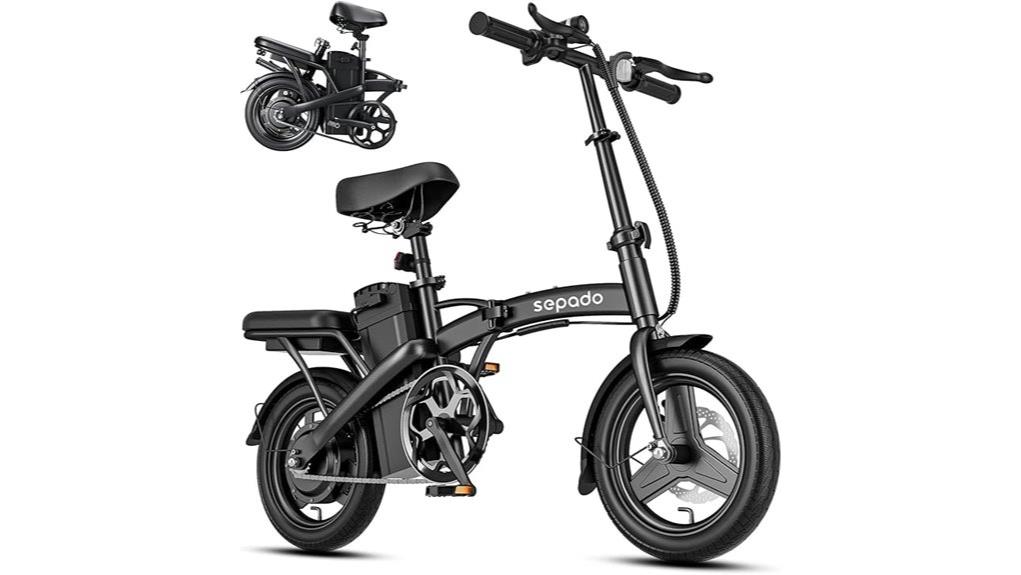

You get a compact, foldable 350W (750W peak) e-bike with a removable 36V/10.4Ah battery that’ll hit about 20 mph and deliver roughly 25 miles pure-electric or up to 40 with pedaling. It’s nimble and portable but feels firm on 14″ wheels and weighs about 61 lb, so it’s best for short urban commutes and mixed-transit trips. Braking and hinge upkeep matter; keep expectations modest and keep going for detailed specs, performance, and alternatives.
Some Key Takeaways
- Compact foldable design with a 350W (750W peak) motor and removable 36V/10.4Ah battery suits short urban commutes.
- Real-world electric range is about 20–25 miles; pedal-assist can extend range up to roughly 40 miles.
- 14-inch wheels and a rigid frame make the ride nimble but firm, transmitting road feedback over bumps.
- At about 61 lb curb weight, it’s portable when folded but requires effort to carry; fits trunks and tight storage.
- Weekly hinge and brake checks, plus proper battery charging, are important for safety and longevity.
Overview and Quick Verdict: Sepado KT100 Specs, Price Position, and Who It’s Best For
While compact and foldable, the Sepado KT100 packs a 350W-rated (750W peak) brushless motor and a 36V/10.4Ah (374.4 Wh) removable battery that deliver up to 20 mph and roughly 25 miles pure-electric (up to 40 miles with pedal assist), making it a practical mini e‑bike for short urban commutes, campus runs, and travel where portability matters. You’ll appreciate its balance of power, weight, and fold size for spontaneous freedom. Specifications favor city riders seeking convenience; price positions it as value-oriented. Inspect charging protocol and battery safety features. Its compact silhouette pairs function with discreet urban aesthetics. It’s a smart option for outdoor-focused riders who need a portable ride with reliable components and foldable e-bike convenience.
Real-World Performance: Speed, Range, Motor Feel, and Ride Comfort in City Use
Because the KT100 pairs a 350W-rated (750W peak) brushless motor with a 36V/10.4Ah removable battery, you’ll get sharp, immediate throttle response and consistent assistance up to the 20 mph limit, making city accelerations and quick lane changes feel confident. You’ll see advertised range translate to roughly 20–25 miles pure electric and up to 40 miles with pedal-assist depending on load and terrain. Motor heat stays moderate under short bursts but rises on prolonged climbs. The 14-inch wheels and rigid frame transmit road feedback; negotiate urban potholes cautiously—the bike is nimble but firm, prioritizing compact freedom over plush comfort. For riders who carry extra gear or want weather protection, consider a durable ebike battery case to protect removable packs during outdoor use.
Folding, Dimensions, and Portability: How It Folds, Folded Size, Weight, and Transport Tips
The KT100 folds down quickly into a compact package, collapsing to 30 x 23 x 13 inches so you can stow it in a closet, trunk, or under a train seat. You operate a single-step folding mechanism: release the main latch, fold the frame, then tuck the handlebars and pedals. At 61 pounds it’s carryable but you’ll want to use the molded carry handle or a two-person lift for longer carries. A slim transport case fits the folded bike for protected travel. Inspect hinge maintenance points regularly—clean, lubricate, and torque fasteners—to preserve fold alignment and safe, free movement. Designed for outdoor riders, the KT100 pairs well with compact-gear accessories like folding ebike bags to keep your kit organized on trips.
Daily Ownership: Battery Charging, Maintenance, Assembly, Brakes, and Display/Features
After folding and stowing routines, you’ll want a predictable daily care plan for the KT100’s electrical and mechanical systems. Charge the removable 36V battery after every long ride; partial top-ups preserve lifespan, avoid full depletion, and expect 4–5 hour charge cycles. Assembly is straightforward with the included tool kit, but torque key latches and hinge pins must be checked each week. Inspect dual 160 mm discs for pad wear and true rotors; bleed or adjust cables if lever feel soft. Monitor Display quirks — occasional reset or lag — and update firmware when available to maintain reliable diagnostics. For riders who take their bike off-road, prioritize battery maintenance as part of your outdoor gear routine.
Should You Buy It?: Pros, Cons, and Alternatives for Commuters and Travelers
While the KT100’s compact folding frame and removable 36V/10.4Ah battery make it a practical choice for short urban commutes and mixed transit trips, you should weigh its limited range, 14″ wheels and 61 lb curb weight against your route and storage needs. You’ll gain portability, tidy storage and quick folding, plus useful features like a smart display and stable ground contact. Downsides: modest 25–40 mile range, single-speed drivetrain, and limited cargo racks integration. If you want lighter travel freedom or higher range, consider a 16–20″ wheel folding e‑bike or commuter model with better battery capacity and clear legal compliance. Many outdoor riders prefer step-through ebikes for easier mounting and dismounting on varied terrain.
Some Questions Answered
Does It Come With Integrated Lights or Reflectors for Night Riding?
No — it doesn’t include integrated reflectors or a built in headlight as standard equipment. You’ll need to add lighting for safe night riding. Consider mounting a compact USB headlight and clip-on reflectors or spoke reflectors to meet visibility needs. That keeps weight low, preserves folding function, and gives you freedom to choose brighter, higher‑quality lights that match your commuting range and legal requirements.
Can I Add a Rear Cargo Rack or Child Seat?
Yes — you can add a rear rack or child seat, but you’ll need to confirm mounting points and weight limits. The small folding frame and 61 lb bike restrict rear-rack load; stay under the 300 lb total system limit. Use a rack designed for 14″ wheels and folding frames and choose a child seat rated for e-bike use and compatible with rear rack or seatpost mounts. Verify secure fastening and brake clearance.
Is the Battery Airline-Transport Compliant for Travel?
No — you can’t bring the battery as-is on most flights. The 36V 10.4 Ah pack equals 374.4 Wh, exceeding many airlines’ allowed carry-on limits. Airline rules typically cap lithium-ion cells at 100 Wh without approval, 160 Wh with airline approval; above that they’re prohibited. You’ll need airline approval or a certified, removable lower‑capacity battery to travel. Check your carrier’s specific battery capacity and airline rules before you go.
Are Replacement Tires and Tubes Standard Sizes Available?
Yes — you’ll find replacement tires and tubes in standard sizes compatible with this bike. Tire compatibility centers on 14×2.2-inch tires; tube sizing should match 14-inch diameter with appropriate 2.0–2.4-inch width range and valve type. You’ll want tubes labeled 14×2.0–2.4 (Schrader or Presta as specified). This technical fitment gives you freedom to source common aftermarket parts and swap tires for terrain or durability upgrades.
Is There an App for Firmware Updates or Ride Data Syncing?
No — there’s no dedicated mobile app for firmware updates or ride data syncing. You’ll rely on the bike’s smart display and vendor support for firmware changes; updates (if offered) typically require dealer service or USB/serial tools. You can still track trips manually or use a separate GPS/fitness app on your phone. That limits seamless syncing but preserves straightforward, freedom-focused riding without mandatory cloud connections or constant app dependence.