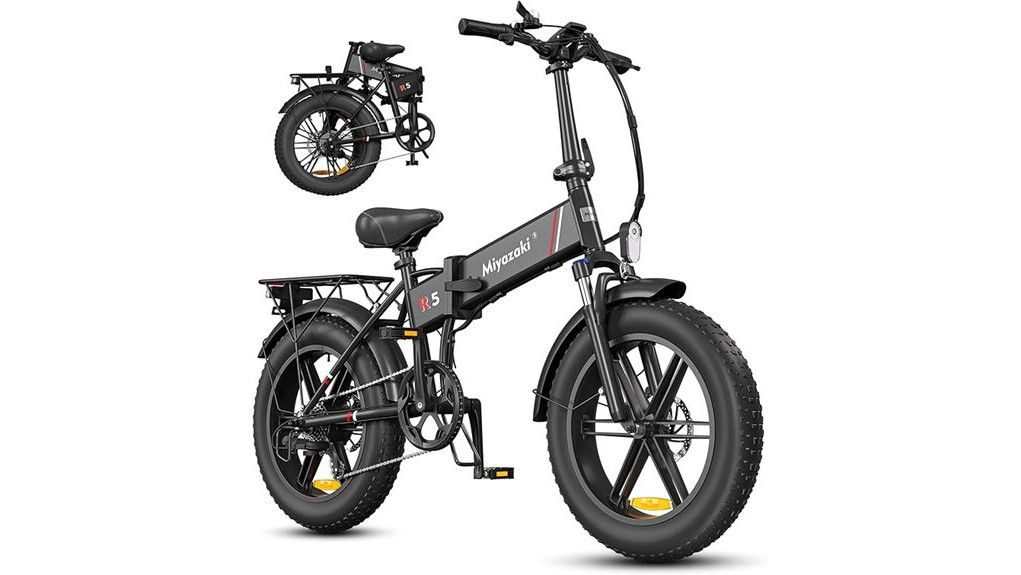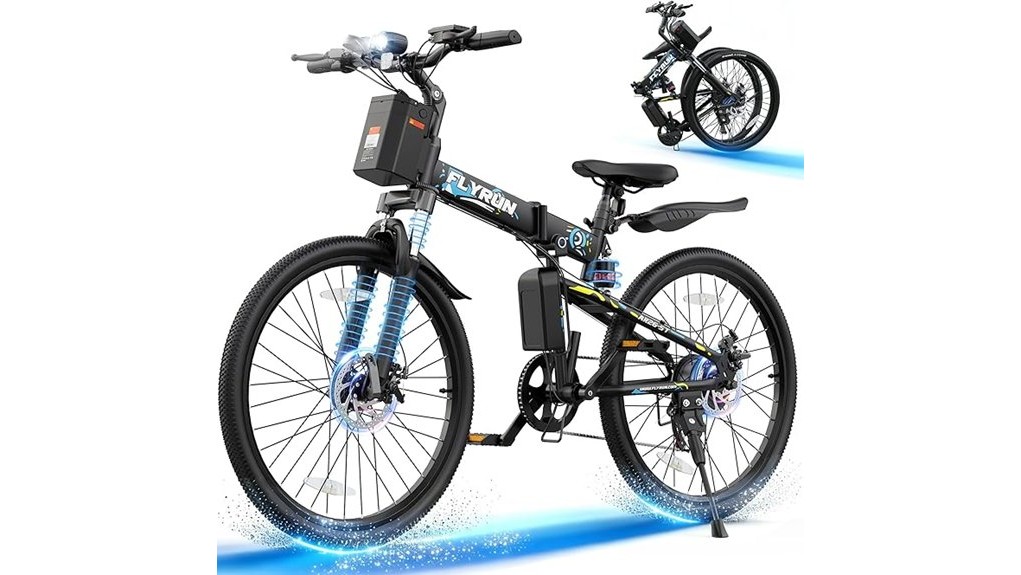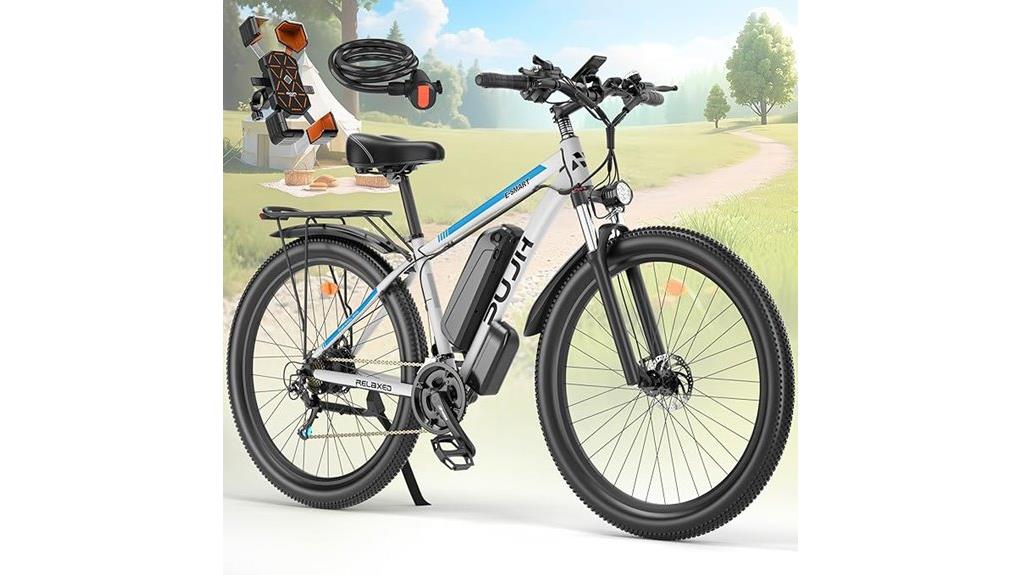
If you want brutal acceleration and serious hauling power, the PU1’s 2000W motor and 48V/17.5Ah removable battery deliver—but you’ll trade nimble city handling and max range for that torque. It’s built on a heavy 6061‑aluminum 29" frame with front suspension, 21 speeds, and mechanical discs, so it excels on hills, trails, sand, and snow but feels cumbersome in tight urban spaces. Battery heat under sustained high power also cuts efficiency, and more details follow. 2000w electric bike performance insights reveal that while the increase in power enhances acceleration, it also brings challenges in terms of efficiency. Riders may notice that battery management plays a crucial role, especially during prolonged use. Understanding these dynamics can significantly improve the overall riding experience.
Some Key Takeaways
- PU1 uses a 2000W brushless motor and 60 Nm torque for rapid acceleration and heavy hauling capacity.
- 48V/17.5Ah removable battery offers flexible charging and claimed range, but heats under sustained high‑power use.
- 29" wheels on a 6061‑aluminum frame provide stable handling across streets, trails, sand, and snow.
- 21‑speed derailleur, twist‑grip shifter, and throttle give versatile gearing and power control.
- Heavy frame and weight hurt low‑speed maneuverability and urban storage despite useful cargo rack and accessories.
What the PU1 Is and Who It’s For
As a high‑power pedelec built around a 2000W brushless motor and a 48V/17.5Ah removable battery, the PU1 targets riders who want rapid acceleration, heavy carrying capacity, and versatility across city streets, mountain trails, sand and snow. You’ll find it’s a beefy commuter cruiser that doesn’t shy from offroad touring; it blends cargo-ready practicality with aggressive propulsion. You’ll appreciate the removable battery for range flexibility and the sturdy frame for loaded runs, but expect weight and bulk that limit nimble city weaving. If you crave freedom and hauling power over pure lightness, the PU1 fits that mission. It’s well suited to outdoor riders who need an adventure-ready step-through ebike.
Key Specs That Matter: Motor, Battery, Frame, Drivetrain, and Brakes
You’ll find the PU1’s character is defined by a few headline specs: a 2000W brushless motor with 60 Nm torque, a 48V/17.5Ah removable battery, a 6061‑aluminum diamond frame on 29" wheels, a 21‑speed derailleur with twist‑grip shifter and throttle, and mechanical disc brakes. You’ll like the brisk torque delivery for quick launches and hauling. The removable pack aids battery management and off‑bike charging, though claimed range varies. Frame geometry favors stability at speed but costs some nimbleness. The drivetrain is serviceable; shifting’s basic. Expect solid component durability for adventure use, but inspect fasteners and cables on arrival. Also consider essential trail gear like a helmet, gloves, and repair kit to match the PU1’s mountain e‑bike capabilities.
Real-World Performance: Speed, Range, Terrain, and Handling
While the PU1's 2000W motor and 60 Nm torque let you hit its advertised top speed of roughly 34 MPH on flat ground, real-world figures depend heavily on rider weight, wind, and assist mode—expect high single‑digit to low double‑digit mile‑per‑hour drops under load or on hills. You’ll enjoy rapid acceleration and usable range from the 48V 17.5Ah pack, but battery heating under sustained high-power runs lowers efficiency and range. The PU1 handles varied terrain—city, mountain, sand, snow—with confidence; cornering stability is decent for a 29-inch wheeled rig, though front suspension and weight make aggressive turns feel heavy. For riders who want longer outings, consider upgraded battery options to extend range and performance with higher-capacity packs.
Daily Ownership: Comfort, Accessories, Maintenance, and Warranty
Typically, day-to-day ownership of the PU1 feels solid but a bit to‑do: the shock‑absorbing saddle, adjustable seat, and front suspension keep rides reasonably comfortable, yet the bike’s weight and 29‑inch wheels make low‑speed maneuvering and tight turns feel heavy. You’ll appreciate deliberate seat ergonomics for longer rides, though the stock saddle may need swapping for true comfort. Accessories are practical: cargo rack, fenders, phone holder, pump, lock and spare tube cover basic needs; storage solutions are limited by frame size. Maintenance is routine—check brakes, chain, and battery latch—and the one‑year parts warranty is standard. For riders who use their ebikes outdoors regularly, paying attention to essential maintenance keeps the bike reliable and ready for adventure.
Should You Buy the PU1? Pros, Cons, and Ideal Buyer Scenarios
If you need a powerful, versatile e‑bike for mixed terrain and don't mind managing extra weight, the PU1 is worth strong consideration: its 2000W motor and 60 Nm torque deliver brisk acceleration and a ~34 MPH top speed. You'll get roomy range, solid suspension, cargo rack utility, bright headlight and good night visibility for late rides. Downsides: heavy frame complicates urban storage, and legal limits/training may frustrate some riders. Consider commuter suitability carefully—it's excellent for long, hilly commutes but bulky for tight apartments. Resale value should hold if you maintain battery and components. Ideal for freedom-seeking adventurers. For riders focused on off-road exploration, pairing the PU1 with purpose-built accessories and maintenance tips from Top Gear can extend its performance and utility.
Some Questions Answered
Is a Motorcycle License Required to Ride the PU1?
No — you typically won't need a motorcycle license to ride the PU1, but license requirements and age restrictions vary by state or country. You should check local laws: some places treat high-power e-bikes like mopeds or motorcycles and may require registration, insurance, or a specific license. You’ll also face minimum age limits in many areas. Stay informed, follow rules, and ride responsibly to protect your freedom and avoid fines.
Can I Tow a Trailer With This E-Bike?
Yes — you can tow a trailer, but do it thoughtfully. You’ll appreciate the bike’s cargo capacity and strong 2000W torque, yet you’ll want proper hitch options rated for the load and compatible with the 29" wheel and rear frame. Keep trailer weight moderate for safety, test braking and handling, and secure the removable battery. Follow local laws, avoid overloading, and prefer a purpose-built rack or hitch to preserve control and range.
How Long Does the Removable Battery Take to Fully Charge?
You can fully charge the removable battery in about 6–8 hours using the standard charger; fast chargers may cut that to 3–4 hours. Expect charge time to vary with charger wattage, battery state and temperature. Over many power cycles you'll see gradual capacity loss, so avoid frequent full discharges to preserve range. Charge on a stable surface, lock the battery when removing, and keep spare cycles in mind for adventurous freedom.
Are Replacement Batteries and Parts Readily Available?
Yes — replacement batteries and parts are available but not always seamless. You can source OEM items from the manufacturer and find third party batteries, yet you’ll face compatibility concerns like connector types, capacity, and BMS differences. You’ll want to verify specs, warranties and return policies before buying. If you value freedom, keep a spare genuine battery, a list of compatible third party options, and basic mechanical skills for swaps.
Is the PU1 Street-Legal in All U.S. States?
No — you can’t assume it’s street-legal in all U.S. states. Laws vary state by state and often by local ordinance, so you’ll need to check classifications for power, top speed, and throttle use where you ride. Many places restrict 2000W motors or throttle-only operation, treating them like mopeds or requiring plates, insurance, or helmets. Confirm state by state rules and local ordinance before riding to avoid fines or impoundment.